
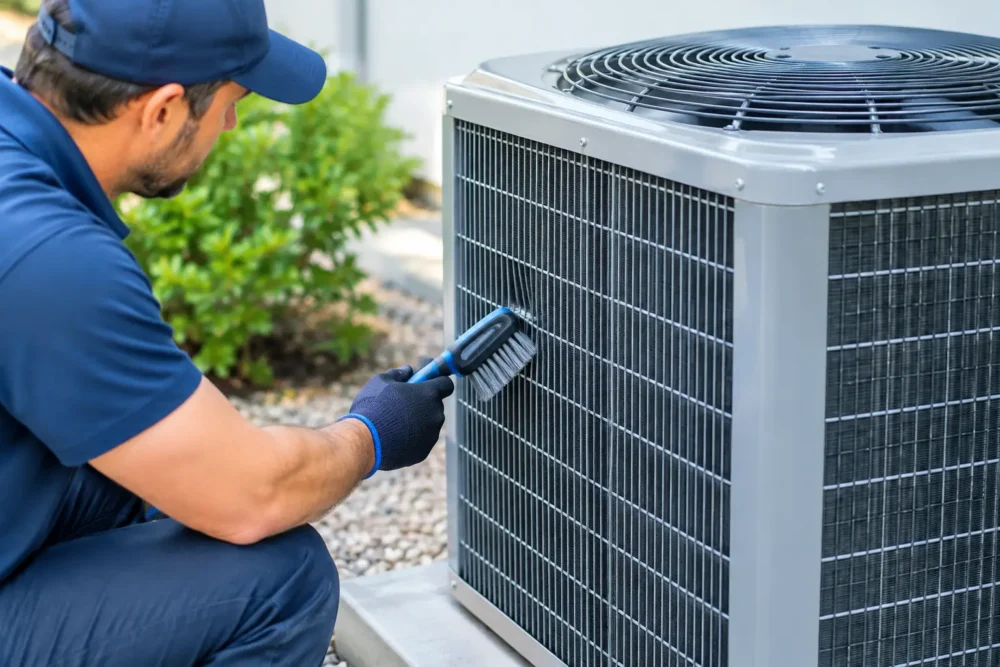
When your air conditioner runs for hours on a hot Treasure Coast afternoon but your home still feels sticky, the problem may be outside. Clean condenser coils are essential to moving heat out of your home. When those coils are coated with grass clippings, leaves, sand, salt residue, or dirt, your system has to work harder to deliver the cooling your family expects.
The outdoor unit is built to handle the weather, but it cannot perform at its best when airflow is blocked. A little routine attention can help prevent high utility bills, uneven cooling, and avoidable repair calls. Knowing what to look for also helps you recognize when it is time to bring in a licensed HVAC technician.
What Condenser Coils Do for Your Air Conditioner
Your outdoor AC unit contains the condenser coil, a network of metal tubing and thin aluminum fins surrounding the unit. After the indoor portion of your system absorbs heat from your home, refrigerant carries that heat outside. The condenser coil releases it into the outdoor air, while the fan pulls air through the fins to keep the process moving.
That heat transfer is the point. If the coil cannot release heat efficiently, the refrigerant stays hotter than it should. Your compressor and fan run longer, and the system may struggle to reach the temperature on your thermostat.
In South Florida, the challenge is more than ordinary dust. Frequent mowing, heavy rain, windblown debris, coastal air, landscaping mulch, and long cooling seasons all put pressure on outdoor equipment. A clean-looking unit from several feet away can still have a clogged coil beneath its protective grille.
Signs Your Condenser Coils May Need Attention
A dirty coil does not always cause an immediate breakdown. More often, it quietly raises the workload on your system until comfort and efficiency begin to suffer. Watch for changes such as longer cooling cycles, rooms that stay warmer than others, reduced airflow at vents, or an AC that runs almost continuously during normal hot weather.
A sudden increase in energy use can be another clue, especially if your household routines have not changed. You may also hear the outdoor unit working harder than usual or notice warm air blowing from the top of the condenser. Warm air is normal during operation, but excessively hot discharge air paired with poor indoor cooling deserves a professional inspection.
Do not assume the coils are the only possible cause. A clogged indoor filter, low refrigerant, a failing capacitor, duct problems, or thermostat issues can produce similar symptoms. That is why a complete diagnostic visit is more useful than treating every cooling problem as a coil-cleaning problem.
How to Keep Condenser Coils Clean Safely
Homeowners can handle basic outdoor-unit housekeeping without taking apart the system. First, turn off power to the unit at the outdoor disconnect box. Do not rely on the thermostat alone. The condenser can start unexpectedly, and its electrical components should never be sprayed or handled while energized.
Clear leaves, branches, grass, and other loose debris from around the unit. Maintain about two feet of open space on every side whenever possible, with clear space above it as well. Trim shrubs back instead of allowing them to grow tightly against the equipment. Good clearance gives the condenser the airflow it needs and makes future service easier.
If there is loose debris on the exterior fins, use a garden hose with gentle water pressure to rinse from the outside inward. Never use a pressure washer. The fins bend easily, and damaged fins restrict airflow just as surely as dirt does. Avoid harsh chemical cleaners, bleach, and acidic products. These can damage coil materials, surrounding landscaping, and nearby electrical parts.
It is also smart to keep lawn clippings away from the unit. Ask your landscaping crew to direct mowers and trimmers away from the condenser, rather than toward it. This small habit can prevent a heavy layer of grass from collecting on the coil during the growing season.
What Not to Do
Do not remove panels, disconnect wiring, or attempt to straighten large areas of crushed fins without the proper tools. Do not use a brush that can flatten the delicate aluminum fins. And do not spray water directly into the electrical compartment, fan motor, or disconnect.
A homeowner rinse may remove surface debris, but it cannot replace professional coil cleaning when buildup is dense or when access requires removing the fan assembly or protective panels. Technicians can inspect the entire system while they clean it, including electrical connections, refrigerant performance, drainage, and other parts that affect reliability.
Why Professional Coil Cleaning Is Worth It
Professional maintenance is about more than making an outdoor unit look neat. A trained technician can determine whether the coils truly need cleaning, select a coil-safe cleaning method, protect electrical components, and restore airflow without damaging the fins.
This matters because aggressive cleaning can create costly problems. Bent fins reduce air movement. Incorrect chemicals can contribute to corrosion. Water in the wrong area can affect electrical controls. In coastal communities, salt exposure adds another concern, since corrosion can shorten the life of outdoor equipment if it is not identified early.
During a maintenance visit, the technician can also spot warning signs that are easy to miss: weak capacitors, worn contactors, refrigerant concerns, a loose fan blade, deteriorating insulation, or drainage issues. Catching these problems before peak summer heat can mean the difference between a quick scheduled repair and an uncomfortable emergency call.
Treasure Coast Air Conditioning has served local homeowners and businesses since 1990, and our technicians understand how Florida heat, humidity, and coastal conditions affect AC equipment. Regular maintenance gives your system its best chance to stay dependable when you need it most.
How Often Should Coils Be Cleaned?
There is no single schedule that fits every property. For many homes, a professional AC maintenance visit once or twice a year provides the right level of oversight. The outdoor unit may need attention more often if it sits near heavy landscaping, a dirt road, a construction area, or the coast.
Rental properties and seasonal homes deserve special consideration. If a home has been closed up for months, schedule maintenance before returning for the season or before guests arrive. For commercial properties, higher operating hours and the need to protect employees, customers, and equipment may justify a more frequent service plan.
The condition of the coils matters more than the calendar alone. A technician can recommend a practical schedule based on your equipment, its location, and how hard it runs. Preventive care is generally less disruptive and less expensive than waiting for performance to decline.
Support Better Cooling Between Service Visits
Keeping the condenser area clear is one part of a larger maintenance routine. Replace or clean your indoor air filter on schedule, because a clogged filter can restrict airflow and make your entire system work harder. Keep supply and return vents open and unobstructed, and pay attention to thermostat changes rather than repeatedly lowering the setting when the house will not cool.
If your AC is running but not keeping up, ice is visible on refrigerant lines, the breaker trips, or you smell something burning, turn the system off and call for service. Continuing to run a struggling unit can turn a manageable repair into more extensive damage.
Your outdoor unit does not need complicated DIY treatment to do its job well. It needs room to breathe, careful cleaning, and timely professional attention. A quick look at the condenser after yard work, storms, or a long stretch of heavy use can help protect the comfort your home depends on.