A sneeze that starts every time the AC comes on is frustrating, especially in a Florida home where the system runs through much of the year. So, does duct cleaning reduce allergies? It can help in the right circumstances, but it is not a cure-all for allergy symptoms. The real answer depends on what is inside the ductwork, how well the HVAC system is maintained, and whether other indoor air-quality issues are present.
For homeowners and property managers, the goal is not simply cleaner ducts. It is cleaner, healthier air moving through the building every day.
Does duct cleaning reduce allergies?
Duct cleaning may reduce allergy triggers when dust, pet dander, pollen, construction debris, or signs of microbial growth have collected inside the duct system. When the air conditioner cycles on, loose particles in the return and supply system can be carried into living spaces. Removing a heavy buildup can reduce the amount of material available to circulate.
That said, duct cleaning will not remove every allergen from a home. Allergens also settle in carpeting, upholstery, bedding, curtains, and other soft surfaces. Outdoor pollen can enter whenever doors and windows open. If there is an active moisture problem, cleaning the ducts without correcting the source of moisture will not provide a lasting result.
Think of professional duct cleaning as one useful part of an indoor air-quality plan, not a one-time answer to every allergy concern.
When duct cleaning is most likely to help
Duct cleaning is worth serious consideration when there is evidence that the duct system is contributing to poor air quality. A professional inspection can help separate a real duct issue from a problem with filtration, humidity, or the AC equipment itself.
It can be especially helpful after a renovation or drywall work. Fine construction dust can travel farther than expected and may remain in returns, registers, and duct runs long after the project appears finished. Homes with shedding pets, smokers, or residents with severe sensitivities may also accumulate more airborne particles over time.
There are several warning signs that should prompt a closer look:
- Visible dust blowing from vents or quickly collecting around supply registers
- Persistent musty odors when the AC starts or runs
- Visible debris, pest activity, or suspected microbial growth near vents or inside accessible ductwork
- A recent water leak, flooding event, or humidity issue affecting the air handler or ducts
- Increased allergy-like symptoms that seem noticeably worse indoors
None of these signs proves the ducts are the only cause. They do indicate that an inspection is more useful than guessing.
Florida humidity changes the equation
On the Treasure Coast, humidity is often as important as dust. Air conditioning does more than cool a home. It removes moisture from the indoor air when the system is operating correctly. If humidity stays too high, the home can feel sticky, odors can linger, and conditions may become more favorable for mold and mildew.
Leaky, poorly insulated, or damaged ducts can worsen this problem, particularly when they run through hot attics, garages, or other unconditioned spaces. They may pull dusty, humid air into the system before distributing it through the home. In that situation, cleaning alone is not enough. Duct repairs, proper insulation, drainage corrections, or equipment adjustments may be needed to address the cause.
What duct cleaning cannot fix
A thorough duct cleaning does not replace regular filter changes, AC maintenance, or humidity control. If the filter is clogged, incorrectly sized, or too low-efficiency for the household’s needs, the system may still circulate more particles than necessary. A dirty evaporator coil, drain issue, or blower problem can also affect both comfort and air quality.
It also cannot solve allergies caused primarily by outdoor pollen, dust mites in bedding, pet exposure, or medical conditions. If symptoms are severe, persistent, or include wheezing or shortness of breath, speak with a healthcare professional. Home improvements can support a cleaner environment, but they are not a substitute for medical care.
Be cautious with any company that promises duct cleaning will eliminate all allergies or cure asthma. A reliable HVAC professional should explain what the service can reasonably accomplish, show you what they find, and recommend only the work that makes sense for your property.
A better approach to cleaner indoor air
The most effective allergy-reduction plan usually combines clean ductwork with strong day-to-day HVAC habits. Start with a filter that fits properly and is changed on schedule. In a home with pets, allergies, or heavy AC use, filters may need attention more often than the standard reminder on the package.
Filter selection matters, but higher-rated is not automatically better. Some high-efficiency filters can restrict airflow if the system was not designed for them. Restricted airflow can strain equipment, reduce cooling performance, and create comfort problems. An HVAC technician can recommend a filter level that balances particle capture with safe system operation.
Preventive maintenance is equally valuable. During a maintenance visit, a technician can inspect the air handler, blower components, evaporator coil, condensate drain, electrical connections, refrigerant performance, and overall airflow. Catching a drainage or humidity issue early can protect both your equipment and your indoor environment.
For households with recurring concerns, an indoor air-quality evaluation may also identify whether air purification, upgraded filtration, duct sealing, or humidity control would offer greater benefit than cleaning alone. The right solution should match the home, the occupants, and the actual source of the problem.
What professional duct cleaning should include
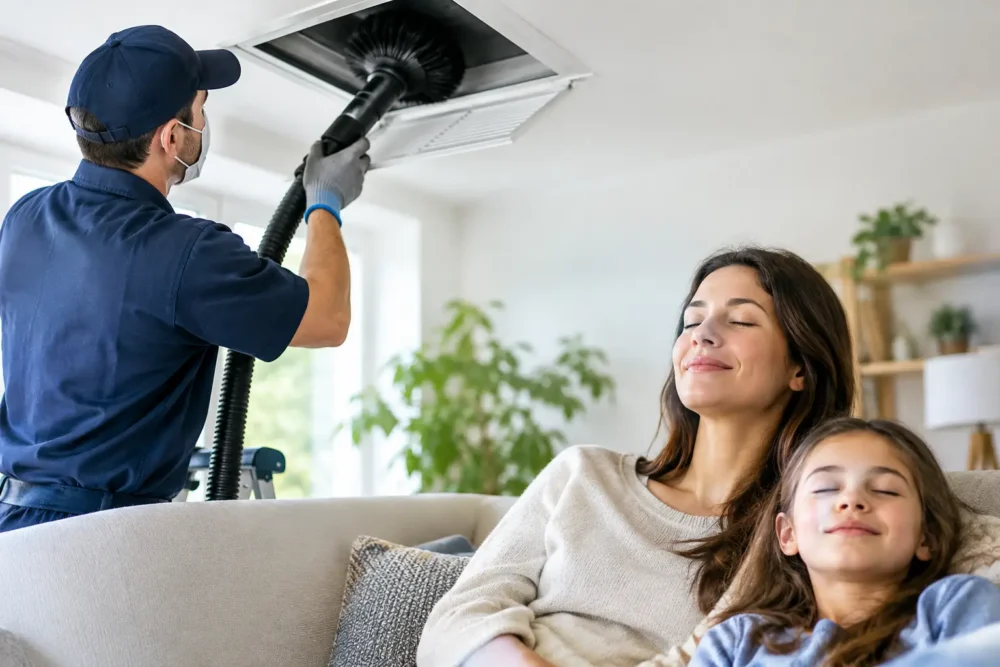
Quality duct cleaning is more than vacuuming around a vent cover. The service should address accessible supply and return ducts, registers, grilles, and key system components as appropriate. Technicians should use equipment designed to contain and remove debris rather than simply push it farther through the system.
Before work begins, ask what areas will be cleaned and whether the technician has found a specific concern, such as excessive debris, moisture damage, or duct leakage. You should receive a clear explanation of the recommended work and the expected benefit. If microbial growth is suspected, the source of moisture needs to be identified and corrected as part of the plan.
A good contractor will also protect your home during the service and inspect the system afterward to make sure airflow has not been compromised. This attention to detail matters in primary residences, seasonal homes, rental properties, offices, and retail spaces alike.
How to tell whether your allergies may be HVAC-related
Pay attention to timing and location. If symptoms worsen after the AC turns on, improve when you are away from the building, or become more noticeable in one room, the HVAC system may be involved. Uneven cooling, stale rooms, visible dust near vents, and recurring musty smells provide additional clues.
Still, indoor air problems can overlap. A damp bathroom, a leaky window, old carpeting, an attic air leak, or an overloaded filter may be contributing at the same time. That is why a complete inspection is more valuable than treating duct cleaning as an automatic first step.
Treasure Coast Air Conditioning can assess your system, explain what is affecting your indoor air, and recommend practical next steps without unnecessary guesswork. For homeowners in Stuart, Jensen Beach, Port St. Lucie, Fort Pierce, Hobe Sound, Hutchinson Island, or Jupiter, prompt professional attention can help protect comfort before a small air-quality concern becomes a larger HVAC problem.
If your home feels dusty, smells musty, or seems to aggravate symptoms whenever the AC runs, do not just keep turning the thermostat down. Have the system checked, keep the filter current, and address the source of the problem so your home can feel like the comfortable place it should be.