
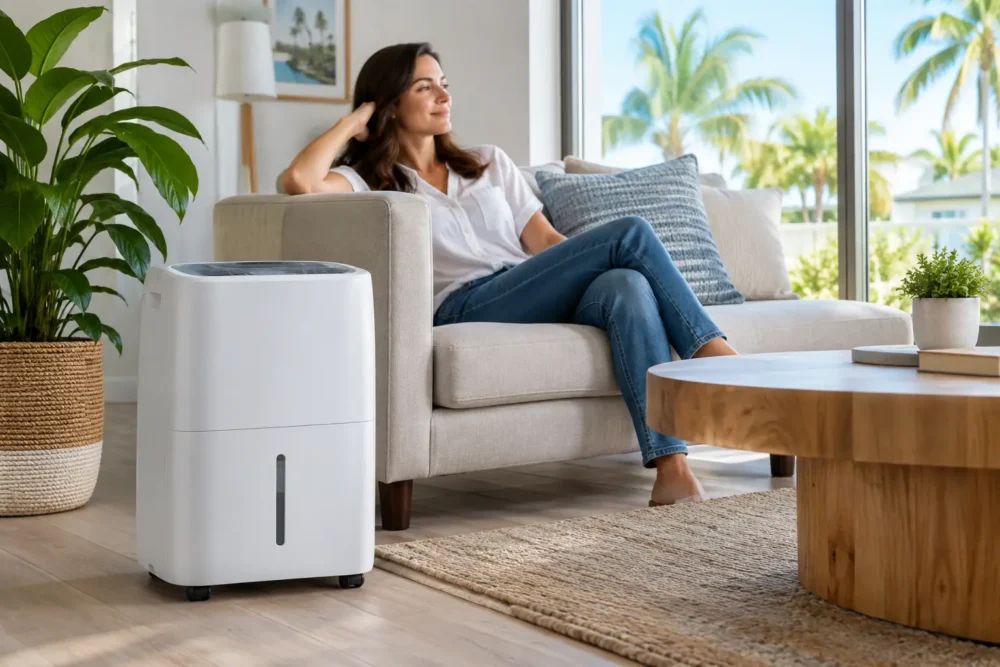
A Florida home can feel sticky even when the thermostat says 74 degrees. That clammy feeling is usually excess indoor moisture, and it can make your family uncomfortable, encourage mold growth, strain your air conditioner, and leave rooms smelling musty. Knowing how to reduce humidity indoors Florida homes starts with treating both sides of the problem: removing moisture already in the air and stopping new moisture from getting inside.
South Florida’s outdoor humidity is a fact of life, especially during rainy season. Your home should still feel cool, dry, and comfortable. If it does not, a few practical changes can make a real difference – and persistent humidity may be a sign that your AC system needs professional attention.
What Indoor Humidity Should Be in Florida
For most homes, an indoor relative humidity level between 40% and 55% is a comfortable target. Below 40%, the air may feel too dry for some people. Above 60%, moisture can settle on cool surfaces and create better conditions for mold, mildew, dust mites, and odors.
A simple digital hygrometer can tell you where you stand. Place it in a central living area away from supply vents, direct sunlight, kitchens, and bathrooms. Check the reading at different times of day. If humidity regularly stays above 60%, particularly while your AC is running, do not ignore it.
High humidity is not only a comfort issue. It can make hardwood floors swell, damage stored belongings, cause condensation around windows, and make a home feel warmer than it really is. That often leads people to lower the thermostat further, increasing energy use without solving the moisture problem.
How to Reduce Humidity Indoors in Florida With Your AC
Your air conditioner does more than cool your home. As warm indoor air passes over the cold evaporator coil, moisture condenses and drains away. A properly sized, well-maintained system should remove a meaningful amount of moisture during normal operation.
Start by setting the thermostat to a steady, realistic temperature. In many Florida homes, 74 to 78 degrees provides a good balance of comfort and humidity control. Constantly lowering the setting may make the house colder, but it will not always make it drier. If the system shuts off quickly because it reaches the temperature setting too fast, it may not run long enough to remove adequate moisture.
Avoid setting the fan to “On” all day. Use the “Auto” setting instead. When the fan stays on between cooling cycles, it can blow moisture left on the indoor coil back into your living space. With Auto selected, the blower runs when the system is actively cooling and dehumidifying.
A clogged air filter can also interfere with performance. Restricted airflow may reduce your system’s ability to cool and remove moisture effectively, while adding unnecessary stress to equipment. Check the filter monthly during heavy-use months and replace it according to its condition and manufacturer recommendations. Homes with pets, renovations, or frequent occupancy may need more frequent changes.
Regular AC maintenance matters here. During a professional visit, a technician can inspect the evaporator coil, condensate drain, refrigerant performance, blower operation, and overall system operation. A blocked drain line, dirty coil, low refrigerant charge, or failing component can all affect cooling and humidity control.
Watch for an Oversized AC System
Bigger is not always better. An oversized air conditioner can cool a house quickly, then shut down before it has completed a proper dehumidification cycle. This is called short cycling, and it can leave rooms cold but damp.
System sizing depends on more than square footage. Insulation, windows, ceiling height, sun exposure, occupancy, ductwork, and the home’s layout all matter. If your home has always felt humid after an AC replacement, ask an HVAC professional to evaluate the equipment sizing and airflow rather than assuming a larger unit is the answer.
Stop Moisture at the Source
Some indoor moisture comes from daily life. Cooking, showering, washing clothes, and even breathing add water vapor to the air. In Florida, small moisture sources can build up quickly when a house is closed tightly against hot outdoor conditions.
Run bathroom exhaust fans during showers and for about 15 to 20 minutes afterward. Make sure the fan vents outdoors, not into an attic or other enclosed space. If the mirror stays fogged long after a shower, the fan may be undersized, dirty, poorly ducted, or simply not being used long enough.
Use the kitchen range hood whenever you boil water, simmer food, or run the dishwasher. If your dryer is vented, inspect the exterior vent periodically to make sure it opens freely and is not blocked with lint. A damaged or disconnected dryer vent can release a surprising amount of warm, humid air into a laundry room.
Check for plumbing leaks under sinks, behind toilets, around water heaters, and near refrigerators with ice makers. Look for stained drywall, soft baseboards, warped flooring, or a persistent musty smell. Even a slow leak can keep a closet, bathroom, or wall cavity damp enough to create bigger problems over time.
Keep Outdoor Humidity Outside
Florida homes work hard to keep conditioned air in and humid outdoor air out. Gaps around exterior doors, windows, attic access panels, cable openings, and plumbing penetrations can allow outside moisture to enter.
Replace worn weatherstripping and damaged door sweeps. Seal visible openings around utility lines and inspect window caulking for cracks. These are relatively simple improvements, but they also help your air conditioner run more efficiently.
Be careful with open windows. On a pleasant, dry day, fresh air can be welcome. But when outdoor humidity is high, opening windows can quickly overwhelm your home’s cooling system. Before airing out the house, check the outdoor humidity level, not just the temperature. A cloudy 75-degree day can still carry a great deal of moisture.
Use a Dehumidifier Where It Makes Sense
A portable dehumidifier can be useful for one damp bedroom, a laundry room, a closet, or a seasonal property that needs extra help. Choose a unit sized for the room or area you are treating, keep doors and windows closed while it runs, and empty or drain the collection bucket as directed.
For a whole-house issue, portable units are usually a temporary tool rather than a complete solution. They can add heat to the room and require regular attention. A whole-home dehumidifier may be a better fit for larger homes, homes with persistent moisture concerns, or households that want humidity control without relying on several portable units.
The right option depends on the cause. If the AC is not operating correctly, adding a dehumidifier without addressing the system may only mask the issue.
Pay Attention to Problem Areas
Humidity is often worst in rooms with weak airflow or hidden moisture. Walk-in closets, guest rooms, bathrooms, garages, and rooms at the end of long duct runs deserve extra attention. Keep interior doors open when practical, avoid blocking supply and return vents with furniture, and make sure each room receives adequate airflow.
Condensation is an important warning sign. A little moisture on a cold drink is normal. Water forming on supply vents, windows, walls, or ceilings is not. It may point to high indoor humidity, inadequate insulation, duct leakage, or a cooling system problem.
For vacation homes and rental properties, do not turn the AC completely off while the property is empty. Set it higher to save energy, but keep the system running enough to manage humidity. A smart thermostat with humidity monitoring can be especially helpful when you are away.
When to Call for Professional Help
Call an HVAC professional if your home stays humid with the AC running, the system runs constantly without reaching the set temperature, or you see water around the indoor unit. You should also schedule service for recurring drain clogs, musty odors from vents, uneven cooling, ice on refrigerant lines, or visible mold.
Treasure Coast Air Conditioning can inspect the equipment and the conditions affecting comfort, then explain the practical next step. Sometimes the answer is maintenance or a drain repair. Other times, airflow adjustments, duct repairs, indoor air-quality equipment, or a properly sized replacement may be needed.
A dry, comfortable home should not be hard to achieve, even through Florida’s most humid months. Address moisture early, keep your cooling system maintained, and act quickly when your home feels damp or smells musty. That protects your comfort now and helps prevent a much larger repair later.