
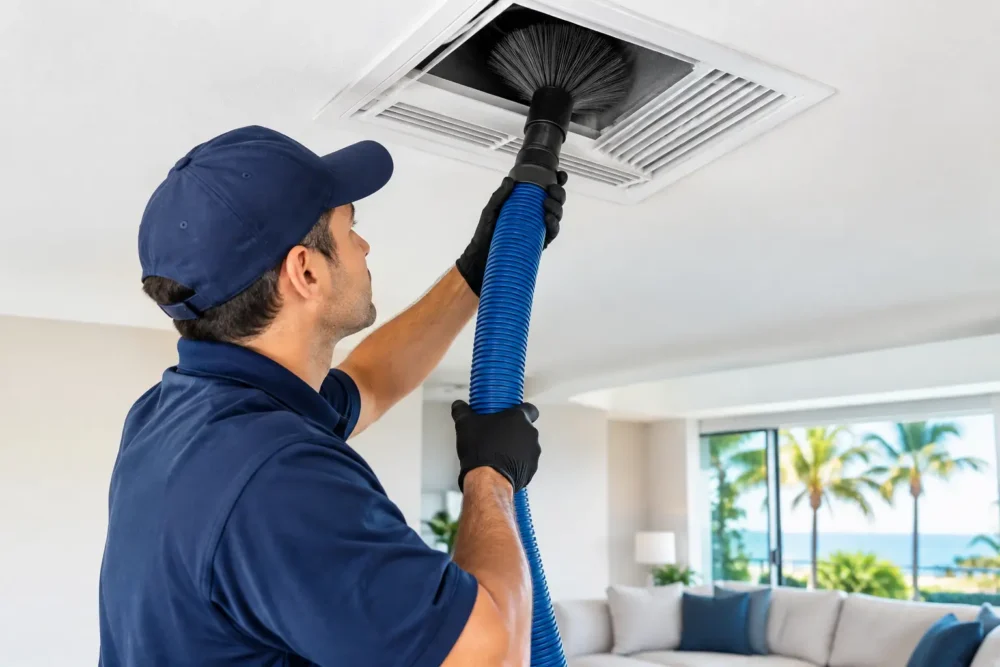
A Florida air conditioner can move a remarkable amount of air through a home every day. Along with that air come dust, pet dander, pollen, construction debris, and the fine particles that collect over time in return vents and ductwork. That is why air duct cleaning benefits Florida homes most when it is treated as part of a practical indoor-comfort plan, not a one-size-fits-all cure for every HVAC issue.
For families on the Treasure Coast, clean ductwork can make a noticeable difference after a renovation, a pest problem, water intrusion, or years of heavy AC use. It can also be a sensible step for seasonal homes that sit closed up during humid months. The right service begins with an honest inspection and a clear explanation of what is inside the system.
Why Florida Ducts Need Extra Attention
Florida homes face conditions that are hard on air-conditioning systems. AC equipment runs for much of the year, often cycling through high humidity, outdoor pollen, sand, and everyday household dust. Every time the system pulls air back through its return vents, it also pulls in airborne particles.
A good filter catches much of that material, but filters do not solve every problem. Leaky ducts, poorly fitted filters, dirty return areas, and heavy buildup from past years can allow debris to settle where it should not. In homes near the coast, open windows and doors can bring in additional dust and salt-laden outdoor air. In rental properties and vacation homes, long periods without regular housekeeping can add to the issue.
Duct cleaning is not automatically needed on a fixed calendar. A well-maintained system with quality filtration may not need frequent cleaning. But when there is visible debris, persistent dust, unusual odors, or a known contamination event, an inspection is worth scheduling.
Air Duct Cleaning Benefits Florida Homes in Daily Life
The strongest benefits are usually practical. Homeowners may see less dust coming from registers, feel more confident about the cleanliness of their HVAC system, and reduce the buildup that can circulate through occupied rooms.
Less dust settling around the house
If you wipe furniture only to find another layer of dust a day later, the ducts may be part of the picture. Dust can enter from several places, including gaps around doors and windows, attic leaks, pets, carpets, and everyday activity. Cleaning ductwork will not eliminate dust completely, but it can remove a reservoir of debris that may be disturbed as air moves through the system.
This is especially helpful after drywall work, flooring replacement, storm repairs, or other projects that create fine construction dust. Those particles can travel farther than most homeowners expect.
Cleaner conditions for allergy and sensitivity concerns
Duct cleaning is not medical treatment, and it should not be presented as a guarantee against allergies or respiratory symptoms. Still, reducing accumulated dust, pet hair, and other debris can be a reasonable part of an indoor-air-quality strategy for households with allergy sufferers, young children, older adults, or pets.
The best results typically come from combining clean ducts with the right filter, routine filter changes, proper humidity control, and professional AC maintenance. If a home has ongoing moisture problems, that issue needs to be addressed directly rather than covered up with cleaning alone.
Help after moisture, pests, or odors
Florida humidity creates a real concern when condensation, roof leaks, plumbing leaks, or poor drainage introduce moisture around HVAC components. Moisture and organic debris can create musty odors and conditions that deserve prompt attention. A qualified technician can inspect the duct system, identify visible concerns, and recommend whether cleaning, repair, sealing, or additional indoor-air-quality measures make sense.
Pest activity is another reason to act quickly. Rodents or insects in duct areas can leave debris and odors behind. Cleaning the ducts is only one part of the solution. The entry point must be sealed, and damaged insulation or duct sections may need repair or replacement.
Support for steady airflow
Heavy debris near return vents, blower components, or registers can contribute to airflow restrictions. Duct cleaning may help restore cleaner air pathways when buildup is present, but it is not a substitute for diagnosing a mechanical problem.
If some rooms remain hot, vents barely blow, or your energy bills rise suddenly, the cause could be a clogged filter, a failing blower, duct leakage, an undersized system, or another AC issue. A professional evaluation can separate a cleaning need from a repair need, saving you from paying for the wrong service.
Signs It Is Time to Schedule an Inspection
You do not need to guess. Start with what you can see and smell. Dust or debris blowing from vents, dark buildup around registers, recurring musty odors when the system starts, and visible particles inside accessible duct openings are all reasons to request an inspection.
Other situations call for a closer look as well: you recently completed a renovation, moved into a previously occupied home, discovered pest activity, experienced water damage, or noticed excessive dust despite changing filters regularly. If someone has performed work in the attic, it is also worth checking that ducts were not disconnected, crushed, or contaminated in the process.
A reputable HVAC professional should inspect before recommending major work. Be cautious of offers that promise dramatic health results or quote a very low price without asking about your home, system, or specific concerns. Quality duct cleaning requires proper equipment, trained technicians, and enough time to access and clean the system carefully.
What Professional Duct Cleaning Should Include
The process should be tailored to the home. Technicians generally inspect accessible supply and return ducts, registers, grilles, and key HVAC components that may hold debris. They use controlled negative-pressure equipment and appropriate agitation tools to collect buildup rather than simply pushing it farther into the system.
Care matters because ductwork can be delicate, especially flexible duct commonly used in Florida attics. Aggressive or improper cleaning can damage duct liners, loosen connections, or create air leaks. That can reduce system efficiency and pull hot attic air into the conditioned space.
Before work begins, ask what areas will be cleaned, whether the air handler and blower components will be inspected, and how technicians will protect floors, walls, and furnishings. You should also receive straightforward information about any additional repairs that are genuinely needed. Cleaning should never become pressure to buy unrelated equipment.
Keep the Benefits Going After Cleaning
Once ductwork is cleaned, routine care helps prevent the same conditions from building up again. Use the filter size and rating recommended for your system, and replace it on schedule. A filter that is too restrictive can reduce airflow, while one that is left unchanged too long can become a problem of its own.
Keep return vents clear of furniture and avoid operating the system with missing or poorly seated filters. During annual maintenance, have the technician check drainage, coils, blower performance, and accessible duct connections. In Florida, keeping indoor humidity under control is just as important as keeping surfaces clean.
If you live in Stuart, Jensen Beach, Port St. Lucie, Fort Pierce, Hobe Sound, Hutchinson Island, or Jupiter, local conditions make experienced HVAC service especially valuable. Treasure Coast Air Conditioning can help homeowners determine whether duct cleaning is appropriate and identify related issues that may affect comfort, airflow, or indoor air quality.
A clean duct system will not fix every comfort problem, but it can remove one source of unwanted debris and give your AC system a cleaner place to do its job. If dust, odors, moisture concerns, or post-renovation debris are affecting your home, schedule a professional inspection before the next stretch of Florida heat puts your system to work.