
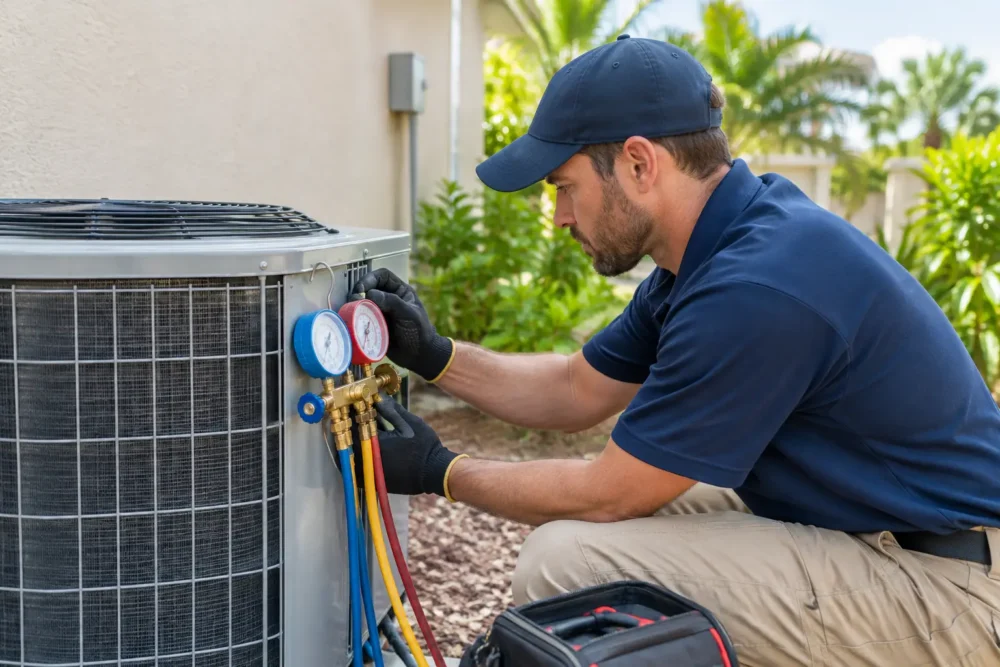
When a Florida air conditioner starts blowing warmer air, runs far longer than usual, or suddenly cannot keep up with the afternoon heat, low refrigerant may be the reason. AC refrigerant leak repair is not a quick recharge-and-go service. Refrigerant operates in a sealed system, so a low level means there is usually a leak that needs to be found and corrected before your comfort, equipment, and electric bill suffer.
For homeowners, seasonal residents, and property managers across the Treasure Coast, fast action matters. An AC system that is struggling during a humid Palm City, Stuart, or Port St. Lucie summer can put a home, rental property, office, or retail space in an uncomfortable position quickly.
What a Refrigerant Leak Does to Your AC
Refrigerant is the fluid that carries heat out of your home. Inside the indoor coil, it absorbs heat from the air moving through your system. Outside, it releases that heat so cooler air can circulate indoors. When the refrigerant charge falls because of a leak, the system loses its ability to transfer heat efficiently.
The problem rarely stays small. With too little refrigerant, your air conditioner may run longer to reach the thermostat setting. That longer runtime can increase energy use and place added strain on the compressor, one of the system’s most expensive components. If the system continues operating while severely low, a manageable repair can become a major equipment decision.
A leak does not always cause an immediate shutdown. Many homeowners first notice that the house feels muggy, certain rooms are warmer than others, or the AC seems to run all day without delivering the cool air it once did. Those early changes are worth taking seriously.
Signs You May Need AC Refrigerant Leak Repair
Warm air from the supply vents is one of the clearest warning signs, particularly when the thermostat is set properly and the outdoor unit is running. However, warm air can also point to electrical issues, airflow restrictions, a thermostat problem, or a failing component. A professional diagnosis separates a refrigerant issue from other common AC repairs.
You may also notice ice forming on the indoor evaporator coil or on the larger insulated refrigerant line outside. This can seem backward in Florida heat, but low refrigerant pressure can make the coil cold enough to freeze moisture from the air. A dirty filter, blocked airflow, or blower problem can cause icing too, which is another reason not to guess.
Other signs include a hissing or bubbling sound near the indoor or outdoor equipment, rising cooling costs, longer cooling cycles, and repeated need for refrigerant. If an AC company has added refrigerant more than once without identifying the source of the loss, ask for a complete leak assessment. A sealed system should not need routine refrigerant top-offs.
Why Adding Refrigerant Alone Is Not a Repair
Adding refrigerant may restore cooling temporarily, but it does not fix a leak. It is similar to adding air to a tire with a puncture: the immediate symptom improves, but the underlying problem remains. The refrigerant will continue escaping, performance will fall again, and the system may be exposed to further damage.
Proper AC refrigerant leak repair begins with confirming that a leak exists and locating it. Technicians may use electronic leak-detection equipment, UV dye when appropriate, pressure testing, or other approved diagnostic methods. The right approach depends on the type of system, the suspected leak location, and the condition of the equipment.
Once the source is identified, the technician can explain the practical options. Some leaks occur at accessible fittings, valves, or connections and can be repaired relatively directly. Others develop in the evaporator coil, condenser coil, or refrigerant lines. Coil repairs are not always dependable or cost-effective, especially when corrosion has weakened a larger area. In those situations, replacement of the affected part may make more sense.
Common Places Refrigerant Leaks Develop
South Florida’s heat, humidity, salt air near the coast, and long cooling season can be hard on AC equipment. Refrigerant leaks are often tied to normal wear over time, vibration, corrosion, or damaged connections. They are not always visible to the untrained eye.
Indoor evaporator coils are a common concern. Over years of service, formicary corrosion can create tiny pinholes in copper tubing. Outdoor condenser coils can also deteriorate, particularly in coastal environments where salt exposure accelerates corrosion. Refrigerant line connections, service valves, and brazed joints are additional areas a technician will inspect.
Physical damage is another possibility. Landscaping work, construction, falling debris, or accidental contact with refrigerant lines can create a leak. If cooling trouble began shortly after work around the outdoor unit or after a storm, mention that detail during your service call. It can help narrow the diagnosis.
Repair or Replace? The Answer Depends on the System
A refrigerant leak does not automatically mean you need a new air conditioner. The best choice depends on where the leak is, how extensive it is, the age and condition of the system, its repair history, and the refrigerant it uses.
For a newer, well-maintained system with an accessible leak, repair and proper recharge can be a sound investment. The technician should repair the leak, verify the system holds pressure, evacuate moisture and air from the refrigerant circuit, and charge the system to manufacturer specifications. This protects cooling performance and helps prevent recurring trouble.
For an older system, a leaking coil or a costly refrigerant issue may shift the conversation. If your AC is more than 10 years old, has needed repeated repairs, or uses an older refrigerant that is increasingly expensive and harder to obtain, putting significant money into a major component may not offer the best long-term value. A new high-efficiency system can bring more dependable comfort, lower operating costs, and a fresh warranty.
There is no one-size-fits-all answer. A trustworthy HVAC professional should give you clear findings and honest options, not pressure you toward a repair or replacement that does not fit your property.
What to Do While You Wait for Service
If you suspect a refrigerant leak, set the thermostat to OFF if the system is blowing warm air continuously or if you see ice on the equipment. Turning off cooling can help prevent the compressor from operating under damaging conditions. If ice is present, leave the fan setting on AUTO unless a technician gives you different instructions.
Do not try to add refrigerant yourself. Refrigerants must be handled by properly certified professionals, and incorrect charging can damage equipment, create safety concerns, and make diagnosis harder. Avoid scraping ice from the coil or refrigerant lines as well. Let it melt naturally, and keep the area around the outdoor unit clear of leaves, mulch, and debris.
Before the technician arrives, make a note of what you have observed: when the issue started, whether the system cools at all, any unusual sounds, the presence of ice, and recent changes in your electric bill. For a rental or seasonal property, ask occupants to share photos of the thermostat and any visible icing if it is safe to do so.
Preventing Future Refrigerant Problems
Not every leak can be prevented, but regular maintenance gives technicians a chance to catch developing concerns before they become an emergency. During a seasonal tune-up, an HVAC professional can check system pressures, inspect coils and connections, confirm proper airflow, clean components, and look for corrosion or damage around the equipment.
Changing filters on schedule also supports your system. A clogged filter restricts airflow, which can contribute to frozen coils and make cooling problems look like a refrigerant leak. For homes near the coast, keeping the outdoor unit clean and professionally maintained is especially valuable because salt and debris can speed up wear.
Treasure Coast Air Conditioning has served local families and businesses since 1990 with prompt repairs and experienced service when cooling problems cannot wait. If your AC is losing its cool, a professional diagnosis can protect your comfort and help you make the right decision before a small leak becomes a much larger problem.
When your home feels warmer, stickier, or less comfortable than it should, do not wait for the next heat wave to test an already struggling system. Prompt service gives you the best chance to protect your equipment and get dependable cooling back where it belongs.