
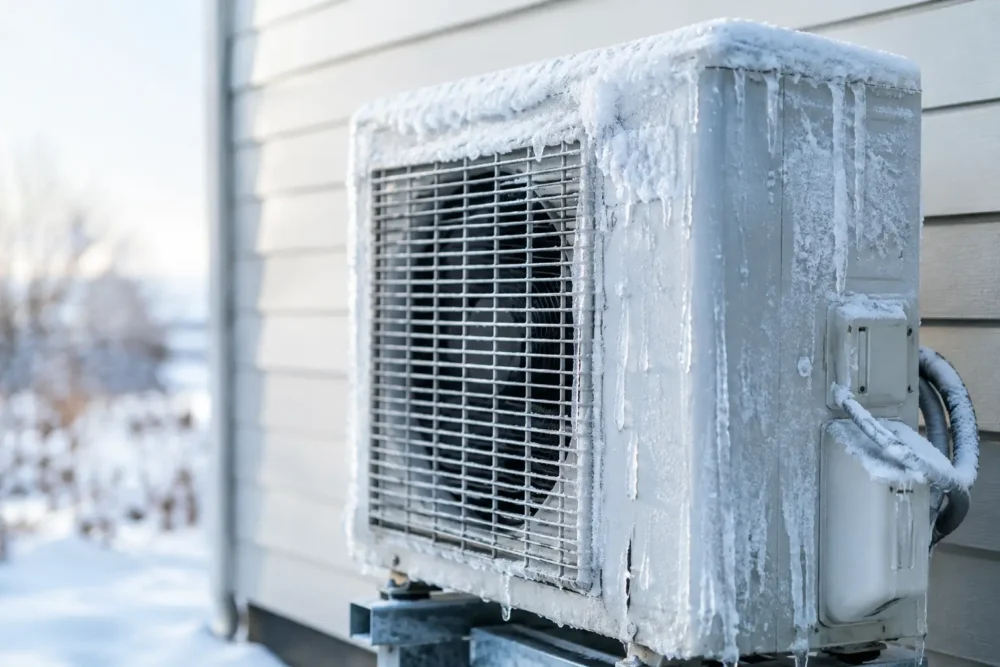
A frozen AC is more than an inconvenience in South Florida. If you see ice on the indoor unit, refrigerant lines, or outdoor equipment, your air conditioner freezing up can quickly turn into warm rooms, water damage, and a more expensive repair. Turning the thermostat lower will not solve the problem. In many cases, it makes the ice worse.
Your system needs the right balance of airflow, refrigerant, and heat transfer to keep your home cool. When that balance is off, the indoor evaporator coil can become cold enough for moisture in the air to freeze on it. The ice then blocks even more airflow, creating a cycle that can leave the system unable to cool at all.
What to Do When Your AC Is Frozen
First, turn the cooling mode off at your thermostat. If your thermostat has a fan setting, set the fan to On instead of Auto. Running the blower can help circulate warmer household air over the coil and speed up thawing.
Do not chip at the ice, pour hot water on the equipment, or keep restarting the system to see if it will recover. Ice can hide a larger issue, and forcing the AC to run while the coil is frozen can strain the compressor. That is one of the most costly parts of an air-conditioning system to replace.
Check the air filter while the system is thawing. A visibly dirty filter is a common airflow restriction, and replacing it may be part of the solution. However, do not assume a new filter fixes everything. If the filter looks clean, ice returns after the unit thaws, or the AC is blowing warm air, schedule professional service before running it again.
A complete thaw can take several hours, and heavily iced equipment may take longer. Place towels near the indoor unit if water begins draining as the ice melts. If you notice water leaking through a ceiling, near electrical components, or around an air handler in a closet, shut the system down and request service promptly.
Common Causes of an Air Conditioner Freezing Up
Restricted airflow across the indoor coil
Your indoor coil relies on a steady stream of warm return air. When too little air reaches it, the coil temperature drops below freezing. A clogged filter is often the easiest reason to correct, but it is not the only one.
Closed or blocked supply vents, a dirty evaporator coil, a failing blower motor, damaged ductwork, or a clogged return grille can all reduce airflow. In Florida homes, dust, pet hair, and high humidity can contribute to buildup faster than many homeowners expect. Seasonal properties are especially vulnerable when filters are left unchanged for months.
Keep return grilles clear of furniture and avoid closing multiple vents to force more air into one room. Closing a single vent is usually not a crisis, but routinely shutting down large sections of the home can affect system airflow and pressure.
Low refrigerant from a leak
Refrigerant does not get used up like fuel. If your AC is low, there is usually a leak that needs to be found and repaired. Low refrigerant lowers pressure inside the system, allowing the evaporator coil to become excessively cold and freeze.
You may notice weak cooling, longer run times, a hissing sound, or ice forming on the copper refrigerant line outside. Adding refrigerant without addressing the leak is only a temporary measure. A trained technician should inspect the system, identify the source of the leak when possible, make the appropriate repair, and charge the unit correctly.
A dirty indoor coil
Even with a clean filter, dust and residue can accumulate on the evaporator coil over time. That buildup acts like insulation. The coil cannot absorb heat effectively, airflow becomes restricted, and freezing becomes more likely.
Coil cleaning is not a typical do-it-yourself job. The coil is delicate, may be difficult to access, and requires proper cleaning methods to avoid damage. Professional maintenance can catch this problem before ice appears on a hot afternoon.
Blower, thermostat, or drainage problems
Mechanical and electrical problems can also lead to freezing. A blower that is slowing down, a weak capacitor, incorrect fan settings, or a control issue can prevent enough air from moving through the system. A technician may also check the condensate system, electrical components, refrigerant pressures, and temperature split to determine why the coil is getting too cold.
The cause is not always obvious from the ice alone. That is why a proper diagnosis matters. Replacing a filter may help a restricted system, but it will not repair a failing blower or refrigerant leak.
Why a Frozen AC Should Not Be Ignored
It can be tempting to wait until the ice disappears and then turn the system back on. Sometimes a mildly clogged filter was the only issue. But repeated freezing is a warning that the AC is operating outside normal conditions.
Continued operation can damage the compressor, reduce energy efficiency, and increase wear on the equipment. As ice melts, it can also overwhelm the drain pan or condensate line, putting floors, drywall, and ceilings at risk. For businesses, a frozen system can mean uncomfortable customers, unhappy employees, and disruption to daily operations.
In the Treasure Coast’s heat and humidity, indoor temperatures can climb quickly when an AC stops cooling. Young children, older adults, pets, and anyone with health concerns may be especially affected. Fast action protects both comfort and the equipment.
Can You Prevent Your AC From Freezing?
Regular maintenance is the best defense. During a professional tune-up, a technician can inspect airflow, clean key components, check refrigerant performance, test electrical parts, and confirm the condensate drain is working properly. These checks are designed to catch small problems before they become a no-cooling call.
At home, replace filters on the schedule recommended for your system and household. Homes with pets, active families, construction nearby, or frequent door opening may need more frequent changes. Use the filter size and type recommended by your HVAC professional. A filter that is too restrictive can create airflow issues of its own.
It also helps to keep outdoor equipment clear of leaves, landscaping, and stored items. The outdoor unit needs room to release heat. While a blocked outdoor unit does not cause every freeze-up, good clearance supports efficient operation and makes service easier when you need it.
For vacation homes and rental properties, do not leave maintenance to chance. Arrange routine service before the hottest months, and make sure someone can notice unusual sounds, water leaks, or poor cooling before a minor issue becomes an emergency.
When to Call for AC Repair
Call for professional help if ice returns after the system has fully thawed, the filter is clean, or your AC is not cooling normally. You should also request service for unusual noises, persistent water leaks, short cycling, weak airflow, or an unexplained increase in electric bills.
A qualified technician can determine whether the problem is airflow-related, refrigerant-related, or caused by a failing component. That distinction can save time and prevent unnecessary repairs. If the system is older and facing a major repair, the right choice may depend on its condition, efficiency, repair history, and the cost of replacement.
Since 1990, Treasure Coast Air Conditioning has helped homeowners and businesses in Palm City, Stuart, Jensen Beach, Port St. Lucie, Fort Pierce, Hobe Sound, Hutchinson Island, and Jupiter respond when comfort is at risk. Prompt same-day service and 24/7 emergency support can make a real difference when your system freezes during a Florida heat spell.
A frozen AC does not have to become a major breakdown. Turn the cooling off, let the system thaw safely, and arrange a professional inspection if the problem is anything more than an obviously dirty filter. Acting early gives your equipment its best chance to keep your home comfortable when you need it most.