
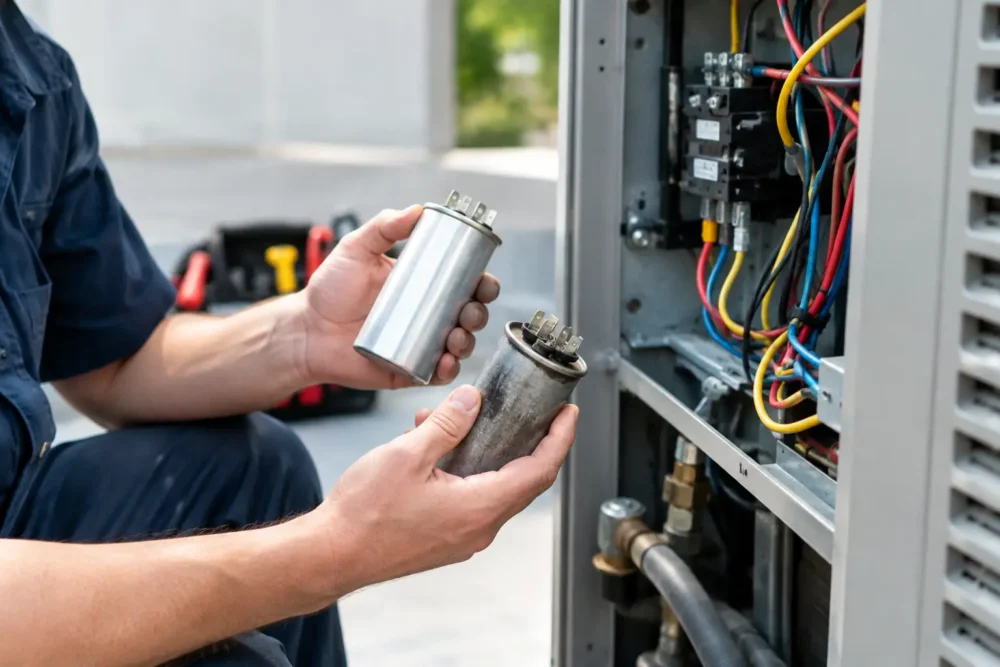
A struggling AC unit can make a Treasure Coast home uncomfortable fast, especially during a humid Florida afternoon. Air conditioner capacitor replacement cost is usually far less than the cost of replacing a major system component, but the final price depends on the part, the service call, and what caused the capacitor to fail in the first place.
A capacitor is a small electrical component with a big job. It stores and releases energy to help the AC compressor, outdoor fan motor, and sometimes the indoor blower motor start and run properly. When it weakens or fails, your system may hum, stop cooling, or shut down before it can keep your home comfortable.
What Does an AC Capacitor Replacement Usually Cost?
For many residential systems, a professionally replaced capacitor commonly falls in the range of about $150 to $450. That range generally includes the capacitor itself and a technician’s diagnostic and labor time. A straightforward replacement during regular business hours may land near the lower end, while emergency service, difficult access, or additional repairs can raise the total.
The capacitor part alone is often relatively inexpensive compared with the complete repair. What homeowners are paying for is accurate diagnosis, safe handling of high-voltage equipment, installation of a correctly matched component, and a check that the system is operating as it should afterward.
In South Florida, an AC problem is rarely convenient. If your system fails at night, over a weekend, or during a heat wave, emergency availability can affect the air conditioner capacitor replacement cost. That added expense can still be worthwhile when a hot home puts young children, older adults, pets, or a vacation property’s condition at risk.
What Changes the Final Replacement Price?
No reputable contractor should quote every capacitor replacement at one flat price without looking at the equipment. Several details determine what the repair requires.
The type and rating of the capacitor
Most central AC systems use either a single-run capacitor or a dual-run capacitor. A dual-run capacitor supports both the compressor and the condenser fan motor. The correct replacement must match the unit’s required microfarad rating and meet or exceed the appropriate voltage rating. Installing a part that is merely close enough can damage equipment or shorten its life.
Larger systems and specialty equipment may use more expensive parts. Availability can matter, too. A fully stocked service vehicle can often avoid delays, but uncommon components may need to be ordered.
Labor, diagnosis, and access
A technician does more than swap a part. They need to confirm the capacitor is actually the issue, inspect wiring and terminals, test electrical readings, and verify that the compressor and fan motor are operating correctly. A burnt wire connection, failing fan motor, or damaged contactor can produce similar symptoms.
The outdoor unit’s location also matters. Equipment tucked behind landscaping, mounted on a roof, or installed in a tight mechanical area can take longer to service safely.
The timing of the repair
Regularly scheduled repairs are generally less expensive than after-hours emergency visits. Still, waiting for normal business hours is not always the right call. If the system will not cool at all, is making alarming electrical noises, or shows signs of overheating, turn it off and arrange service promptly.
Related repairs found during inspection
Capacitors can fail from age and Florida heat, but they can also fail because another component is working too hard. If the condenser fan motor is drawing excessive power, the contactor is pitted, or power surges have affected the unit, replacing only the capacitor may not provide a lasting fix.
A clear repair recommendation should explain which components need attention now and which items can be monitored. That helps you make a practical decision rather than spending money on repeated temporary repairs.
Signs Your AC Capacitor May Be Failing
A failed capacitor does not always shut an air conditioner down immediately. In some cases, it weakens gradually and leaves the system struggling during the hottest part of the day. Common warning signs include a loud humming from the outdoor unit, warm air from the vents, intermittent cooling, a fan that will not start, or an AC system that trips a breaker.
You may also hear the unit attempt to start and then stop. This is sometimes called short cycling, although several different problems can cause it. Do not keep resetting the breaker or repeatedly adjusting the thermostat in hopes that the unit will catch up. Continuing to force a system to start can place additional stress on the compressor, which is a much more costly component.
If you notice a burning smell, smoke, sparking, or a breaker that trips repeatedly, shut off the system and call for professional help right away. Those symptoms require more than a quick guess at the problem.
Why a DIY Capacitor Replacement Is Risky
Videos may make capacitor replacement look simple, but an AC capacitor can retain a dangerous electrical charge even after the system has been turned off. There is also the risk of using the wrong part, connecting wires incorrectly, or overlooking the root cause of the failure.
A mismatched capacitor may allow the system to run poorly for a while, but it can strain the compressor or motor. An incorrect diagnosis can be just as costly. For example, a weak fan motor can look like a capacitor problem, and replacing the capacitor alone may only delay the real repair.
Professional service protects the equipment and gives you a clearer picture of your system’s condition. A trained technician can test the capacitor, inspect related electrical parts, and make sure the repaired unit is cooling safely and efficiently before leaving.
Is It Worth Replacing the Capacitor on an Older AC?
Usually, yes. A capacitor is a normal repair item, and replacing one can be a sensible way to keep an otherwise dependable system in service. Age alone does not mean every repair should lead to replacement.
The decision changes when the system is more than 10 years old and has a pattern of expensive breakdowns, declining cooling performance, refrigerant issues, or major compressor trouble. In that situation, a repair may still restore cooling today, but it is wise to ask for an honest assessment of the unit’s remaining life and replacement options.
For seasonal residents and rental-property owners, reliability deserves special attention. A system that is barely holding on can fail while the property is unoccupied, leaving indoor humidity to climb. High humidity can contribute to musty odors, moisture concerns, and unnecessary stress when you are away.
How Maintenance Can Help Prevent Capacitor Problems
Capacitors eventually wear out, particularly in the heat and long cooling seasons common across Martin and St. Lucie counties. Preventive maintenance cannot guarantee that a capacitor will never fail, but it can reveal signs of wear before a minor electrical issue becomes a no-cooling emergency.
During an AC tune-up, a technician can check capacitor readings, electrical connections, motor performance, airflow, and the overall condition of the outdoor unit. Keeping coils clean, changing filters on schedule, and correcting airflow restrictions also helps reduce strain on system components.
If your AC is running but not keeping up in Palm City, Stuart, Jensen Beach, Port St. Lucie, Fort Pierce, Hobe Sound, Hutchinson Island, or Jupiter, do not assume you need a new system. Treasure Coast Air Conditioning can identify the cause, explain the repair clearly, and help restore the comfort your household or business depends on.
A capacitor may be a small part, but a fast, properly diagnosed repair can protect your equipment, limit downtime, and make a Florida heat emergency feel manageable again.