
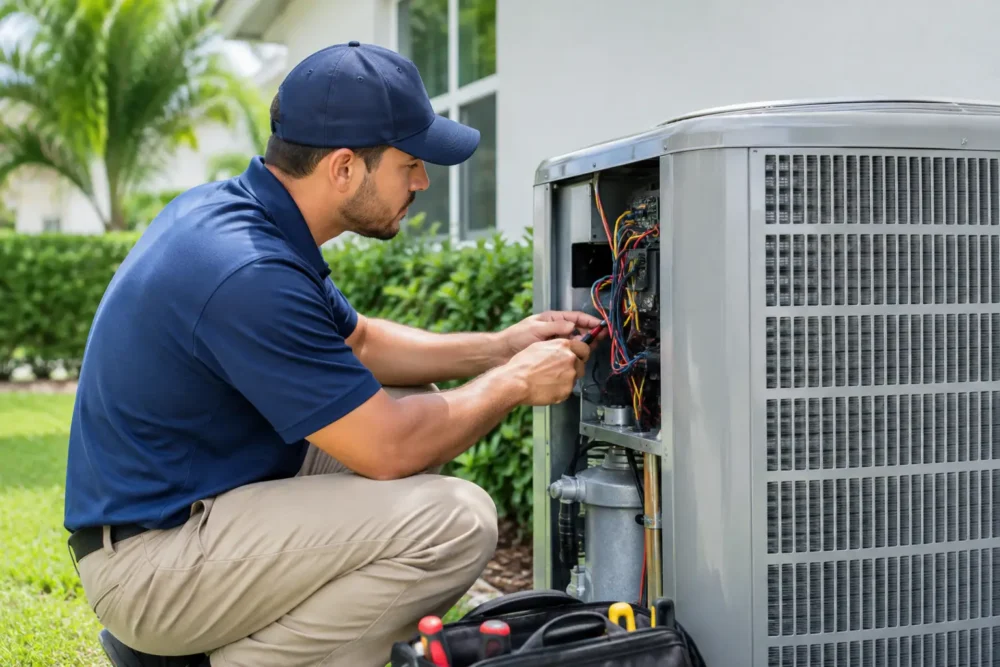
A South Florida air conditioner does not get much time off. Between long cooling seasons, high humidity, salt air near the coast, and afternoon storms, your system works harder than one in many other parts of the country. Homeowners often ask, “how often should AC be serviced?” For most homes on the Treasure Coast, the dependable answer is twice a year.
That schedule is not about selling unnecessary work. It is about catching small issues before they leave your home hot, humid, and uncomfortable on a 90-degree day. Regular professional service helps your AC cool more reliably, manage humidity, use less energy, and last longer.
How Often Should AC Be Serviced? Twice a Year Is Best
In Florida, schedule professional AC maintenance every six months. A spring visit prepares the system for the heavy summer workload, while a fall visit checks it after months of near-constant operation and gets it ready for the cooler season when heat-pump systems may switch into heating mode.
If you have a newer system, this twice-yearly routine helps protect the efficiency and reliability you paid for. If your equipment is older than 10 years, maintenance becomes even more valuable. Aging parts, electrical connections, drain lines, and coils can develop problems gradually. Finding those concerns early may prevent an inconvenient breakdown or give you time to plan a replacement instead of making a rushed decision.
Some properties need more attention than others. A beachside home, rental property, busy retail space, pet-friendly household, or home with occupants who have allergies may benefit from more frequent filter changes and occasional additional inspections. The right schedule depends on how hard the system runs and the conditions around it.
Why Florida AC Systems Need Regular Care
Air conditioning in Martin and St. Lucie counties is not simply a summer convenience. It protects sleep, indoor air quality, electronics, furnishings, and the overall comfort of your home or business. When humidity rises indoors, the space can feel sticky even when the thermostat setting looks normal.
Florida’s climate also creates specific maintenance challenges. Dust and debris can collect around outdoor units. Humidity encourages algae and buildup in condensate drain lines. Dirty indoor coils can restrict airflow, while a clogged filter makes the equipment work harder to move air through the home. Near the water, salt in the air can contribute to corrosion on outdoor components.
A maintained system is better equipped to handle those conditions. It is also less likely to surprise you when the weather is at its hottest and repair availability is in high demand.
What a Professional AC Tune-Up Should Include
A proper maintenance visit is more than a quick glance at the thermostat. An experienced technician checks the parts that affect cooling performance, safe operation, and system longevity.
During service, the technician should inspect electrical components and connections, test system operation, check refrigerant performance, examine the indoor and outdoor coils, clear the condensate drain, and assess airflow. They may also inspect the blower, thermostat, safety controls, insulation on refrigerant lines, and the overall condition of the outdoor unit.
The goal is to identify wear before it becomes failure. A weak capacitor, worn contactor, blocked drain line, loose wire, or airflow restriction can become a much larger problem if it goes unnoticed during peak cooling season.
Maintenance also gives you a clearer picture of where your system stands. If repairs are starting to add up on an older unit, your technician can explain the practical options without pressure. That information helps homeowners and property managers budget wisely rather than wait for an emergency.
Between Visits, Change the Filter on Schedule
Professional service twice a year does not replace the basic tasks that keep air moving every day. The most important one is changing the air filter.
Many homes need a new filter every 30 to 90 days. A one- or two-person household with no pets may be closer to the longer end of that range, while homes with pets, children, allergies, construction dust, or frequent AC use may need a change every month. Check the filter regularly rather than relying only on the calendar. If it looks gray, dusty, or visibly loaded with debris, replace it.
A dirty filter can reduce airflow, increase energy use, make rooms cool unevenly, and contribute to frozen evaporator coils. It can also make your indoor air feel less fresh. Using the correct filter size and rating matters, too. An overly restrictive filter is not always the best choice for every system, especially if it limits airflow.
Keep the outdoor unit clear as well. Trim back shrubs, remove leaves, and avoid stacking items against the equipment. The condenser needs open space to release heat efficiently. Do not spray the unit with harsh chemicals or try to take it apart yourself. If the coils appear dirty or damaged, let a trained HVAC professional handle the inspection and cleaning.
Signs You Should Schedule Service Sooner
Do not wait for your next maintenance appointment if your AC starts acting differently. Small changes often provide the earliest warning that something needs attention.
Call for service if you notice any of the following:
- Warm air or weak airflow from the vents
- Rooms that cool unevenly or never reach the thermostat setting
- Water around the indoor unit or a drain line that appears clogged
- New rattling, buzzing, grinding, or clicking sounds
- Musty odors, burning smells, or a sudden increase in humidity
- A sharp rise in your electric bill without a change in usage
- Frequent cycling, thermostat problems, or a system that will not turn on
Some concerns, especially water leaks and electrical smells, should be addressed promptly. Turning the system off may prevent further damage while you wait for help. A frozen unit also needs attention – continuing to run it can strain the equipment and may lead to more extensive repairs.
Maintenance Can Help You Avoid Emergency Repairs
No maintenance plan can guarantee that a part will never fail. Components can wear out unexpectedly, storms can cause electrical issues, and older equipment can reach the end of its useful life. Still, routine service greatly improves the odds that developing issues are found before they interrupt your day.
That matters for seasonal residents and rental-property owners, too. An AC failure in an unoccupied Florida home can allow humidity to build quickly, creating risks for furnishings, finishes, and indoor air quality. Scheduled maintenance provides a useful check on the equipment before a vacancy, before guests arrive, or before the hottest months begin.
For commercial properties, preventive care supports more than comfort. Reliable cooling can affect employee productivity, customer experience, inventory, computer equipment, and daily operations. A restaurant, office, retail store, or professional building may need a maintenance plan built around its operating hours and equipment demands.
When Maintenance May Point to Replacement
Regular service is designed to extend the useful life of your AC, not keep an inefficient system running forever. If your unit is more than 10 years old, needs frequent repairs, cools inconsistently, or struggles to control humidity, it may be time to discuss replacement options.
A new system can offer better efficiency, quieter operation, and more dependable comfort, but replacement is a financial decision that deserves careful guidance. The best choice depends on the condition of the existing equipment, repair costs, home size, ductwork, insulation, and your plans for the property.
Treasure Coast Air Conditioning has served local families and businesses since 1990, helping customers make practical maintenance, repair, and replacement decisions based on the condition of their systems and their comfort needs.
Put Your Next AC Service on the Calendar
The best time to schedule maintenance is before your system gives you a reason to worry. Book a spring tune-up before summer temperatures settle in, then schedule a fall visit after the busiest cooling months. Keep filters fresh between appointments and respond quickly when you notice changes in performance.
A comfortable home should not depend on luck. A little planned attention now can help your AC deliver the cool, dry indoor comfort your family, tenants, customers, or employees count on when Florida heat is at its worst.