
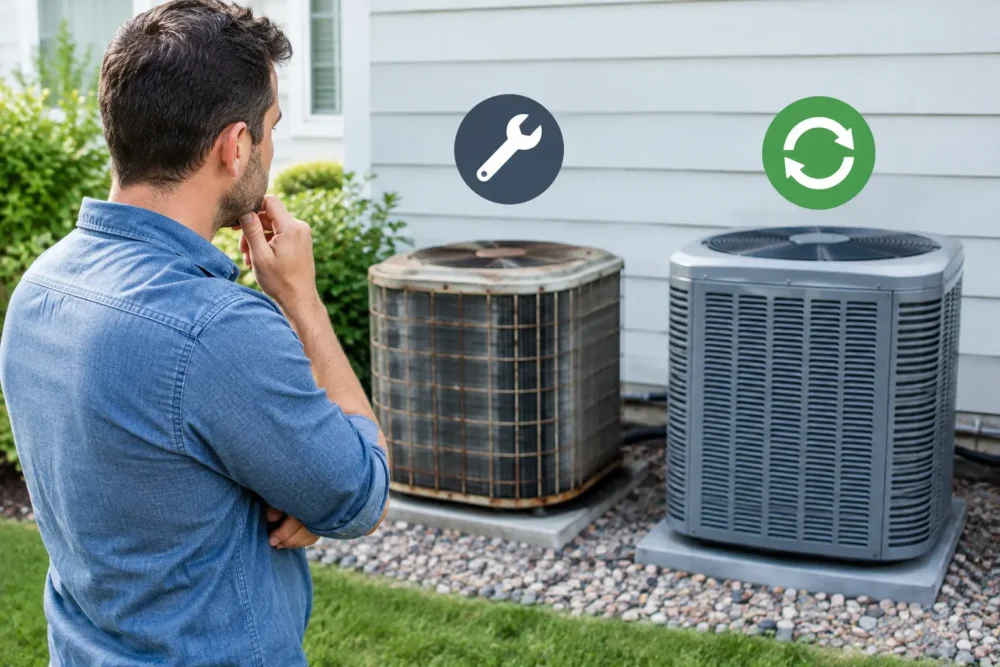
A South Florida AC problem rarely arrives at a convenient time. It often starts with warm air in the afternoon, rising humidity overnight, or a system that cannot keep up when guests, tenants, or employees need relief. The repair versus replace air conditioner decision can feel urgent, but it does not have to be a guess. A professional evaluation can show whether a targeted repair will restore dependable comfort or whether aging equipment is costing more than it is worth.
For homeowners and property managers, the right answer depends on more than whether the system is running today. Its age, repair history, efficiency, condition, and the size of the repair all matter. In Florida’s long cooling season, choosing carefully can protect your budget and prevent another stressful breakdown a few weeks later.
When Air Conditioner Repair Is the Smart Choice
A repair is often the right move when the issue is isolated and the rest of the system is in good condition. A failed capacitor, worn contactor, clogged condensate drain, thermostat issue, or minor electrical problem can stop an AC system from working properly, yet these repairs may not mean the equipment has reached the end of its service life.
If your air conditioner is under 10 years old, has received regular maintenance, and has not needed frequent major repairs, fixing it is usually sensible. The same may be true for a newer system with a single failed part, especially if the repair is covered by a manufacturer warranty.
Look at how the system has performed before the problem. Has it cooled evenly? Has it kept humidity under control? Have your utility bills been stable? One repair after years of reliable operation is very different from a unit that has been struggling through every summer.
A qualified technician should identify the cause before recommending a path forward. For example, weak cooling could be caused by a refrigerant leak, dirty coils, ductwork trouble, a blower issue, or a failing compressor. Those situations have very different costs and long-term implications. A clear diagnosis gives you the information needed to make a confident decision.
Repair Versus Replace Air Conditioner: The Key Factors
There is no one repair price or system age that automatically means replacement. Still, several practical factors can make replacement the better investment.
Age and expected service life
Most central air conditioners last roughly 10 to 15 years, though coastal conditions, heavy use, installation quality, and maintenance habits can shorten or extend that range. On the Treasure Coast, a system works hard for much of the year. Once it reaches the 10-year mark, it is wise to compare the repair cost against the value and remaining reliability of the equipment.
An older AC can sometimes be repaired successfully. The question is whether that repair is likely to buy meaningful, dependable time or simply postpone the next failure. If the system has become unpredictable, replacement can offer greater peace of mind.
The cost and frequency of repairs
Consider the full repair pattern, not just the current invoice. A modest repair may be worthwhile on an otherwise dependable unit. But if you have called for service several times in the past year or two, those costs add up quickly.
A useful guideline is to compare a major repair with the cost of a new system. When a repair approaches a substantial portion of replacement cost, especially on equipment near or beyond its expected lifespan, putting that money toward new equipment may make more financial sense. A professional can provide a straightforward estimate for both options so you can see the difference clearly.
Major component failure
Not all parts carry the same weight. Replacing a capacitor is different from replacing a compressor, evaporator coil, or condenser coil. Major components can be expensive, and their failure on an older system often signals broader wear.
A refrigerant leak deserves special attention. Simply adding refrigerant without finding and addressing the source is not a lasting solution. Older systems may also use refrigerant that is increasingly costly or difficult to obtain. If the leak is significant and the equipment is aging, replacement may be the more dependable path.
Comfort and humidity problems
An air conditioner should do more than lower the temperature. It should cool rooms consistently, manage indoor humidity, and circulate clean air without excessive noise. Hot bedrooms, muggy rooms, weak airflow, and frequent cycling are signs worth investigating.
Some comfort issues can be repaired through duct sealing, thermostat adjustments, maintenance, or component replacement. Others point to an improperly sized or aging system. Replacing a system also creates an opportunity to address the whole comfort setup, including ductwork, filtration, and indoor air quality.
Rising energy bills
Utility costs can rise for many reasons, including hotter weather, rate changes, dirty filters, and poor insulation. But a steady increase in cooling costs can also indicate an AC system that is losing efficiency. Older equipment often uses more electricity to deliver less comfort.
A modern, properly sized high-efficiency system may reduce energy use and provide better humidity control. Savings vary by household and usage, so they should not be the only reason to replace. They do become more meaningful when paired with fewer repair risks and improved comfort.
What a Professional Evaluation Should Include
Before deciding, ask for a complete system assessment rather than a quick assumption based on age. The technician should inspect the indoor and outdoor equipment, electrical connections, refrigerant levels, airflow, drain system, coils, thermostat operation, and visible duct concerns. This helps separate a repairable problem from a system-wide issue.
You should also receive plain-language answers to practical questions: What failed? Why did it fail? Is the repair expected to last? Are other parts showing wear? What are the likely costs if another major component fails? A trustworthy recommendation recognizes that every property and budget is different.
For a rental property or business, downtime matters too. A repair that restores cooling immediately may be the best short-term decision, even if replacement is planned for a quieter time. For a family home with a system that repeatedly fails during heat waves, the reliability of new equipment may be worth the upfront investment.
Replacement Offers a Chance to Correct Bigger Problems
Replacing an AC system is not only about installing a new outdoor unit. Proper replacement starts with evaluating the home or building’s cooling needs. Equipment that is too large can cool quickly but cycle too often, leaving humidity behind. Equipment that is too small may run constantly and still struggle on the hottest days.
The installation should account for square footage, insulation, windows, occupancy, duct condition, and local climate. Correct sizing and careful installation affect efficiency, comfort, and equipment life as much as the brand name on the cabinet.
New equipment may also work with modern thermostat controls and improved filtration or air-quality options. For seasonal residents, programmable settings can help protect the property between visits. For households dealing with allergies, dust, or excess humidity, a replacement project can be a good time to improve the air you breathe indoors.
Do Not Wait for a Complete Breakdown
Waiting until the system quits entirely can limit your choices. During the hottest periods, replacement decisions become more stressful, and a failing AC can quickly make a home uncomfortable or unsafe for children, older adults, and pets. Planning ahead gives you time to review equipment options, financing, installation timing, and the condition of your ductwork.
That said, a breakdown does not automatically require replacement. Prompt same-day service can often restore cooling while you weigh the best long-term option. Treasure Coast Air Conditioning has served local families and businesses since 1990 with repair evaluations, replacement guidance, and 24/7 emergency response when comfort cannot wait.
If your system is making new noises, leaking, running constantly, or failing to cool as it should, schedule an evaluation before the problem grows. The best decision is the one that gives your home or property reliable comfort, honest value, and fewer surprises when Florida heat returns tomorrow.