
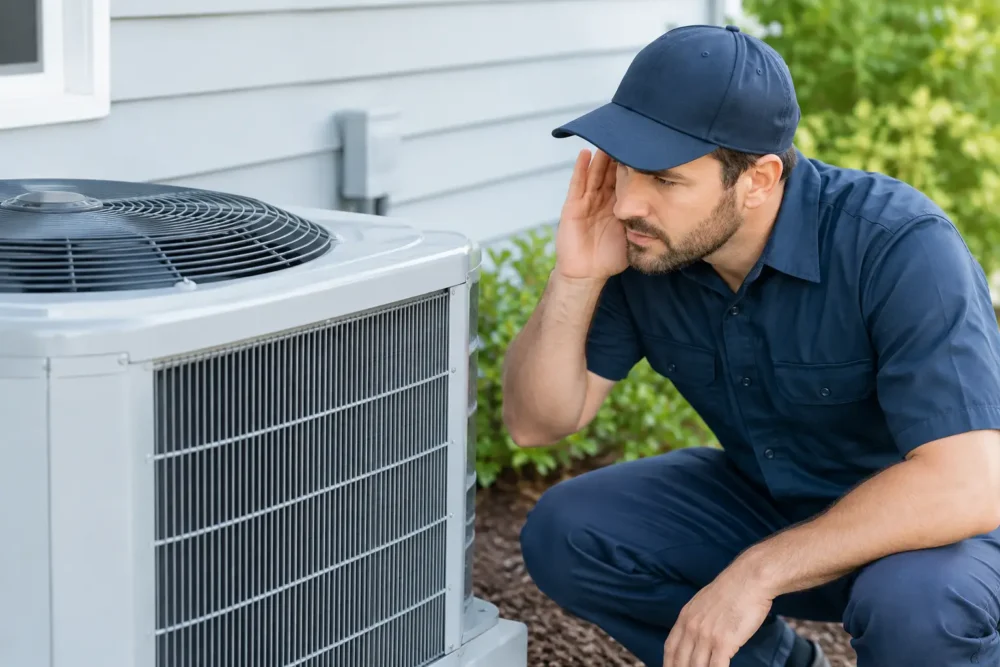
A Florida air conditioner rarely gets the chance to stay quiet for long. It runs hard through humid afternoons, storms, and warm nights, so a new sound can feel alarming fast. While some AC noise causes are minor, others point to a loose electrical connection, failing motor, refrigerant issue, or part that could damage the system if it keeps running.
The sound matters, but so does when it happens. A brief click when the system starts is often normal. A loud bang, grinding sound, or repeated buzzing is not something to ignore. Paying attention early can help protect your comfort, limit repair costs, and prevent a small issue from turning into an after-hours breakdown.
AC Noise Causes You Should Not Ignore
Every sound has a different likely source. The indoor unit, outdoor condenser, ductwork, thermostat, and electrical components can all make noise. A trained technician can identify the actual cause, but these common patterns can help you decide how quickly to act.
Banging or clanking
A bang or metallic clank often means a part is loose inside the system. In the outdoor unit, it may be a fan blade hitting its housing, a loose mounting component, or a damaged compressor part. Inside, the blower assembly may have a loose wheel or motor mount.
Turn the system off if the sound is loud, ongoing, or getting worse. Continuing to run an AC with a loose mechanical component can bend parts, damage the motor, or create a more expensive repair. Do not remove panels or try to straighten fan blades yourself. The unit contains moving parts and electrical components that require safe handling.
Buzzing or humming
A low hum can be normal while the system operates, especially from the outdoor condenser. A noticeable buzz that suddenly appears, grows louder, or continues when the unit should be off deserves attention.
Buzzing may come from loose wiring, a failing capacitor, a contactor problem, or debris interfering with the outdoor fan. It can also occur when a compressor is struggling to start. Electrical problems are not DIY repairs. If you smell anything burning, see smoke, notice a tripped breaker, or hear an unusually loud electrical buzz, shut the AC off at the thermostat and call for service right away.
Squealing or screeching
High-pitched squealing often points to a motor or blower problem. Depending on the system, it may involve worn bearings, a failing belt, or a blower wheel that is out of balance. Older equipment is more likely to have belt-related issues, while newer systems may develop motor bearing or electrical concerns.
A short squeak at startup may not be an emergency, but persistent squealing is a reason to schedule a repair promptly. The longer a motor works under strain, the more likely it is to fail during the hottest part of the day.
Grinding or metal-on-metal sounds
Grinding is one of the more serious AC noise causes. It can signal worn motor bearings, compressor trouble, or another mechanical failure involving moving parts. This sound is not normal and should not be treated as a wait-and-see issue.
Shut the system down and arrange professional service. Running equipment that is grinding can cause further damage and may leave your home without cooling when you need it most.
Rattling or vibrating
A rattle may be as simple as loose cabinet screws, a panel that needs securing, or leaves and twigs caught around the outdoor condenser. Outdoor units can also vibrate against an uneven pad or nearby structure. Indoors, a rattling sound may come from loose ductwork, vents, or a return grille.
Homeowners can safely check for obvious debris around the outside unit after turning off power, keeping hands away from the fan and internal components. Make sure furniture, landscaping, and stored items are not pressed against the equipment. If the rattle remains, a technician can inspect the cabinet, fan, compressor mounts, and ducts to find the source.
Clicking that repeats or will not stop
One click when the thermostat calls for cooling and another when the system shuts down can be normal. Repeated clicking, rapid clicking, or clicking without the AC starting can indicate a failing relay, thermostat issue, capacitor problem, or control board concern.
Because the system may be trying and failing to start, repeated clicking should be checked soon. Frequent failed start attempts can place added stress on electrical components and the compressor.
Hissing or bubbling
A hissing sound may come from air escaping through ductwork, particularly near a loose connection or damaged duct section. It can also indicate a refrigerant leak. Bubbling or gurgling may occur when refrigerant is low or moving through the system improperly.
Refrigerant is not something to top off without finding the leak. A properly operating AC is a closed system, so low refrigerant usually means there is a problem that needs repair. If cooling performance drops while hissing or bubbling becomes noticeable, call for an HVAC inspection.
When an AC Sound Is an Emergency
Not every noise requires immediate emergency service, but certain warning signs should move to the top of your list. Shut the system off and seek prompt help if a new sound comes with a burning odor, smoke, warm air from the vents, a repeatedly tripped breaker, ice on refrigerant lines, water leaking near electrical components, or a complete failure to start.
In South Florida, a cooling problem can become more than an inconvenience quickly, especially for young children, older adults, pets, and people with health concerns. Vacation homes and rental properties also need fast attention because humidity can build up inside even when the property is unoccupied.
Treasure Coast Air Conditioning provides prompt same-day repairs and 24/7 emergency response when a sound signals that comfort may be at risk. A professional diagnosis is the safest way to separate a simple loose panel from a repair that needs immediate action.
What You Can Check Before Calling
A few safe observations can help make the service visit more efficient. Note whether the noise comes from the indoor air handler, an air vent, or the outdoor unit. Listen for when it occurs: startup, during operation, shutdown, or all the time. Also check whether the home is cooling normally and whether airflow feels weaker than usual.
Replace a visibly dirty air filter if it is the correct size and installed in the right direction. A clogged filter can restrict airflow and make the blower work harder, sometimes contributing to unusual noise. Check that supply vents are open and not blocked by rugs, furniture, or curtains.
Avoid resetting breakers repeatedly or opening the unit to investigate. A breaker that trips again is warning you about an underlying electrical or mechanical problem. Turning the system back on over and over can make the damage worse.
Preventing Future AC Noises
Regular maintenance is the best defense against unexpected sounds and breakdowns. During a professional tune-up, a technician can tighten electrical connections, inspect capacitors and motors, clean the system, check the blower and outdoor fan, evaluate refrigerant operation, and catch worn parts before they fail.
Maintenance does not guarantee that an older system will never need repair. Age, salt air near the coast, long cooling seasons, and heavy humidity all affect equipment differently. Still, keeping the system clean and serviced gives it a better chance to operate quietly and efficiently.
If your AC starts making a sound you have not heard before, trust that change. A quick call while the unit is still cooling may be the difference between a straightforward repair and a hot, uncomfortable night without air conditioning.