
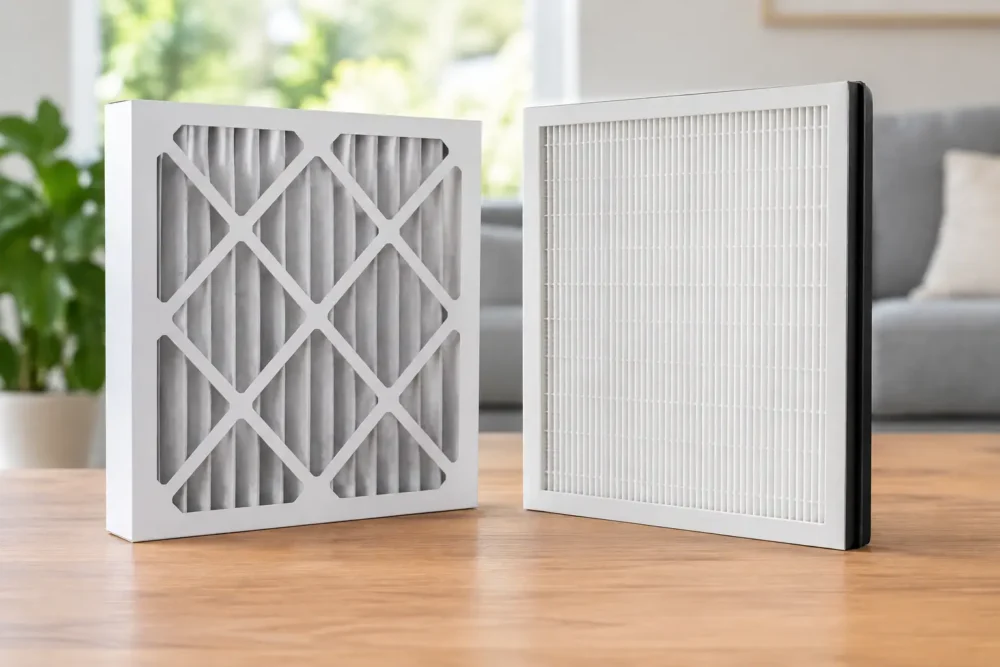
A filter that captures more particles is not automatically the best filter for your air conditioner. When homeowners compare MERV versus HEPA, the real question is whether their existing HVAC system can move enough air through that filter without sacrificing cooling, efficiency, or equipment life. In South Florida, where an AC system works hard through long stretches of heat and humidity, that distinction matters.
HEPA filters are highly effective in the right equipment. But most home central-air systems were not designed to use them. For many homes, a properly sized MERV filter, changed on schedule, delivers the more practical balance of cleaner indoor air and dependable system performance.
MERV Versus HEPA: The Basic Difference
MERV and HEPA are not interchangeable ratings. They measure filtration performance differently and are commonly used in different kinds of equipment.
MERV stands for Minimum Efficiency Reporting Value. It is a scale from 1 to 16 that indicates how well an air filter captures particles of varying sizes. A higher MERV number generally means the filter catches smaller particles, including pollen, dust, pet dander, mold spores, and some smoke-related particles.
HEPA stands for High-Efficiency Particulate Air. A true HEPA filter must capture at least 99.97% of particles measuring 0.3 microns under test conditions. That is a much higher filtration standard than a typical residential HVAC filter.
The trade-off is airflow. Dense filtration media creates more resistance as air passes through it. HEPA filters need systems designed with the right fan capacity, filter surface area, cabinet space, and sealed housing. A standard residential return grille with a one-inch filter slot usually does not provide those conditions.
What a MERV Filter Can Do in a Home
Most residential HVAC systems are built to work with MERV-rated filters. The right rating depends on the system, the filter size, how often the home is occupied, and the indoor-air concerns of the people living there.
A MERV 8 filter is a common starting point. It catches many everyday particles, such as lint, dust, pollen, and larger pet dander, while allowing relatively easy airflow. It is often a sensible choice for homes without major allergy or respiratory concerns.
MERV 11 offers more filtration for smaller airborne particles. It can be a good middle ground for homes with pets, frequent dust, seasonal allergies, or people who want improved air filtration without making a dramatic change to the system.
MERV 13 filters capture finer particles and are often considered when stronger indoor-air filtration is a priority. They can help reduce smaller particles associated with smoke, bacteria, and fine dust. However, MERV 13 is not automatically right for every system, especially if the filter is thin, undersized, or left in place too long.
Filter depth changes the equation. A four-inch or five-inch media filter usually has much more surface area than a one-inch filter. That larger surface area can provide better filtration with less airflow restriction. In other words, a deeper MERV 13 filter in a properly designed cabinet may be easier on an HVAC system than a restrictive one-inch filter with the same rating.
Why a True HEPA Filter Can Be a Problem for Central AC
A HEPA filter is excellent at trapping tiny airborne particles, but it can place a heavy load on a system not designed for it. When airflow drops, the effects are more serious than a little less air coming from the vents.
Restricted airflow can make the evaporator coil too cold, which may lead to freezing. It can increase operating time, reduce cooling capacity, raise energy bills, and contribute to unnecessary wear on the blower motor and compressor. In a humid Florida home, poor airflow may also make humidity control less effective, leaving rooms feeling cool but clammy.
There is another concern: air will follow the path of least resistance. If someone forces a HEPA filter into a return opening that does not seal properly, air may be pulled around the filter instead of through it. That leaves the system with both poor airflow and less effective filtration.
Some central systems can support a HEPA-style solution, but it usually requires a professionally designed whole-home air-cleaning setup. These systems may use a dedicated bypass, a larger filter cabinet, upgraded return ducts, or equipment engineered for high-efficiency filtration. That is very different from purchasing a dense filter at a store and placing it behind the return grille.
HEPA Is Often Better in a Dedicated Air Purifier
For many households, the most effective approach is not choosing only one side of MERV versus HEPA. It is using each where it works best.
Your central HVAC filter protects the equipment and improves air quality throughout the home. A compatible MERV filter can handle that job without creating damaging airflow restrictions. A portable, room-sized HEPA air purifier can then target the rooms where clean air matters most, such as a bedroom, nursery, home office, or living area.
This approach can be especially helpful for family members with allergies, asthma, sensitivity to smoke, or concerns about fine airborne particles. The portable purifier recirculates and cleans air in a specific room, while the HVAC system continues to cool and dehumidify the home as intended.
A HEPA purifier does not replace HVAC maintenance, though. It cannot correct dirty ducts, a clogged drain line, poor ventilation, humidity problems, or an aging AC system that is struggling to keep up.
How to Choose the Right Filter Rating
Start with your HVAC manufacturer’s recommendation. The owner’s manual, air handler label, or an experienced technician can help identify the highest filter rating your system can safely accommodate. Do not assume that a higher number is always an upgrade.
Next, look at the filter’s actual dimensions. Many filters are sold by nominal size, but the true dimensions can be slightly smaller. A filter that does not fit tightly can allow unfiltered air to bypass it. It should slide into place without bending, gaps, or force.
Then consider your household needs. A part-time vacation home with no pets may not need the same filtration strategy as a busy household with two dogs, frequent guests, and family members with allergies. A commercial office, rental property, or retail space also needs a plan based on occupancy, operating hours, and the capabilities of the equipment.
Finally, commit to replacement intervals. In a hot, humid area where systems run frequently, filters can load up faster than expected. A one-inch filter may need attention every 30 to 60 days, while deeper media filters can often last longer. The correct interval depends on filter type, household activity, pets, construction dust, and system runtime. Check the filter regularly instead of relying only on the date printed on the package.
Common Filter Mistakes That Affect Comfort
One common mistake is installing the most restrictive filter available because it sounds healthier. Another is leaving a high-efficiency filter in place for months after it has become loaded with dust. Both can cause airflow problems that look like an AC issue.
It is also easy to overlook the airflow arrow printed on the frame. That arrow should point toward the air handler or furnace, in the direction the air travels. Installing it backward can reduce performance and may cause the filter to buckle.
Homeowners sometimes expect a better filter to solve odor or humidity issues. Particle filters do not remove every indoor-air concern. Odors, chemical vapors, excess moisture, microbial growth, and stale air may require a different solution, such as humidity control, source removal, duct service, ventilation improvements, or specialized air-cleaning equipment.
When to Ask an HVAC Professional
If your AC begins running longer, certain rooms become warmer, airflow feels weak, the indoor coil freezes, or humidity rises after a filter change, do not ignore it. The filter may be too restrictive, but the system could also have a blower, ductwork, refrigerant, or maintenance issue.
A professional can measure static pressure and airflow rather than guessing from the filter label. That is the safest way to determine whether your equipment can handle a higher MERV rating or whether a larger media cabinet or separate air purifier would be the better investment.
For homeowners and property managers across the Treasure Coast, Treasure Coast Air Conditioning can help match indoor-air solutions to the needs of the building and the limits of the equipment. Cleaner air should never come at the cost of a struggling AC system. Choose the filter your system can support, keep it changed, and ask for help when comfort or airflow changes.