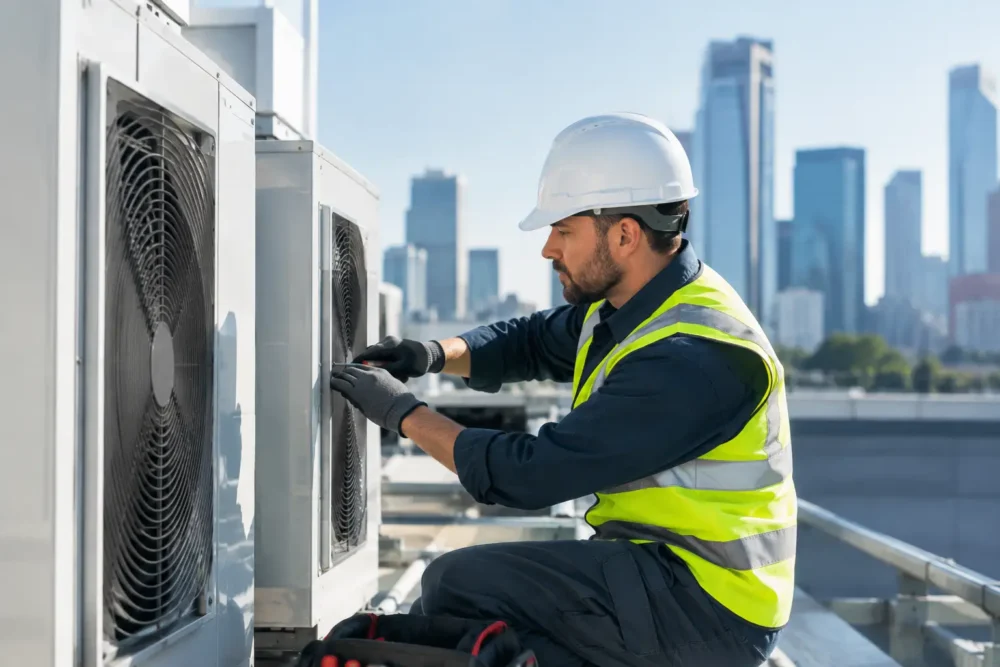
A busy office with hot conference rooms, a retail store with sticky air near the entrance, or a rental property facing repeat AC complaints all point to the same costly problem: the cooling system is working harder than it should. Commercial HVAC efficiency upgrades address the equipment, controls, airflow, and maintenance issues that drive up utility bills while making tenants, customers, and employees uncomfortable.
In South Florida, an air-conditioning system is not a seasonal convenience. It is essential operating equipment. The right improvement plan can reduce waste, improve humidity control, and help prevent the surprise breakdowns that disrupt business. The key is choosing upgrades based on how the building actually performs, not simply replacing parts because they are old.
Start With the Problems Costing Your Building Money
Efficiency is more than the rating printed on an air conditioner. A high-efficiency unit can still waste energy if it is oversized, poorly maintained, connected to leaking ducts, or controlled by an outdated thermostat. Before investing in upgrades, a qualified commercial HVAC technician should evaluate the whole system.
That evaluation should consider cooling capacity, equipment age, refrigerant condition, airflow, ductwork, electrical components, thermostat schedules, filter condition, and indoor humidity. It should also account for changes in the building. A space that was once a small office may now have more employees, computers, refrigeration equipment, or hours of operation. A storefront may have changed its layout or added display lighting. Those details affect the load on the AC system.
Utility bills can offer useful clues. If electric costs have climbed even though business hours and occupancy are stable, the HVAC system deserves attention. So do frequent repair calls, rooms that never reach the set temperature, short cycling, excess moisture, and complaints about uneven comfort. Waiting for a complete failure usually leaves a property manager with fewer choices and a tighter timeline.
Commercial HVAC Efficiency Upgrades With Real Impact
The best upgrade depends on the condition of the existing equipment and the needs of the property. In some buildings, a few targeted improvements can extend useful equipment life. In others, replacing an aging system will be the more dependable financial decision.
Replace Equipment That Is Past Its Productive Years
Commercial air conditioners and heat pumps lose efficiency as components wear and repairs accumulate. If a system is more than 10 years old, requires frequent service, uses an obsolete refrigerant, or cannot keep up during the hottest part of the day, replacement may be worth evaluating.
Newer high-efficiency equipment can use less energy while providing steadier cooling and better moisture removal. But bigger is not automatically better. An oversized unit may cool the air quickly, then shut off before it has removed enough humidity. That can leave a building feeling clammy and may increase wear from repeated starts and stops.
Proper sizing matters. A contractor should consider square footage, ceiling height, insulation, windows, sun exposure, occupancy, equipment heat, and ventilation needs before recommending a replacement. For businesses with varied occupancy or operating hours, equipment with variable-speed capabilities may offer better control than a basic single-stage system. It costs more upfront, so the expected operating savings and comfort needs should justify the investment.
Upgrade Controls and Thermostats
Many commercial properties waste energy when cooling runs at full output in empty areas or continues after closing. Modern programmable and smart thermostats can set schedules around business hours, reduce unnecessary runtime, and allow staff or managers to monitor settings more easily.
The goal is not to make the building uncomfortably warm to save a few dollars. It is to avoid cooling vacant spaces to the same level as occupied ones. A well-planned schedule can maintain a safe, stable temperature before employees or customers arrive, then ease back after the building is empty.
For properties with multiple zones, controls can be especially valuable. A sunny front office, an interior workspace, and a server room do not always have the same cooling needs. Zoning and properly located sensors can reduce the familiar problem of one area freezing while another stays warm.
Restore Airflow Through Ducts and Filtration
Airflow problems force HVAC equipment to work harder and can make even newer systems perform poorly. Dirty filters, blocked returns, damaged duct insulation, loose connections, and duct leaks can all contribute to higher operating costs.
In a commercial setting, filter changes need to match the environment. A lightly occupied professional office may have different needs than a salon, medical office, restaurant-adjacent space, or retail location with doors opening frequently. Filters that are left in too long restrict airflow. Filters that are too restrictive for the system can create their own problems. The correct choice balances air quality goals with the equipment’s design.
Duct inspection is equally important, particularly in buildings with ducts running through hot attics or unconditioned areas. Escaping conditioned air means the system must run longer to achieve the same result. Repairing leaks, securing connections, and improving insulation can support comfort without immediately replacing the entire HVAC system.
Address Humidity, Not Just Temperature
Florida businesses often focus on the thermostat reading while overlooking moisture. Yet high indoor humidity can make a 74-degree building feel uncomfortable, encourage musty odors, and affect products, furnishings, and electronics.
Properly operating air conditioning removes moisture as it cools, but it cannot do that job well if the system is oversized, poorly maintained, or not running long enough. In some properties, dedicated dehumidification or adjustments to controls and airflow may be needed. The right solution depends on the building use, occupancy, and moisture sources. A restaurant, fitness facility, and office building may require very different approaches.
Maintenance Protects the Return on Every Upgrade
Efficiency upgrades are not a one-time event. A new unit, smart thermostat, or repaired duct system will not deliver its best performance without ongoing care. Commercial preventive maintenance helps catch small issues before they become expensive interruptions.
During service, technicians can inspect electrical connections, clean coils, check refrigerant performance, clear drain lines, test controls, evaluate motors, and confirm that the system is moving air properly. These tasks matter in the Treasure Coast climate, where long cooling seasons put heavy demand on commercial equipment.
Maintenance also creates a record of system condition. That helps business owners plan for replacement instead of being forced into an emergency decision during a heat wave. For a multi-tenant property or business with critical cooling needs, that planning can protect more than the utility budget. It can prevent lost work time, customer discomfort, inventory concerns, and tenant complaints.
How to Prioritize Your Upgrade Budget
Not every property needs a full system replacement immediately. If funds are limited, start with repairs and improvements that correct obvious waste or reliability risks. A system with dirty coils, failing capacitors, clogged drains, poor airflow, and inaccurate controls will not benefit much from a new thermostat alone.
For a relatively sound system, maintenance, control upgrades, duct repairs, and airflow corrections may provide a practical first step. For equipment nearing the end of its service life, it often makes more sense to compare repair costs, energy use, expected downtime, and replacement options together. The lowest initial price is not always the lowest long-term cost.
Ask for recommendations that explain what problem each upgrade solves. A clear proposal should identify whether the goal is lower energy consumption, better humidity control, fewer service calls, improved zoning, or equipment replacement. It should also explain any trade-offs, including upfront cost, installation timing, and possible disruption to daily operations.
Choose a Contractor Who Understands Commercial Comfort
Commercial HVAC work requires careful planning because businesses cannot simply stop operating whenever the AC needs attention. Scheduling, access to equipment, tenant communication, and fast response all affect the outcome. A contractor should be prepared to assess the system, explain the options in plain language, and perform work with minimal interruption whenever possible.
Treasure Coast Air Conditioning has served local property owners since 1990 with experienced technicians, responsive service, and practical recommendations for keeping systems dependable. Whether a business in Stuart, Port St. Lucie, or the surrounding area is dealing with rising cooling costs or an aging unit, the first step is a professional evaluation of what the system needs now and what it will need next.
A more efficient commercial HVAC system should make the building easier to operate, not more complicated. Addressing the right issues before the next major heat stretch can protect comfort, control costs, and give your business a better plan than waiting for the AC to quit.