
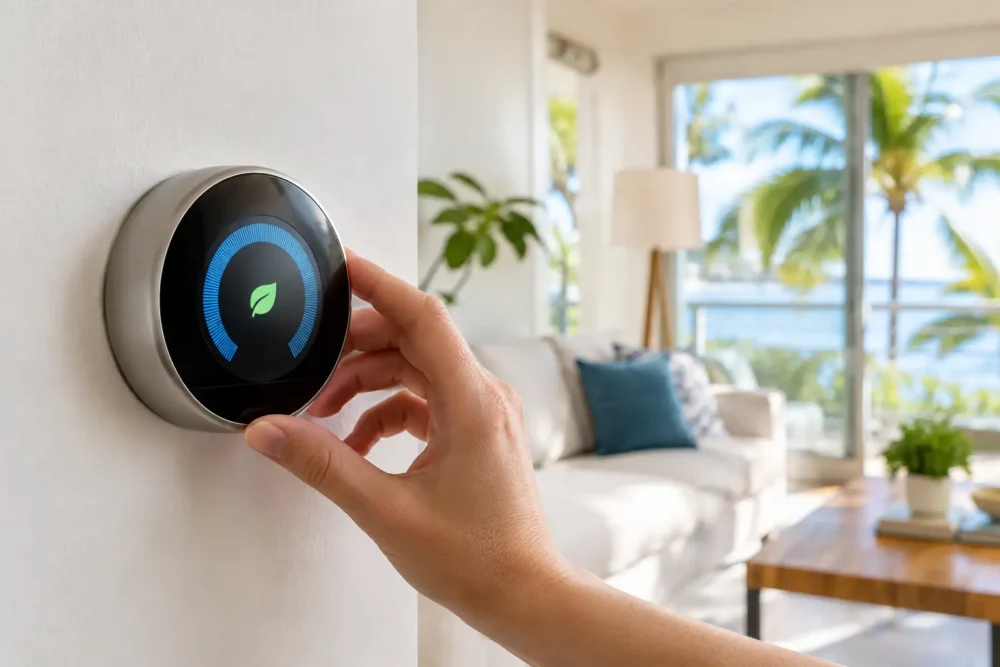
A thermostat adjustment can feel minor when your AC runs for much of the year. But can Nest thermostat save energy in a South Florida home? It can, provided it is set up correctly and paired with an air-conditioning system that is operating as it should. The thermostat cannot repair worn equipment, leaky ducts, or poor insulation, but it can help prevent unnecessary cooling when no one needs it.
For households in Stuart, Port St. Lucie, Jensen Beach, and nearby communities, the biggest opportunity is usually better control of long daily AC runtime. A smart thermostat gives you more visibility and more consistent habits than manually changing the temperature several times a day.
How Can a Nest Thermostat Save Energy?
A Nest thermostat can reduce energy use by controlling cooling around your real routine instead of holding one temperature around the clock. When your home is empty, asleep, or receiving less afternoon sun, your AC may not need to work at the same level it does during busy daytime hours.
The potential savings come from avoiding overcooling. Lowering the thermostat setting does not cool a house faster. It simply asks the system to run longer until it reaches that lower temperature. In Florida’s heat and humidity, even a small change can add meaningful runtime over a month.
Nest models can support scheduled temperature changes, remote adjustments through a compatible app, and automated energy-saving settings, depending on the model and connected equipment. Some models may also use occupancy information to help determine when the home is vacant. These functions can help, but they work best when the schedule reflects how the property is actually used.
A family that leaves for work and school every weekday has different needs than a retired couple at home during the day or a seasonal resident managing a vacant property. The right settings are personal, not one-size-fits-all.
The Settings That Make the Biggest Difference
The most useful Nest feature for many homeowners is a dependable schedule. Instead of remembering to raise the temperature before leaving, program the change to happen automatically. When you return, schedule the home to cool back to your preferred comfort level before you walk through the door.
For cooling season, many homeowners start with a comfortable occupied setting and raise it a few degrees during regular away periods. The best temperature depends on your comfort, the home’s insulation, sun exposure, number of occupants, and humidity concerns. A drastic setback is not always better. If a home gets very warm and humid while empty, it may take longer to recover and can feel clammy when the system turns back on.
For vacation homes and rental properties, remote access can be especially valuable. You can check the temperature, make an adjustment before arrival, and notice a problem sooner than you might with a basic thermostat. That does not replace regular service, but it can provide useful peace of mind when a property is unoccupied.
Avoid Constant Temperature Changes
Smart controls are most effective when they create consistency. Frequently changing the setpoint up and down can work against the schedule and make comfort harder to manage. Set a realistic routine, live with it for a week, then make small changes based on how the home feels and how often the system runs.
If family members have different comfort preferences, agree on a reasonable baseline rather than lowering the thermostat repeatedly. Ceiling fans can help occupants feel more comfortable at a slightly higher setting, but remember to turn fans off in empty rooms. Fans cool people, not the room itself.
Use Away Features Carefully in Humid Weather
Florida humidity changes the conversation. It is tempting to set an empty home very warm, but an excessive setback may allow indoor humidity to climb. That can create a damp feeling, strain the system during recovery, and contribute to moisture concerns.
A moderate away setting is often a better choice for a regularly occupied home. For a seasonal home, the right temperature and humidity strategy depends on how long the property will be vacant, the condition of the HVAC system, and whether supplemental humidity control is available. A qualified HVAC technician can help you choose a practical setting for the property rather than relying on a generic recommendation.
What a Nest Thermostat Cannot Fix
A Nest thermostat is a control, not a cure for an inefficient AC system. If your equipment is short cycling, blowing weak airflow, making unusual noises, or struggling to maintain temperature, changing thermostat settings will not solve the underlying issue.
The same is true for dirty filters, clogged coils, refrigerant problems, damaged ductwork, and aging equipment. Each issue can increase energy use because the system must run longer to deliver the same amount of cooling. In some cases, a smart thermostat makes the problem easier to spot because you can see that the system is running far more than expected.
Pay attention if your AC runs continuously on mild days, if some rooms remain warm while others are cold, or if your energy bills rise without a clear change in usage. Those are good reasons to schedule professional service. Prompt repairs can protect both comfort and the life of your equipment.
Professional Installation Matters
Nest thermostat installation is not always as simple as mounting a new control on the wall. Compatibility depends on the wiring, the type of system, and equipment features such as heat pumps, variable-speed components, zoning, or whole-home dehumidification.
A thermostat may need a common wire, often called a C-wire, for steady power. While some Nest models can work without one in certain situations, relying on limited power can lead to charging problems, unexpected shutdowns, or equipment behavior that is not ideal. The correct approach depends on the system, not on a universal wiring diagram.
Improper thermostat wiring can cause short cycling, loss of heating or cooling functions, or damage to HVAC components. That is why professional setup is worth considering, especially when you have a heat pump or more advanced comfort equipment. An experienced technician can confirm compatibility, connect the thermostat correctly, test operation, and help program settings that suit your household.
Pair Smart Controls With Basic AC Care
The best energy-saving thermostat settings will only go so far if airflow is restricted. Replace or clean filters on schedule, keep supply vents open and unobstructed, and have the system professionally maintained. Preventive maintenance helps identify dirty coils, electrical wear, drainage issues, and refrigerant concerns before they affect comfort or efficiency.
It also helps to look beyond the thermostat. Sun-facing windows, attic insulation, duct leakage, and older equipment all influence how hard your AC must work. If your system is more than 10 years old and needs frequent repairs, an efficiency evaluation may be more useful than continually adjusting settings on a thermostat.
Treasure Coast Air Conditioning can help homeowners determine whether a Nest thermostat is compatible with their system and whether an installation, repair, maintenance visit, or equipment upgrade will deliver the better long-term result.
Is a Nest Thermostat Worth It for Your Home?
A Nest thermostat is often worth considering if your household has a predictable schedule, you want remote control of a second home, or you tend to forget to adjust the temperature when leaving. It can also be a helpful tool for monitoring comfort at a rental or commercial property.
The trade-off is that the thermostat needs thoughtful programming and proper installation to deliver its value. If everyone is home most of the day, your savings may be smaller. If your AC is already operating inefficiently, repairing or maintaining the equipment should come first.
The goal is not to make your home uncomfortably warm to chase a lower bill. It is to stop paying for cooling you do not need while keeping indoor temperatures and humidity under control. A properly installed Nest thermostat, backed by a healthy AC system, gives you a smarter way to protect comfort through Florida’s longest cooling days.