
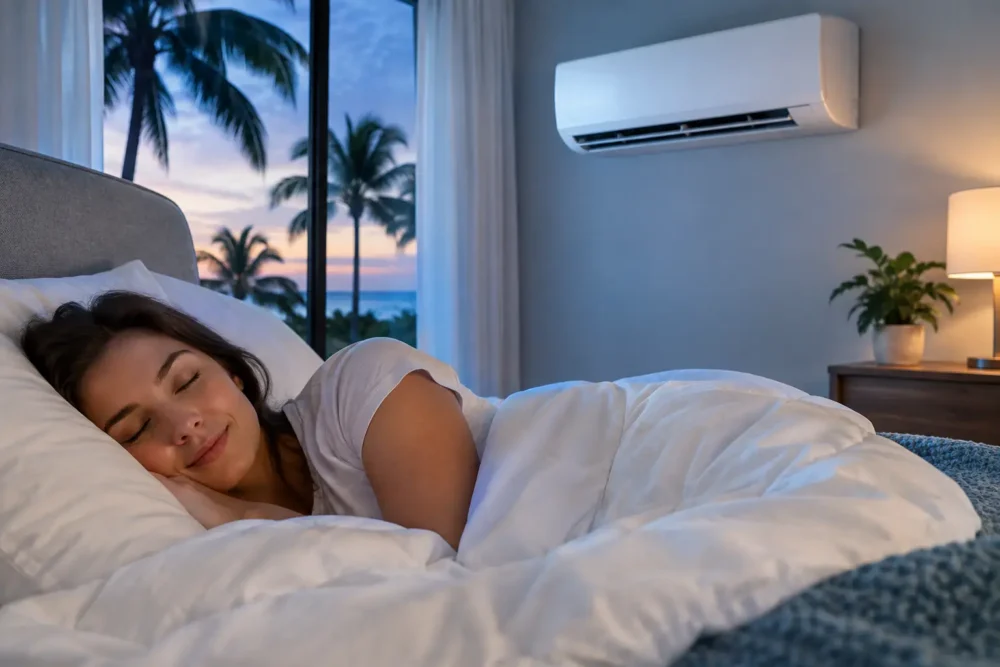
A bedroom can feel uncomfortable at 74 degrees when Florida humidity is high, while 76 degrees can feel perfectly restful in a dry, well-circulated room. The best AC settings for sleep are not just about choosing the lowest number on the thermostat. They are about managing temperature, humidity, airflow, and your system’s ability to run reliably through the night.
For most Treasure Coast households, a few smart adjustments can make bedtime more comfortable without driving up energy use or placing unnecessary strain on the AC. The goal is a cool, dry, quiet room that lets your body rest – not an ice-cold house with an overworked system.
Best AC Settings for Sleep: Start at 68 Degrees
Most adults sleep comfortably with the thermostat set between 65 and 72 degrees. A practical starting point is 68 degrees, then adjust by one degree at a time over several nights. If you wake up chilly, move the setting up. If you wake up sweaty or restless, lower it slightly.
Your body naturally lowers its core temperature as you fall asleep. A cooler room supports that process, which is why a bedroom that feels a little cool at bedtime often feels better than one that is warm and stuffy. Still, colder is not always better. Setting the thermostat extremely low may cause longer run times, higher utility bills, and uneven cooling elsewhere in the home.
Families also need to account for personal needs. Young children, older adults, and anyone with certain health conditions may be more comfortable at a slightly warmer setting. The right temperature is the one that keeps the sleeper comfortable consistently, without leaving the room damp or clammy.
Use a Schedule Instead of Cooling All Day
A programmable or smart thermostat can make nighttime comfort easier to manage. Set the temperature to begin lowering about 30 to 60 minutes before bedtime, then allow it to rise a few degrees shortly before you wake up. This creates a comfortable sleep environment when you need it most and can reduce unnecessary cooling during the day.
For example, a household that prefers 76 degrees while away may schedule the thermostat for 68 to 70 degrees overnight. Seasonal residents and rental-property owners can also use scheduling to avoid running the system harder than necessary when a home is unoccupied.
Humidity Is Just as Important as Temperature
In Stuart, Port St. Lucie, Jensen Beach, and nearby coastal communities, humidity can be the reason a home feels uncomfortable even when the thermostat looks right. High indoor humidity makes it harder for sweat to evaporate, so the body feels warmer. It can also leave bedding feeling damp, worsen musty odors, and create conditions that encourage mold growth.
For sleeping comfort, indoor relative humidity should generally stay between 30% and 50%. In South Florida, maintaining humidity at the lower end of that range may not always be realistic during heavy rain or extreme heat, but a healthy system should still help keep the home from feeling sticky. If your home regularly remains above 55%, it is worth having the AC system evaluated.
Your air conditioner removes moisture while it cools, but it must run correctly to do so. An oversized system can cool the air too quickly and shut off before removing enough moisture. A dirty filter, blocked drain line, incorrect thermostat settings, or duct leakage can also affect humidity control.
Do Not Turn the AC Off Overnight
Turning the AC off may sound like an easy way to save energy, but it often creates a miserable morning in Florida. Indoor temperatures rise quickly, humidity builds, and the system may need to work much harder to bring the home back to a comfortable level.
Instead, raise the thermostat a few degrees if you prefer warmer sleep or are trying to reduce energy use. Keeping a stable overnight setting helps protect comfort and gives your AC a more manageable workload.
Set the Thermostat Fan to Auto
The fan setting is a small detail with a noticeable effect on nighttime comfort. In most homes, the thermostat fan should be set to Auto rather than On.
With the fan set to Auto, the blower runs only when the system is actively cooling. This helps prevent moisture on the indoor coil from being pushed back into the home after a cooling cycle ends. When the fan runs continuously, that moisture can re-enter the airflow and make rooms feel more humid.
There are exceptions. A technician may recommend continuous fan operation to address certain airflow issues, and some variable-speed systems handle fan operation differently. But for many Florida homeowners dealing with a sticky bedroom, switching from On to Auto is a sensible first step.
Improve Airflow in the Bedroom
A properly set thermostat cannot overcome poor airflow. If one bedroom is consistently warmer than the rest of the house, check the basics before assuming the entire AC system is failing.
Make sure supply vents are open and not blocked by furniture, rugs, curtains, or storage. Keep the bedroom door open if possible, especially if the room has only one supply vent and limited return-air access. A closed door can trap air and prevent the room from balancing with the rest of the home.
A ceiling fan can help as well. During warm months, set it to rotate counterclockwise so it pushes air downward and creates a gentle cooling effect. A fan does not lower room temperature, but it helps your skin release heat more effectively. You may be able to raise the thermostat by a degree or two and still sleep comfortably.
If airflow remains weak, uneven, or noisy, the cause could be a dirty filter, duct issue, undersized return, failing blower component, or improper system design. These are service concerns, not problems to solve by closing more vents or dropping the thermostat to 62 degrees.
Keep the System Ready for Overnight Demand
Florida AC systems do some of their hardest work late in the day and overnight, particularly during long summer heat waves. A system that is already struggling may cool the home during the afternoon but fail to keep bedrooms comfortable after everyone goes to bed.
Replace or clean your air filter on schedule. A clogged filter restricts airflow, reduces efficiency, and can contribute to frozen coils or poor humidity removal. Check the condensate drain area for warning signs such as water around the indoor unit, musty odors, or an overflowing safety pan. These issues deserve prompt attention before they become an after-hours breakdown.
Annual preventive maintenance is also one of the best ways to protect sleep comfort. During a professional visit, a technician can inspect refrigerant performance, electrical components, drainage, blower operation, thermostat calibration, and the overall condition of the system. Treasure Coast Air Conditioning has helped local families maintain dependable cooling since 1990, including fast service when a comfort problem cannot wait.
When a Sleep Problem Is Really an AC Problem
A few rough nights during extreme weather are one thing. Ongoing sleep disruption can point to an issue that needs professional repair. Call for service if your AC runs constantly without reaching the set temperature, the bedroom feels humid despite cooling, certain rooms stay much warmer than others, or you hear new banging, buzzing, or grinding sounds.
You should also act quickly if you notice ice on refrigerant lines, water leaks, a burning smell, or repeated thermostat changes that do not improve comfort. Waiting can turn a minor repair into a larger failure, especially when the system is under peak seasonal demand.
For the best results, keep the overnight setting reasonable, aim for dry indoor air, use the fan setting wisely, and give your system the maintenance it needs. A comfortable night should not depend on luck – it should be something your home delivers every evening.