
If you are searching for “best thermostat settings summer,” you probably want two things at once: a home that feels comfortable when Florida heat and humidity peak, and an electric bill that does not climb higher than it has to. The right setting is not a single magic number. It depends on who is home, how well the house is insulated, how much sun it receives, and whether your air conditioner is controlling humidity as it should.
For most Treasure Coast homes, a steady indoor temperature is usually more effective than constantly turning the thermostat up and down. Your AC system is doing more than lowering the temperature. It is also pulling moisture from the air, which makes a major difference in how comfortable your home feels.
Best Thermostat Settings for Summer in Florida
A good starting point for an occupied home is 76°F to 78°F. Many homeowners find 76°F comfortable during the day, while 78°F can reduce cooling costs without making the home feel noticeably warm when humidity is under control.
At night, consider setting the thermostat between 72°F and 76°F if cooler temperatures help you sleep. There is no need to force the system dramatically lower just because it is bedtime. Setting the thermostat to 68°F will not cool the house faster. It only tells the system to run longer, which can increase energy use and place extra strain on equipment.
The best temperature for your household may land outside these ranges. A home with young children, older adults, pets, medical needs, or upper-floor bedrooms that stay warmer may need a different approach. Comfort and health come first. The goal is to find the highest temperature that still feels comfortable for the people living in the space.
Why Humidity Changes the Answer
In Stuart, Port St. Lucie, Jensen Beach, and surrounding coastal communities, humidity is often the reason a house feels uncomfortable even when the thermostat shows 75°F. Humid air slows the body’s natural cooling process. That is why 75°F with high indoor moisture can feel much warmer than 78°F in a properly conditioned home.
Most homes feel best with indoor relative humidity around 45% to 55%. Your air conditioner removes moisture as it runs, but it can struggle when the system is oversized, airflow is restricted, filters are clogged, or the equipment needs service. If your home feels clammy, lowering the thermostat a few degrees may provide only temporary relief while driving up operating costs.
Watch for warning signs such as musty odors, damp-feeling rooms, condensation on vents or windows, and rooms that never seem comfortable. These can point to an AC performance, drainage, ductwork, or indoor air quality issue. A qualified technician can identify the cause instead of leaving you to fight humidity from the thermostat.
Avoid Extreme Temperature Setbacks
It is tempting to set the thermostat much higher while everyone is away. In a dry climate, that can work well. In South Florida, large setbacks can allow humidity to build indoors, especially during long summer afternoons.
For a typical workday, raising the thermostat 2°F to 4°F is a sensible starting point. For example, if you keep your home at 76°F when occupied, try 78°F to 80°F while the house is empty. When you return, the system can bring the temperature back down without having to recover from a major heat and humidity increase.
A vacation home, rental property, or seasonal residence needs a different strategy. Many owners choose 78°F to 82°F with humidity monitoring while the property is vacant. The right setting depends on how often the home is checked, whether pets or sensitive belongings are inside, and how well the system manages moisture. Leaving a Florida home warm and unattended for weeks can create avoidable humidity and mildew risks.
Use Your Programmable or Smart Thermostat Wisely
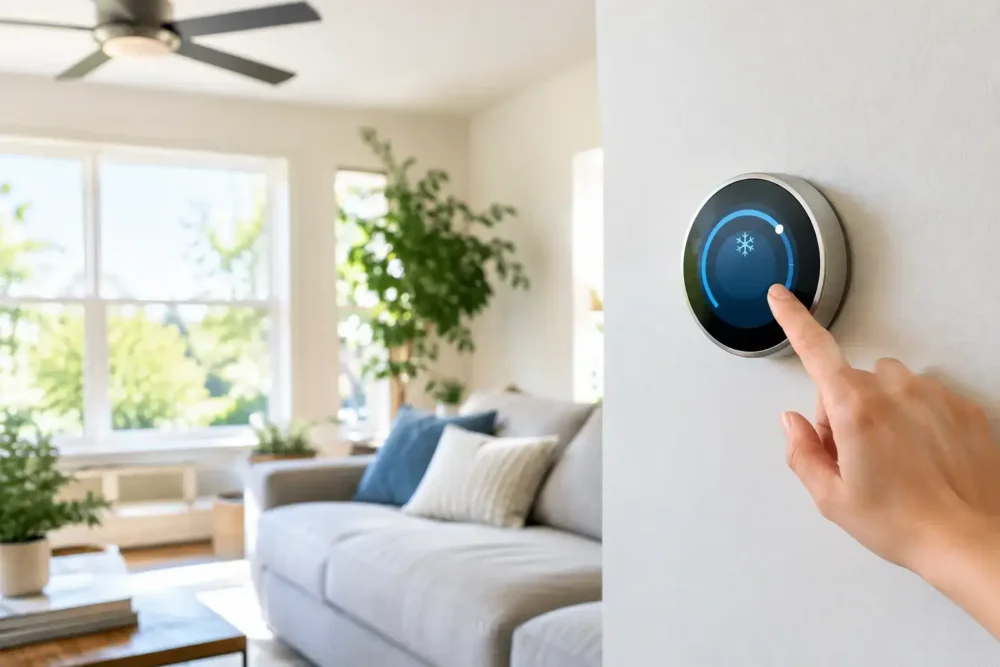
A programmable thermostat can reduce the need to remember daily adjustments. Smart thermostats, including Nest models, can also help homeowners create schedules, monitor system activity, and adjust settings remotely. The best schedule is one that matches real routines, not one that looks efficient on paper but gets overridden every day.
Start with a simple plan: maintain a comfortable setting while the home is occupied, raise it slightly during regular absences, and return it to your preferred temperature shortly before people arrive home. Keep changes modest. A schedule that swings from 74°F at night to 84°F during the day may save less than expected once the AC works to pull down both temperature and humidity.
If your thermostat has a fan setting, leave it on Auto in most cases. In Auto mode, the blower runs only during a cooling cycle. Setting the fan to On keeps air moving, but it can also circulate moisture back into the home after a cooling cycle ends if the system does not have the right controls. Continuous fan operation can be useful in certain homes with airflow problems, but it is best discussed with an HVAC professional first.
Small Changes That Help Your AC Hold the Set Temperature
Thermostat settings work best when the rest of the cooling system is in good shape. If your AC runs constantly but does not reach the selected temperature, the thermostat may not be the problem. Dirty filters, blocked supply vents, a clogged drain line, duct leaks, low refrigerant, or aging equipment can all affect performance.
Start with the basics. Replace or clean the filter on the schedule recommended for your system and household. Homes with pets, heavy use, or ongoing construction nearby may need more frequent filter changes. Keep furniture, curtains, and rugs away from return grilles and supply vents so air can move freely.
Sunlight also matters. Close blinds or shades on sun-facing windows during the hottest part of the day, especially in rooms with large glass areas. Ceiling fans can help occupants feel cooler by improving air movement, allowing some households to choose a slightly higher thermostat setting. Fans cool people, not empty rooms, so turn them off when the room is vacant.
Do not overlook maintenance. A seasonal tune-up gives a technician the opportunity to check refrigerant performance, electrical components, airflow, drainage, coils, and thermostat operation before a small issue becomes a midsummer breakdown. In Florida, where AC systems work hard for much of the year, preventive service is a practical way to protect comfort and manage repair costs.
When the Thermostat Setting Is Not the Real Problem
Call for professional AC service if your home will not cool to a reasonable temperature, one room is much warmer than the rest, the system short-cycles, or the air feels humid even with the thermostat set low. Unusual sounds, water around the indoor unit, ice on refrigerant lines, burning smells, and a sudden rise in your electric bill also deserve prompt attention.
Older systems can lose efficiency gradually, making homeowners compensate by setting the thermostat lower and lower. If your unit is more than 10 years old and requires frequent repairs, a replacement evaluation may reveal options that cool more evenly and manage humidity better. The best choice depends on the home, ductwork, budget, and expected length of ownership, not just the age of the equipment.
Treasure Coast Air Conditioning has helped local families and property owners stay comfortable since 1990, with prompt same-day service and 24/7 emergency support when cooling problems cannot wait. A trained technician can help you determine whether a thermostat adjustment, maintenance visit, repair, or equipment upgrade is the right next step.
A comfortable Florida summer should not require guessing at the thermostat every day. Choose a steady setting that fits your household, keep humidity in check, and act early when your AC no longer keeps up. That gives your family a cooler place to come home to when the heat outside is at its worst.