
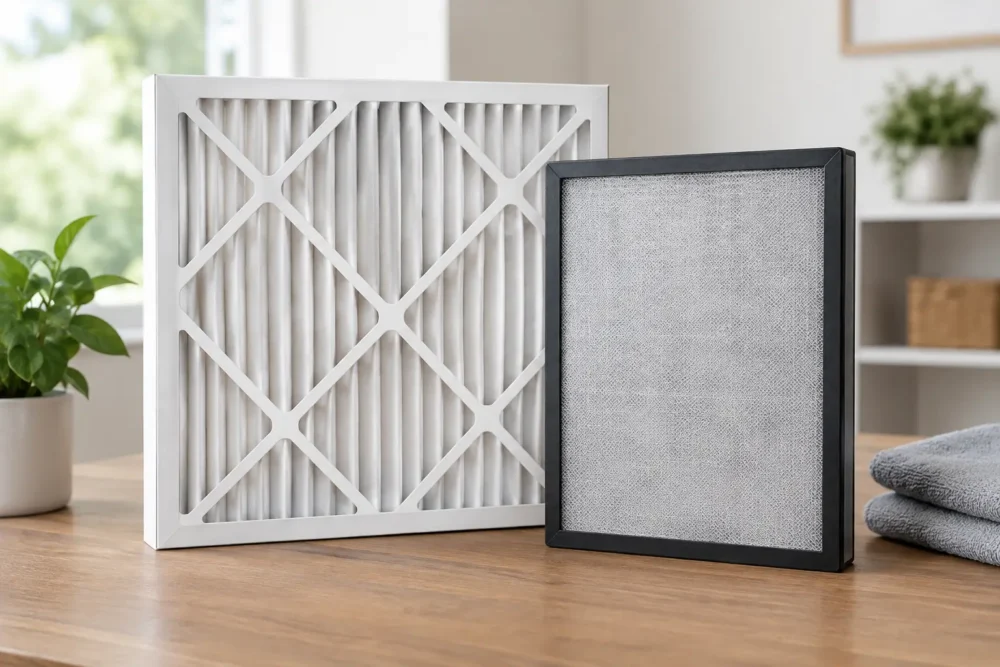
A filter can look like a small, low-cost part of your AC system, but it has a major job in a South Florida home. When comparing pleated versus washable air filters, the better choice comes down to more than whether you would rather buy replacements or rinse one clean. Your filter affects airflow, dust control, system wear, and how hard your air conditioner must work through long stretches of heat and humidity.
For many homes, a quality disposable pleated filter is the safer and more practical option. Washable filters can work in the right situation, but they require careful cleaning and complete drying every time. A reusable filter that is still dirty or damp can create the exact problems it was meant to prevent.
Pleated vs. Washable Air Filters: The Main Difference
Pleated filters are disposable filters made with folded filter media. Those folds create more surface area than a basic flat filter, allowing the filter to capture more airborne particles while maintaining reasonable airflow. Most are replaced every one to three months, depending on the filter rating, household conditions, and manufacturer guidance.
Washable filters, also called reusable filters, are typically made from a metal or plastic frame with layered mesh media. Instead of replacing them, you remove the filter, rinse it, let it dry thoroughly, and reinstall it. Their appeal is clear: buy one filter and reuse it for years.
The trade-off is performance and upkeep. A reusable filter may catch larger dust particles and debris, but many models do not capture the smaller particles that a well-chosen pleated filter can collect. And unlike a disposable filter, it is only as effective as the cleaning routine behind it.
Why Filter Choice Matters More on the Treasure Coast
Air conditioners in Stuart, Port St. Lucie, Jensen Beach, and nearby communities often run for much of the year. That means the filter has a steady flow of air moving through it, carrying dust, pollen, pet dander, fibers, and outdoor contaminants into the return system.
A clogged filter restricts that airflow. Your system may run longer to cool the home, rooms may feel uneven, and the blower motor can be placed under extra strain. In severe cases, limited airflow can contribute to a frozen evaporator coil or other avoidable service issues.
Humidity adds another consideration. A washable filter must be completely dry before it goes back into the system. Installing it while moisture remains on the media can introduce moisture where it does not belong and can encourage mold or mildew growth. In Florida, where indoor humidity control is already part of keeping a home comfortable, that is not a shortcut worth taking.
The Case for Pleated Filters
Disposable pleated filters are popular because they are simple, consistent, and available in a wide range of efficiency levels. When it is time for a change, you remove the old filter and install a clean, dry one. There is no washing, waiting, or guessing whether debris is still trapped in the material.
Better particle capture
The pleats create more filtering area, which generally helps these filters capture smaller particles than standard washable models. This can be especially helpful for households with pets, allergy concerns, smokers, or residents who notice excessive dust.
Filter efficiency is commonly described with a MERV rating. Higher ratings capture finer particles, but higher is not automatically better for every system. An overly restrictive filter can reduce airflow if your equipment was not designed for it. Many residential systems do well with a mid-range filter, often MERV 8 to MERV 11, but the right choice should follow your system manufacturer’s recommendations and your home’s needs.
Easy maintenance
A pleated filter makes regular maintenance straightforward. Write the installation date on the frame, check it monthly, and replace it as needed. Homes with multiple pets, construction nearby, frequent guests, or year-round occupancy may need more frequent changes than a lightly used seasonal property.
This convenience matters. The best filter is not the one that sounds best on paper. It is the one you will actually maintain on schedule.
More predictable airflow protection
A clean pleated filter provides a known level of filtration from the day it is installed. With washable filters, results can vary based on how thoroughly the filter was cleaned, whether it has become damaged, and whether it was allowed to dry fully. That variability is one reason many HVAC professionals recommend disposable filters for typical residential systems.
When a Washable Filter Can Make Sense
Washable filters are not always a poor choice. They may suit a homeowner who is committed to maintaining the filter carefully, prefers to reduce disposable waste, and has a system that does not require a higher level of particle filtration.
They can also be useful as a basic pre-filter in certain setups. However, homeowners should not assume that a reusable filter is automatically more economical. A washable filter has an upfront cost, uses water and time to clean, and may need replacement if the mesh bends, the frame warps, or the filter no longer comes clean.
Cleaning must be done correctly
If you use a washable filter, turn off the HVAC system before removing it. Rinse the filter gently in the direction opposite normal airflow so debris is pushed out rather than driven deeper into the media. Avoid harsh chemicals, aggressive scrubbing, and high-pressure spraying that can damage the material.
Then let the filter air-dry completely. Do not reinstall it damp, and do not use a hair dryer or other intense heat source that could warp the frame. This process can take several hours, which means you may need a spare filter if your AC cannot be left without filtration during that time.
Cost: Upfront Savings vs. Long-Term Value
A washable filter may seem less expensive because it can be reused. But the right cost comparison includes more than the price at the register. Consider how often you will clean it, whether it provides enough filtration for your household, and whether neglected cleaning could lead to airflow problems.
Pleated filters create an ongoing purchase cost, but they are usually affordable and take only minutes to replace. Home-delivered replacement filters can make this even easier by helping you keep the correct size and change schedule on hand.
For most homeowners, protecting an expensive air-conditioning system is worth the modest cost of regular filter replacement. The savings from avoiding unnecessary strain, poor cooling performance, or a service call can outweigh the cost difference quickly.
How to Choose the Right Filter for Your Home
Start with your equipment. Check the filter size printed on the existing frame or inside the return grille, and confirm the recommended filter rating in your system documentation. The filter must fit snugly. A filter that is too small can allow unfiltered air to bypass it, while forcing the wrong size into place can damage the filter or restrict airflow.
Next, think about your household. A home with pets, allergies, frequent open doors, or high occupancy may benefit from a pleated filter with stronger particle capture. A lightly occupied vacation home may have different needs, though its filter still needs regular checks before and during extended stays.
Finally, be realistic about maintenance. If washing, drying, and reinstalling a reusable filter will become another postponed household chore, choose a pleated filter and replace it on schedule. Consistent care beats good intentions every time.
Signs Your Filter Needs Attention
Do not wait only for a calendar reminder. Check the filter sooner if you notice weaker airflow from supply vents, more dust on furniture, a musty smell when the system starts, longer cooling cycles, or unusually high energy bills. A visibly gray or packed filter should be replaced, not left in place until the next scheduled date.
If a clean filter does not improve airflow or comfort, the issue may be elsewhere in the system. Dirty coils, duct problems, thermostat settings, refrigerant concerns, and mechanical failures can produce similar symptoms. Changing filters is essential preventive maintenance, but it cannot solve every AC problem.
A properly fitted pleated filter is the dependable choice for most Treasure Coast households because it offers reliable filtration with minimal effort. If you have questions about the filter rating your system can handle, or your AC is struggling despite regular filter changes, Treasure Coast Air Conditioning can help you protect your comfort before a small airflow issue becomes a larger repair.