A new air conditioner is a major decision in South Florida, especially when your current system quits during a humid summer afternoon. While homeowners often start by comparing AC brands, the badge on the outdoor unit is only one part of what determines your comfort, energy use, and long-term repair costs. The right system is the one that fits your home, handles humidity well, and can be supported quickly by qualified local technicians.
A dependable manufacturer matters. So do correct sizing, careful installation, duct condition, thermostat setup, and preventive maintenance. Before choosing a brand or accepting an installation quote, it helps to know what separates one system from another and which differences will actually matter in your home.
What Really Separates AC Brands?
Most established air-conditioning manufacturers offer equipment at several price and performance levels. You may see familiar names such as Carrier, Trane, Lennox, Rheem, Ruud, Goodman, Amana, and Daikin. Each has product lines designed for different budgets, efficiency goals, and comfort preferences.
The best brand for one property is not automatically the best fit for another. A smaller home with consistent occupancy may do well with a reliable single-stage system. A larger home, waterfront property, or house with rooms that feel damp may benefit from equipment with better humidity control and variable-speed operation. The question is not simply, “Which brand is best?” It is, “Which system and installation plan will keep this specific property comfortable?”
Manufacturer reputation should be part of the decision, but not the entire decision. A premium system installed incorrectly can have airflow problems, short cycling, uneven temperatures, and premature wear. A well-matched mid-range system installed with care can provide years of reliable cooling.
Compare AC Brands by the Features You Will Feel
Marketing terms can make every system sound similar. Focus instead on the features that affect comfort during the hottest months and the costs you will carry after installation.
Efficiency ratings and real operating costs
New central air systems are rated by SEER2, which measures cooling efficiency over a typical season. Higher SEER2 equipment can use less electricity, but the upfront cost also rises. For many homeowners, a mid- to high-efficiency system provides a practical balance between purchase price and monthly energy savings.
The highest efficiency rating is not always the smartest investment. Savings depend on how long you plan to own the home, how heavily the system runs, your electric rates, insulation, duct leakage, and thermostat habits. A seasonal resident may evaluate payback differently than a family living in the home year-round.
Ask for an estimate that clearly identifies the efficiency level, expected system capacity, and any available utility or manufacturer incentives. That makes it easier to compare proposals fairly instead of comparing one price to another without knowing what is included.
Stages of cooling and humidity control
Single-stage air conditioners run at full capacity whenever they are on. They are straightforward, dependable, and often the most budget-friendly choice. Two-stage systems can operate at a lower level during milder conditions, which can improve temperature consistency and help remove more moisture.
Variable-speed systems make smaller adjustments over longer run times. In Florida, that can make a noticeable difference because comfort is not just about temperature. A home can read 74 degrees and still feel sticky if the system is not controlling humidity effectively.
Higher-end equipment is not necessary for every home. But if bedrooms are uneven, indoor air feels clammy, or your system cycles on and off frequently, a two-stage or variable-speed option is worth discussing. The installer should assess the cause of the problem before promising that a more expensive unit will solve it.
Sound level and outdoor placement
Air conditioner sound levels vary by model. This may matter if the condenser sits near a patio, bedroom window, pool area, or neighboring property. Quieter systems typically use improved fan designs, compressor insulation, and variable-speed technology.
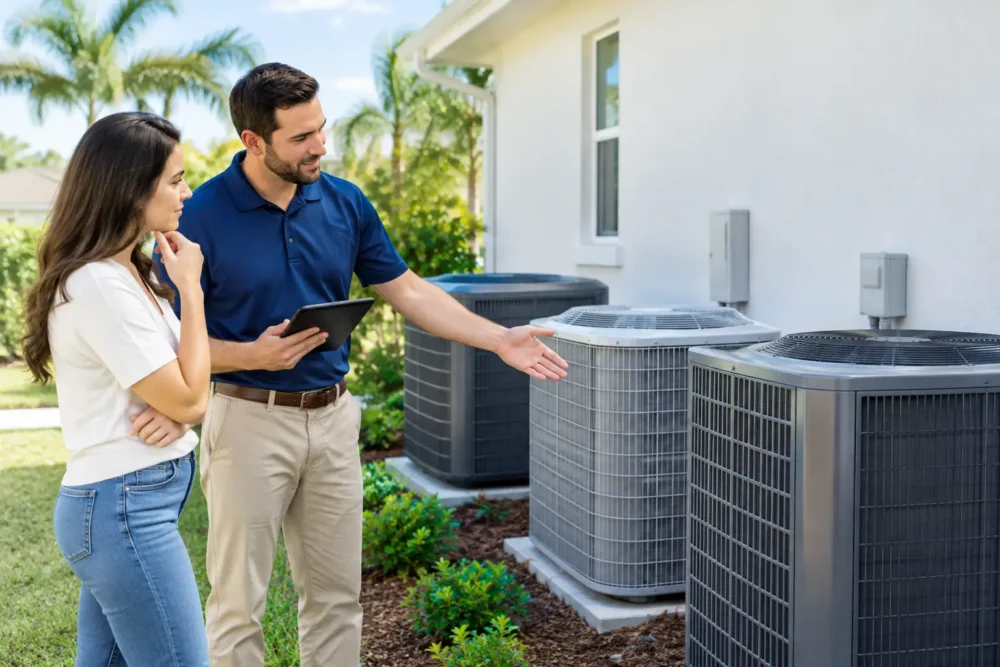
Placement also matters. A technician should consider service access, drainage, airflow around the unit, and protection from physical damage. Landscaping should never crowd the condenser, because restricted airflow can reduce efficiency and add strain to the system.
The Installation Matters as Much as the Brand
A properly selected unit begins with a load calculation. This process considers square footage, ceiling height, window exposure, insulation, ductwork, occupancy, and other factors that affect cooling needs. Choosing equipment based only on the size of the old system can repeat an old mistake.
An oversized air conditioner may cool the home quickly but run in short bursts. That can leave humidity behind, create uneven temperatures, and increase wear on components. An undersized system may run continuously during peak heat without catching up. Both situations are frustrating, and neither is fixed by choosing a more recognizable brand name.
The installation should also address refrigerant lines, electrical connections, drain lines, supply and return airflow, and thermostat compatibility. If ductwork is leaking, undersized, dirty, or poorly balanced, even excellent new equipment may not deliver the comfort you expect.
For homes with aging ducts or persistent dust concerns, it may be the right time to discuss duct cleaning, sealing, repairs, or indoor air-quality improvements. Replacement is an opportunity to look at the whole comfort system rather than only the outdoor unit.
Warranty Terms Deserve a Close Look
Most major manufacturers offer parts warranties, often with longer coverage when the equipment is registered after installation. Warranty lengths and requirements differ by brand, model, and registration status, so read the paperwork rather than relying on a general promise.
A manufacturer warranty usually covers specific parts, not every cost involved in a future repair. Labor coverage may be separate, and exclusions can apply. Ask what is covered, what registration is required, who handles warranty service, and whether extended labor protection is available.
Also ask about local parts access. A system is only as convenient as the support available when it needs service. In an emergency, homeowners do not want to wait days for a commonly used component. An experienced local contractor can help guide you toward equipment they can maintain and repair confidently in the years ahead.
When a Premium System Is Worth the Cost
Paying more for a premium AC system can make sense when the home has demanding comfort needs. A variable-speed model may be a strong choice for a large household, a home with humidity trouble, a property with long daily cooling hours, or an owner planning to stay for many years.
It may also be worth it when quiet operation, advanced thermostat controls, or enhanced filtration are priorities. Some systems pair well with smart thermostats and indoor air-quality equipment, allowing more control over schedules, fan operation, and comfort settings.
On the other hand, a dependable, properly sized mid-range system can be the better choice when budget is the primary concern or the property will not be occupied year-round. Financing can help make replacement more manageable, but the goal should be a sensible long-term investment, not features you will never use.
Questions to Ask Before Choosing an AC Brand
A clear conversation with your HVAC contractor should leave you with more than a model number and a price. Ask how the system was sized, what efficiency rating is recommended and why, whether your ducts need attention, and how the proposed equipment will manage humidity.
You should also understand what the installation includes. Confirm whether the quote covers removal of the old equipment, permits when required, thermostat setup, drain line work, electrical updates, start-up testing, and warranty registration. If two proposals differ significantly, these details often explain why.
It is also reasonable to ask which brands the contractor services most often and why. A trustworthy answer should be practical, not a hard sell. The best recommendation accounts for your property, your budget, your comfort goals, and the availability of reliable future service.
Choose Support You Can Count On After Installation
An air conditioner does not stop needing attention after installation day. Regular maintenance helps protect efficiency, catch worn parts early, keep drains clear, and reduce the chance of a breakdown during extreme heat. Clean filters and good airflow also support better indoor comfort.
For homeowners and property managers on the Treasure Coast, Treasure Coast Air Conditioning brings more than three decades of local HVAC experience to system replacement, repair, maintenance, and indoor air-quality needs. A professional evaluation can help you compare equipment options without guessing about sizing or overlooking issues elsewhere in the system.
When you are ready to replace an aging unit, focus on the comfort you need five or ten summers from now. The right brand matters, but a properly designed system and responsive local service are what keep your home cool when Florida heat has no patience.