
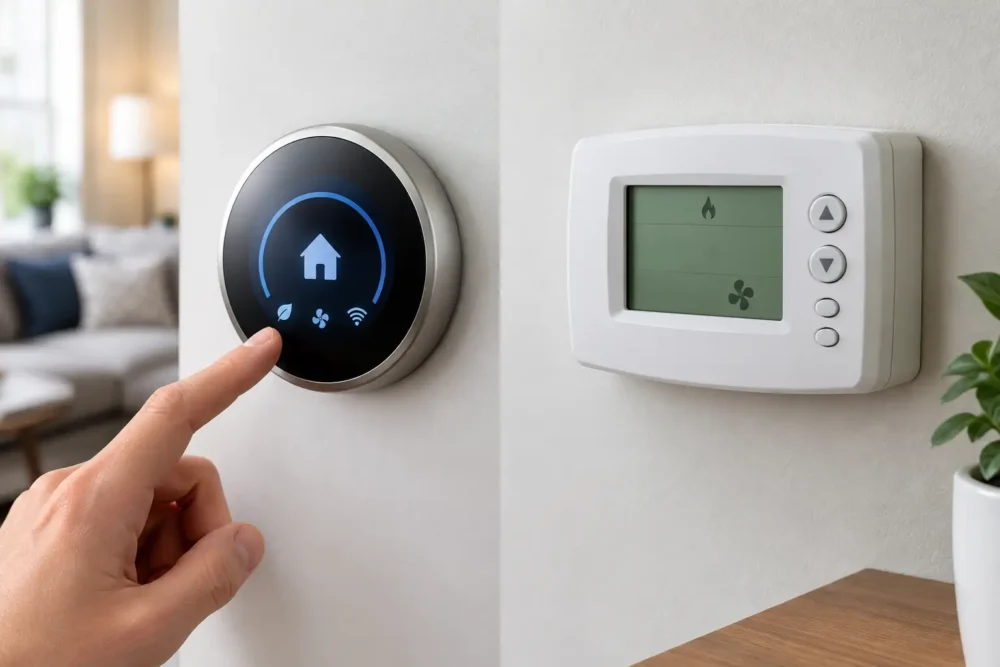
A thermostat may be a small part of your HVAC system, but in a Florida home, it has a big job. It tells your air conditioner when to run through hot afternoons, humid nights, vacant workdays, and busy weekends. When weighing smart versus programmable thermostats, the best choice is not always the newest model. It is the one that matches your schedule, your system, and how you want to manage comfort.
For some households, a dependable programmed schedule is all they need. For others, remote access, alerts, and automatic adjustments bring real peace of mind, especially for seasonal homes, rentals, or properties that sit empty for part of the year. Here is how to make a confident choice.
Smart Versus Programmable Thermostats: The Main Difference
A programmable thermostat follows a schedule you set. You might program it to keep the home cooler before everyone wakes up, raise the temperature while the house is empty, and return to a comfortable setting before the family gets home. Once it is set correctly, it works without requiring daily attention.
A smart thermostat can also run on a schedule, but it connects to Wi-Fi and offers more control through a phone app or connected device. Depending on the model, it may learn routines, use occupancy sensors, provide maintenance reminders, send temperature alerts, or allow you to change settings from anywhere.
The distinction is simple: programmable thermostats follow the instructions you give them, while smart thermostats can provide more information and flexibility around those instructions. Neither one can make an aging AC system perform like a new one, but the right thermostat can help a properly operating system run more efficiently and comfortably.
When a Programmable Thermostat Makes Sense
A programmable thermostat is often an excellent fit for homeowners who have a consistent routine and want straightforward control. It is generally less expensive than a smart model, has fewer features to manage, and does not depend on Wi-Fi for normal operation.
If your family leaves for work and school at roughly the same time each weekday, a schedule can prevent the AC from cooling an empty home at your preferred comfort setting all day. You can have the system return to your chosen temperature shortly before people arrive home. That reduces unnecessary runtime without coming home to a hot, sticky house.
This option can also make sense for homeowners who prefer buttons and a wall-mounted display over another app. A programmable thermostat is practical, familiar, and effective when it is programmed correctly.
The trade-off is flexibility. If plans change, you must adjust the thermostat at home unless the model offers remote connectivity. Many owners also leave their programmable thermostat on one temperature because programming it feels inconvenient. In that case, they may not receive the energy-saving benefits they expected.
Consistency Matters More Than Complexity
A basic thermostat that is easy for everyone in the home to use can be a better choice than an advanced device that nobody understands. If multiple family members need to override settings regularly, choose a model with clear controls and a schedule that is easy to review.
For vacation properties, programmable models can work well when the occupancy schedule is known in advance. However, a smart thermostat may offer more reassurance when travel dates change unexpectedly.
Why Homeowners Choose Smart Thermostats
Smart thermostats are built for households that want control beyond the hallway wall. With an internet connection, you can check the temperature, change a setting, or switch to an away schedule from your phone. That is valuable when you are traveling, managing a rental, or returning to a home after several days away.
For Florida property owners, remote alerts can be especially useful. If the indoor temperature rises unexpectedly while a home is vacant, you can see the issue sooner and arrange service before heat and humidity create a larger problem. A notification does not replace regular maintenance or emergency repair service, but it can give you an earlier warning that something needs attention.
Many smart thermostat models also provide usage reports. These reports can help you see how often the system runs and whether a schedule adjustment may reduce runtime. Some units work with room sensors that help account for temperatures in areas that are warmer or cooler than the thermostat location.
Smart Features Have Limits
A smart thermostat is not a cure for poor airflow, dirty coils, leaky ducts, a failing capacitor, or an undersized system. If your AC runs constantly, struggles to cool, freezes up, or produces unusual humidity indoors, changing thermostat settings is unlikely to solve the root problem.
The same is true of energy savings. A smart model can help reduce wasted cooling when it is installed and configured properly, but savings vary with your household habits, insulation, equipment condition, and preferred indoor temperature. South Florida humidity also changes the equation. Setting the thermostat too high when you are away may reduce cooling costs, but it can allow excess indoor humidity to build up. A qualified HVAC technician can recommend an away setting that protects both comfort and the home.
Consider Your Home, Schedule, and HVAC Equipment
Before choosing between smart and programmable controls, think about how you actually use your property. A busy family with changing schedules may benefit from remote adjustments. A homeowner with a predictable weekday routine may be perfectly served by a programmable model. A seasonal resident may place the most value on alerts and the ability to monitor conditions from another state.
Your existing HVAC system matters too. Some smart thermostats require a common wire, often called a C-wire, for continuous power. Others may use an adapter or work with certain systems without one, but compatibility must be checked carefully. Heat pumps, multi-stage systems, zoning controls, whole-home dehumidifiers, and older equipment may need specific thermostat wiring or setup.
Do not assume that a thermostat will work simply because it fits on the wall. Incorrect wiring can cause the system to operate improperly, damage controls, or leave you without cooling when you need it most. Professional installation helps ensure that the thermostat communicates correctly with your equipment and that features such as fan control, staging, and humidity settings are configured appropriately.
Wi-Fi, Privacy, and Power Outages
Smart thermostats need reliable Wi-Fi for app-based controls and alerts. If the internet goes down, most models can still control heating and cooling at the thermostat itself, but remote access will not be available until service returns. It is worth confirming how a specific model behaves during a Wi-Fi outage before installation.
There is also a practical privacy question. Smart thermostats collect usage data to provide reports, schedules, and other connected features. Review the manufacturer’s account and privacy settings, use a strong password, and keep your home network secure. For homeowners who would rather avoid connected devices entirely, a programmable thermostat remains a sound option.
Choosing the Right Temperature Schedule
Whether your thermostat is smart or programmable, avoid dramatic temperature changes. Lowering the setting far below your normal comfort level will not cool the home faster. It only tells the system to keep running until it reaches that lower temperature, which can increase energy use and leave the home uncomfortably cold.
For many homes, modest adjustments while the house is empty are more effective than large swings. Your ideal settings depend on insulation, sun exposure, household preferences, pets, and humidity concerns. The goal is not to make the AC work harder. The goal is to reduce unnecessary operation while maintaining a comfortable, healthy indoor environment.
If you are unsure where to start, use one schedule for a week and pay attention to comfort when you wake up, return home, and go to sleep. Make small changes rather than resetting everything at once. If rooms remain unevenly cooled or humidity feels high, the issue may involve the system or ductwork rather than the thermostat.
Get Advice Before Replacing Your Thermostat
A thermostat upgrade is a good time to consider the condition of the entire comfort system. If your AC is more than 10 years old, needs frequent repairs, or cannot keep up during peak heat, a new control may be only one part of the solution. Regular maintenance, clean filters, proper airflow, and professional repairs all affect how well any thermostat performs.
Treasure Coast Air Conditioning can help homeowners and property managers choose a compatible thermostat, including Nest thermostat support, and make sure it is set up for the equipment already in place. A quick professional assessment can prevent wiring problems and help you get the full value from the features you choose.
The best thermostat is the one that makes comfort easier to maintain without adding frustration. Choose the dependable simplicity of programmable control if your routine is steady, or choose smart control if remote access and flexibility will genuinely make life easier. If your home is not staying comfortable, address the HVAC system behind the thermostat before the next hot afternoon puts it to the test.