
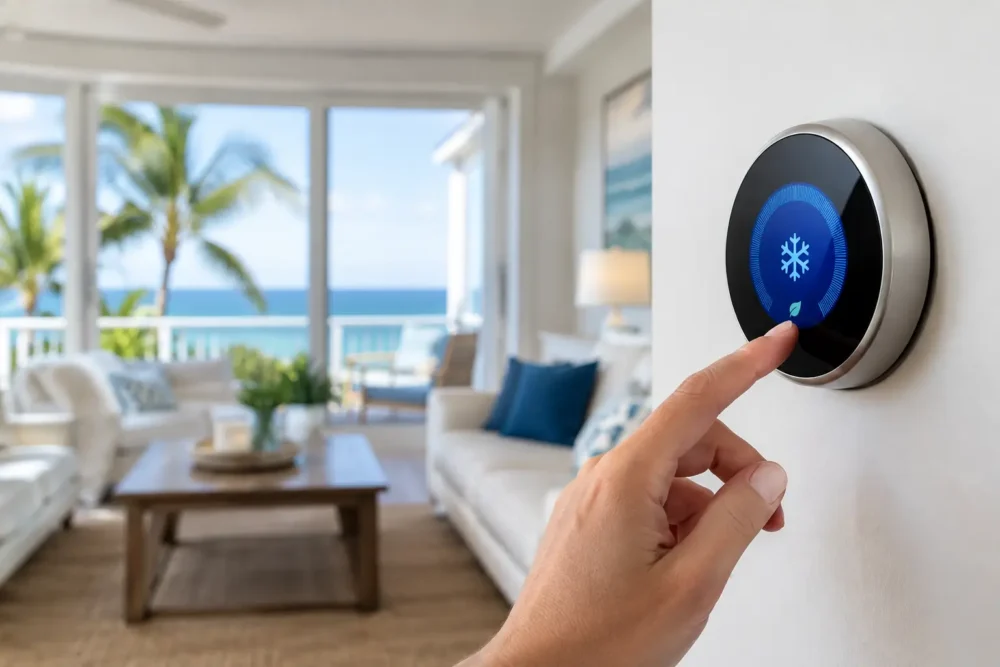
A vacation home can look perfectly fine from the driveway while indoor heat and humidity quietly create a costly problem. That is why the best thermostats for vacation homes do more than let you change the temperature from your phone. They help you spot an AC issue early, protect the home while it is vacant, and keep conditions comfortable before you arrive.
For seasonal homes on Florida’s Treasure Coast, remote access matters. So do reliable alerts, humidity awareness, a secure Wi-Fi connection, and proper compatibility with the existing air-conditioning system. The right choice depends on your equipment, how often the property sits empty, and whether you need a simple control or a more complete monitoring tool.
What a Vacation-Home Thermostat Needs to Do
A standard programmable thermostat can follow a schedule, but it may not give an owner enough visibility when the home is unoccupied for weeks or months. A smart thermostat adds remote control through an app, allowing you to confirm the system is running, adjust settings before a visit, and receive notifications when conditions move outside the range you choose.
In South Florida, protecting against excessive humidity is nearly as important as managing temperature. High indoor humidity can contribute to musty odors, mildew growth, warped finishes, and uncomfortable air. A thermostat cannot fix a failing AC system or a drainage problem by itself, but a model with humidity readings and alerts can give you an early warning that something needs attention.
Look for a thermostat that offers dependable app access, customizable high- and low-temperature alerts, humidity monitoring, scheduling, and a display that is easy for a guest or property manager to use. If you have more than one zone or separate systems, make sure the thermostat platform can manage each one without making daily oversight complicated.
Best Thermostats for Vacation Homes: Top Options
The best model is not always the one with the most features. It is the one that fits your AC equipment, Wi-Fi setup, and level of oversight.
ecobee Smart Thermostat Premium
The ecobee Smart Thermostat Premium is a strong choice for owners who want detailed monitoring and flexible comfort control. It provides remote temperature management, humidity information, alerts, and optional room sensors. Those sensors can be especially helpful in larger homes where a back bedroom, upstairs area, or sun-facing room tends to run warmer than the main living space.
It also offers indoor air-quality information and a responsive touchscreen. The trade-off is that the feature set can feel like more than a part-time resident needs, and proper setup matters. If the system is not configured correctly, the thermostat may not operate the equipment as intended.
Google Nest Learning Thermostat
For owners who prefer a familiar, polished interface, the Google Nest Learning Thermostat is often a good fit. Nest thermostats offer remote control, scheduling, notifications, and an option to create temperature safety limits. That makes them useful when you want the home held within a sensible range while vacant without constantly revising a schedule.
Nest can be an especially practical choice for vacation homeowners who already use Google smart-home products. Still, the learning features should not be treated as a substitute for a clear vacancy schedule. When a home sits empty for extended periods, it is usually better to set deliberate cooling and humidity-conscious operating parameters than to depend entirely on automated habits.
Honeywell Home T9 Smart Thermostat
The Honeywell Home T9 is well suited to homes with uneven temperatures. Its optional room sensors can help the thermostat respond to the areas that matter most, rather than relying only on the temperature near the hallway thermostat. Remote access and smart scheduling make it a capable option for seasonal residents and rental-property owners.
The key consideration is placement. A sensor in direct sunlight, near a kitchen, or beside a supply vent can give misleading readings. A professional installer can help determine whether sensors would genuinely improve control or simply add unnecessary complexity.
Emerson Sensi Touch 2
The Emerson Sensi Touch 2 is a sensible choice when you want straightforward smart control without a crowded feature list. It offers app-based adjustments, scheduling, alerts, and a clean touchscreen interface. It is often appealing for owners who want to check the property from afar, set an arrival schedule, and receive notice if temperatures rise unexpectedly.
This is not necessarily the best pick for a home that needs multiple remote sensors or advanced whole-home monitoring. But for a condo, smaller vacation property, or rental unit with one central AC system, simple and dependable may be exactly what you need.
Do Not Buy Before Checking Compatibility
A smart thermostat should be selected for the HVAC system, not just the app. Many Florida homes use heat pumps, conventional split systems, multi-stage equipment, or systems with added accessories such as whole-home dehumidifiers. Not every thermostat supports every configuration.
Before purchasing, confirm the thermostat works with your equipment type and number of heating and cooling stages. Also check whether the existing wiring includes a C-wire, also called a common wire. Many smart thermostats need this wire for consistent power. Some models offer adapters or alternative installation methods, but those solutions are not right for every system.
Compatibility becomes more important with newer high-efficiency equipment. Installing an incompatible thermostat can limit system performance, cause short cycling, prevent auxiliary heat from working correctly, or lead to unnecessary service calls. If you are replacing an older thermostat while upgrading the AC system, ask the installer which controls are designed to work with the new equipment.
Set It Up for a Vacant Florida Home
The thermostat is only helpful if its settings match the way the property is used. Leaving a vacation home excessively warm to save energy can create humidity concerns, while keeping it at full-time living temperatures can add unnecessary operating costs.
A common starting point for an unoccupied Florida home is a cooling setpoint in the upper 70s or low 80s, but there is no single number for every property. Construction, insulation, window exposure, occupancy, pets, furnishings, and humidity levels all matter. A waterfront home or property with significant sun exposure may need a different strategy than a shaded condo.
Set temperature alerts high enough to avoid unnecessary notifications but low enough to catch a failure before indoor conditions become extreme. Review humidity alerts as well. If readings remain elevated for long periods, do not assume the thermostat is the problem. The cause could involve AC runtime, drainage, air leaks, ductwork, a dehumidifier, or equipment that needs service.
It is also wise to create an arrival schedule. Start cooling the home before you travel so the system has time to bring down both temperature and moisture. In peak summer, asking an AC system to pull a closed-up home from the 80s to a comfortable indoor setting at the last minute can place added strain on equipment.
Protect the Connection Behind the Thermostat
Remote access depends on electricity and internet service. If the home’s Wi-Fi router fails, the thermostat may continue operating its programmed schedule, but you may lose the ability to view or change settings from away. A thermostat alert is valuable, but it cannot reach you if the network is down.
For homes vacant for long stretches, consider a reliable internet plan, a router that can be restarted remotely, and a backup power option where appropriate. It also helps to give a trusted local contact or property manager access to thermostat alerts. If an alarm appears while you are out of state, someone may need to enter the property before a minor issue becomes an emergency.
A Smart Thermostat Works Best With Maintained Equipment
No thermostat can compensate for a clogged drain line, dirty filter, low refrigerant, failing capacitor, or aging AC system. Remote alerts give you valuable time, but preventive maintenance reduces the likelihood of receiving a troubling notification in the first place.
Before leaving your vacation home for the season, replace the filter, confirm the condensate drain is clear, test the thermostat connection, and schedule maintenance if the system is due. Treasure Coast Air Conditioning can help homeowners choose and install compatible thermostat controls while checking that the rest of the system is ready for Florida’s heat and humidity.
Choose a thermostat that gives you clear information, not just another app to manage. When the property is empty, the most reassuring feature is knowing you will hear about a comfort problem early enough to act.