A Florida AC can run for most of the year, so even a small efficiency problem can show up on the electric bill. Does AC maintenance lower bills? In many homes and businesses, yes – because maintenance helps the system move heat, manage humidity, and circulate air without working harder than it should.
Maintenance is not a promise that every utility bill will drop by a specific amount. Electric rates, thermostat settings, insulation, weather, household occupancy, and system age all matter. But routine professional service is one of the most practical ways to avoid wasting energy and to catch the little problems that often become expensive breakdowns.
Why AC Maintenance Can Lower Your Bills
Your air conditioner does more than blow cold air. It removes heat from inside your home and sends it outdoors, while helping pull excess moisture from the air. That process depends on clean airflow, correct refrigerant levels, working electrical parts, and a system that can drain condensation properly.
When one of those pieces is not doing its job, the AC may still run, but it can run longer to reach the temperature on the thermostat. Longer cycles use more electricity. In South Florida, where high heat and humidity put steady pressure on cooling equipment, that extra runtime can add up quickly.
A well-maintained system is better positioned to operate at the efficiency it was designed to deliver. It also has a better chance of keeping rooms consistently comfortable instead of leaving the house cold in one area, muggy in another, and constantly adjusting the thermostat.
Clean Airflow Means Less Strain
A clogged air filter, dirty evaporator coil, blocked return grille, or neglected outdoor unit can restrict airflow. When air cannot move freely through the system, your AC has to work harder to deliver cooled air.
The simplest task is changing the filter on schedule. Many homes need a fresh filter every one to three months, although pets, construction dust, allergies, and frequent AC use can mean more frequent changes. A clean filter supports airflow and can also help protect indoor air quality.
During a maintenance visit, a technician can look beyond the filter. Dust buildup on coils, damaged ductwork, or a struggling blower component can all reduce performance. Fixing the cause is more effective than repeatedly lowering the thermostat and hoping the home cools faster.
Small Repairs Prevent Expensive Waste
Some efficiency problems start quietly. A weakening capacitor, worn contactor, loose electrical connection, or failing drain component may not stop the system immediately. Yet the issue can affect how reliably and efficiently the equipment starts, runs, and shuts off.
A refrigerant issue is another example. Refrigerant is not something an AC normally uses up. If the level is low, there may be a leak that needs to be located and repaired. Simply adding refrigerant without addressing the source can lead to repeat trouble, uneven cooling, ice on the system, and higher operating costs.
Preventive maintenance gives a trained technician a chance to spot these conditions before a hot afternoon turns them into an emergency call. That can protect both the monthly budget and the comfort of everyone inside.
What Professional AC Maintenance Should Include
A real maintenance appointment is more than a quick glance at the equipment. The exact checklist varies by system, but a thorough visit typically evaluates cooling performance, airflow, electrical components, thermostat operation, condensate drainage, and the condition of key indoor and outdoor parts.
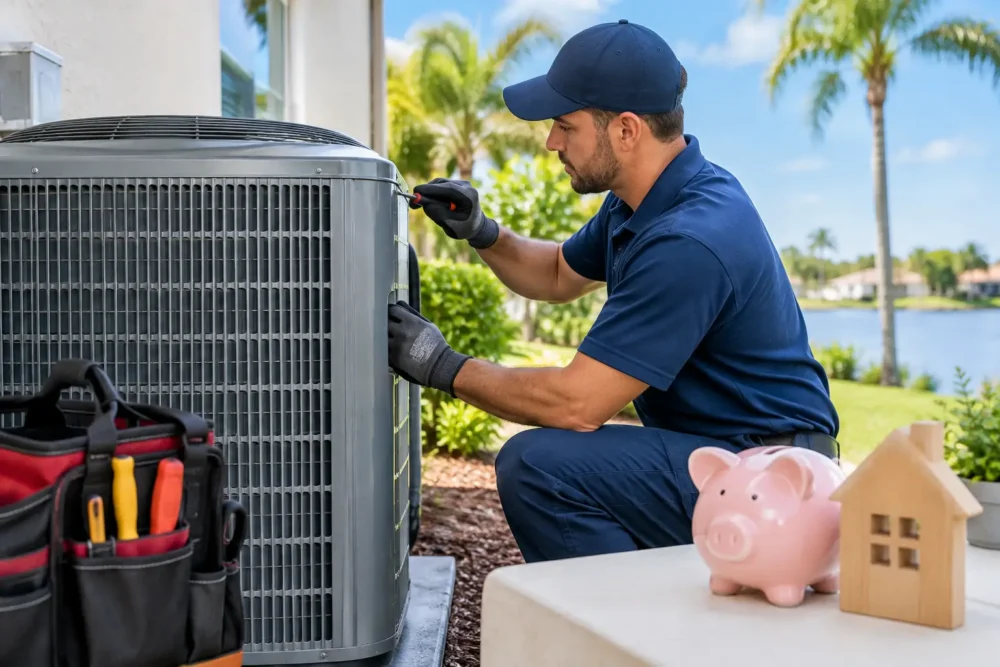
The technician may clean accessible components, inspect the outdoor condenser for debris, check for signs of refrigerant trouble, confirm that electrical connections are secure, and test the system’s operation. They can also identify whether a dirty coil, aging part, duct concern, or thermostat issue deserves attention.
For Florida property owners, the condensate drain deserves special attention. Air conditioners remove a great deal of moisture from indoor air, and that water has to drain away correctly. A clogged drain line can lead to water damage, system shutdowns, musty odors, or excess indoor humidity. Addressing it early is generally easier than dealing with water around an air handler later.
If your home has a smart thermostat, maintenance is also a good time to verify that schedules and settings make sense for how you actually live. There is little value in cooling an empty home to the same temperature all day, but setting the temperature too high during humid weather can make the system work hard to recover when you return. The right balance depends on the home, occupants, and humidity conditions.
How Often Should You Schedule Service?
For most Treasure Coast homes, twice-yearly maintenance is a sensible target: once before the strongest cooling season and again later in the year. A system that runs nearly nonstop, serves a large household, or cools a rental or vacation property may benefit from closer attention.
Commercial spaces also need a maintenance plan based on their use. A small office, retail store, restaurant, or rental property can have different airflow demands, occupancy levels, and operating hours. Waiting for the AC to fail is rarely the least expensive option when customer comfort, employee productivity, inventory, or tenant satisfaction is on the line.
If you have missed maintenance for a year or two, scheduling service is still worthwhile. The goal is not to find fault with an older system. It is to understand its condition, correct avoidable inefficiencies, and make a clear plan for repairs or replacement if needed.
When Maintenance Will Not Be Enough to Cut Costs
Maintenance helps a system operate properly, but it cannot make an aging or undersized unit perform like a new high-efficiency model. If your air conditioner is more than 10 years old, needs frequent repairs, runs constantly, or cannot maintain comfort during normal summer weather, it may be nearing the point where replacement deserves a serious conversation.
Duct leakage, poor attic insulation, old windows, and thermostat habits can also drive high bills. In some cases, the AC is doing exactly what it can, but cooled air is escaping or heat is entering the home faster than the equipment can manage.
There is also a trade-off with very low thermostat settings. Setting the thermostat far below your normal comfort temperature does not cool the home faster. It usually makes the system run longer. A steady, reasonable setting paired with a properly maintained system is often the more efficient approach.
Signs Your AC May Be Wasting Energy
Pay attention if your utility bills climb without a clear change in weather or usage. Other warning signs include weak airflow, warm air from vents, rooms that never feel comfortable, frequent on-and-off cycling, unusual sounds, water near the indoor unit, or humidity that feels high even while the AC is running.
These signs do not automatically mean you need a new system. They do mean it is time for a professional inspection. The sooner the cause is identified, the more options you may have to correct it before the issue becomes a major repair.
A Practical Way to Protect Comfort and Costs
A maintenance visit gives you a clearer picture of what your equipment needs now, not after it quits on the hottest day of the year. It can help your AC use less energy, reduce the chance of sudden repairs, and extend the useful life of a system that works hard in Florida’s climate.
Treasure Coast Air Conditioning has served local families and property owners since 1990 with experienced service, prompt repairs, and maintenance focused on dependable comfort. If your system is running longer, cooling unevenly, or simply has not been checked recently, scheduling service now can be a smart way to protect your next electric bill and your peace of mind.