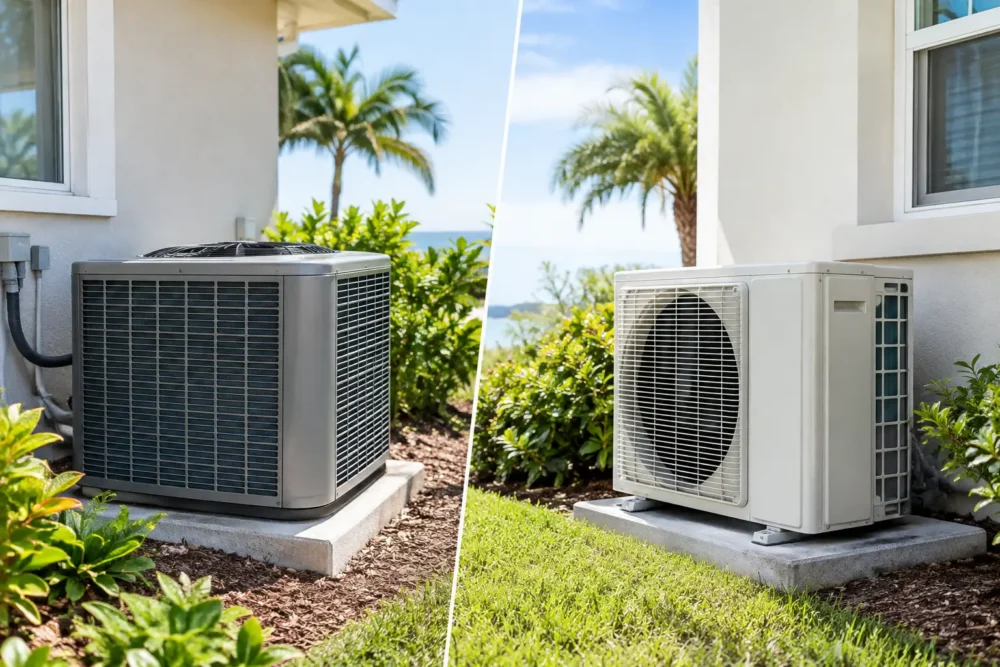
When your cooling system is nearing the end of its life, the choice is rarely as simple as replacing it with the same thing. A heat pump versus air conditioner comparison matters in South Florida because both systems can keep your home cool, but they handle the occasional chilly night, energy use, and upfront investment differently.
For homeowners in Stuart, Port St. Lucie, Jensen Beach, and across the Treasure Coast, the right choice depends on more than the name on the equipment. Your current ductwork, the condition of your existing system, your heating needs, and the quality of installation all play a part. Here is what to consider before making a replacement decision.
Heat Pump Versus Air Conditioner: The Main Difference
During cooling season, a central air conditioner and a heat pump work in very similar ways. Both use refrigerant to pull heat out of the air inside your home and move it outdoors. Both rely on an indoor air handler or furnace, an outdoor unit, ductwork, a thermostat, and regular maintenance to perform reliably.
The difference shows up when you need heat. A standard central air conditioner only cools. It needs a separate heat source, such as electric heat strips, a furnace, or another heating system, when outdoor temperatures drop.
A heat pump can reverse its operation. Instead of moving heat from inside to outside, it gathers available heat from the outdoor air and brings it indoors. Even on a cool Florida morning, outdoor air contains heat that the system can use. This gives a heat pump the ability to provide both heating and cooling from one primary system.
For many Treasure Coast homes, that all-in-one capability is the biggest reason to consider a heat pump. Florida does not have long, severe winters, so homeowners often want efficient heat for short cold spells without installing a full furnace system.
How Each System Performs in Florida Weather
Cooling performance is often comparable
A properly sized heat pump can cool a home just as effectively as a properly sized air conditioner. Neither option automatically delivers better comfort simply because of its type. The system must be matched to the home, installed correctly, and maintained over time.
Humidity control deserves special attention in our climate. Your AC system does more than lower the temperature. It also removes moisture as warm indoor air passes across the cold evaporator coil. Oversized equipment may cool a home too quickly, shutting off before it removes enough humidity. The result can be a house that feels clammy even when the thermostat says it is cool.
That is why equipment selection should start with a professional evaluation, not a guess based on the size of the old unit. Square footage matters, but so do insulation, windows, ceiling height, occupancy, duct condition, shade, and sun exposure.
Heat pumps make sense for mild winters
A heat pump is especially well suited to the Treasure Coast’s mild heating season. It can provide comfortable heat efficiently during the days and nights when you need it, then switch back to cooling when the weather warms up.
Most heat pumps include electric auxiliary heat for colder conditions or when the system needs extra support. In Florida, this backup heat generally runs far less often than it would in colder states. That can make a heat pump an efficient, practical choice for year-round comfort.
A conventional AC system paired with electric heat can still be a good fit, particularly if you are replacing only certain components or have unique property requirements. The best option depends on the complete system, not one feature alone.
Upfront Cost and Long-Term Operating Costs
Heat pumps can cost more upfront than a comparable air conditioner because they include the components needed to reverse the refrigeration cycle for heating. The price difference varies by efficiency level, equipment size, electrical needs, brand, and installation requirements.
That higher initial price may be worthwhile when a heat pump replaces both cooling equipment and an aging or inefficient heating setup. It may also reduce heating costs compared with electric resistance heat, which creates heat directly rather than transferring it.
An air conditioner may have a lower purchase price if your home already has a heating system that is in good condition and meets your needs. For a homeowner focused strictly on cooling replacement, that can be a sensible path.
Energy savings should be viewed realistically. A high-efficiency system can help lower utility use, but it will not solve problems caused by leaky ductwork, poor insulation, a dirty filter, or an improperly sized unit. Before comparing efficiency ratings, make sure the installation plan addresses the home as a whole.
Efficiency Ratings to Understand Before You Buy
You do not need to become an HVAC expert to make a confident decision, but a few ratings are useful during an equipment quote.
SEER2 measures cooling efficiency. Higher SEER2 ratings generally indicate that the system uses less electricity to provide the same amount of cooling under standardized conditions. Because South Florida homes run cooling systems for much of the year, this rating can have a meaningful effect on long-term operating costs.
HSPF2 measures heating efficiency for heat pumps. A higher HSPF2 rating indicates more efficient heating performance. This number is relevant when comparing heat pump models, though it is often less important to a Florida buyer than cooling performance and humidity control.
Look beyond the rating printed on the brochure. A system with an impressive efficiency rating may not perform as expected if airflow is restricted, refrigerant levels are incorrect, or ducts are poorly sealed. Professional installation and follow-up maintenance protect the investment you make in new equipment.
Installation Details That Can Change the Decision
Replacing HVAC equipment is not always a one-for-one swap. A technician should inspect the outdoor unit location, electrical connections, condensate drainage, indoor equipment, ductwork, and thermostat compatibility before recommending a system.
If your ductwork leaks into an attic or crawlspace, conditioned air can be lost before it reaches the rooms where you need it. If the drain line is clogged or poorly routed, Florida humidity can create water damage risks. If the air handler is aging while only the outdoor unit is replaced, the equipment may not operate as an efficient matched system.
Smart thermostat compatibility can also factor into the decision. A thermostat must be configured correctly for the type of heat installed, particularly when a heat pump uses auxiliary heat. The wrong settings can cause the backup heat to run unnecessarily and increase your electric bill.
For rental homes, seasonal properties, offices, and retail spaces, reliable controls and preventive maintenance are especially valuable. An unexpected breakdown in humid weather can quickly become a tenant, customer, inventory, or property-protection problem.
Maintenance Needs Are Similar for Both
Heat pumps and air conditioners require much of the same care. Change or clean filters as recommended, keep the outdoor unit clear of vegetation and debris, and schedule professional maintenance before small problems become expensive repairs.
Heat pumps operate in both cooling and heating modes, so they work year-round. That makes routine inspections particularly important. A technician can check electrical components, refrigerant performance, drain lines, coils, airflow, and thermostat operation while identifying wear before it leads to a no-cool or no-heat call.
No system is maintenance-free. Skipping service can reduce efficiency, strain parts, affect indoor comfort, and shorten equipment life. In a Florida home where cooling is a daily necessity for much of the year, preventive care is one of the most practical ways to avoid a surprise breakdown.
Which Choice Is Right for Your Property?
Choose a heat pump when you want one system for efficient cooling and heating, your current heating setup is due for replacement, or you want a practical solution for Florida’s mild winters. It is often the preferred option for homeowners replacing an older all-electric system.
Choose a central air conditioner when you have a separate heating system that is still dependable, or when a system evaluation shows that retaining the existing heating equipment makes the most financial sense. A lower upfront cost can be a valid priority, especially when the cooling side of the system is the immediate concern.
The right answer is not always the most expensive model or the highest efficiency rating. It is the system that is properly sized, professionally installed, suited to your home, and supported with dependable service after installation.
Treasure Coast Air Conditioning has helped local families and property owners make these decisions since 1990. If your system is more than 10 years old, needs frequent repairs, struggles with humidity, or cannot keep up on hot afternoons, schedule a professional evaluation before it fails completely. A clear recommendation now can help you choose comfort on your terms instead of making a rushed decision during an emergency.