
A puddle near your indoor AC unit is not a small housekeeping issue in South Florida. It can be the first sign that moisture is no longer leaving your system as it should. This condensate drain guide explains what the drain does, how to spot trouble early, and when a simple cleanup should become a service call.
Your air conditioner removes more than heat. As warm, humid indoor air passes over the cold evaporator coil, the system pulls water vapor from that air. On a humid Florida day, that can add up to several gallons of water. The condensate drain system moves that water safely outside or to an approved drain location. When it clogs, backs up, or loses its proper slope, the results can include water damage, mold growth, system shutdowns, and an uncomfortable home.
What a Condensate Drain Does
The condensate drain is a small but essential part of your HVAC system. Water collected at the indoor evaporator coil falls into a drain pan, then travels through a PVC drain line. Many systems also have a secondary drain pan and a safety float switch. If water rises too high, the float switch can turn the AC off before the pan overflows.
That shutdown can feel alarming when the thermostat is calling for cooling but the system will not run. In many cases, the safety switch is doing exactly what it was designed to do: preventing water from spilling into a closet, attic, ceiling, or wall.
Because Treasure Coast homes run air conditioning for much of the year, drain lines here work harder than those in milder climates. Algae, mildew, dust, pet hair, and airborne debris can combine inside the line and create a stubborn blockage. A drain problem is especially common after a long stretch of high humidity or when routine maintenance has been delayed.
Condensate Drain Guide: Signs of a Clog
The most obvious warning is standing water around the indoor air handler. But not every issue begins with a visible puddle. Pay attention to changes around the system, particularly if they appear while the AC is running regularly.
A musty smell from a utility closet, garage, or supply vents can indicate standing water in the drain pan or line. You may also notice water stains on a ceiling below an attic air handler, dripping from an emergency drain outlet, or moisture around the outside drain termination.
Another common sign is an AC system that suddenly stops cooling even though the thermostat has power. A tripped float switch may be the reason. Do not keep resetting the thermostat or switch if the system shuts down again. The water has to go somewhere, and forcing the unit to run can turn a manageable drain repair into a damaged ceiling or flooring claim.
If your indoor unit makes gurgling sounds, drains slowly, or repeatedly develops a slime-like buildup near the access opening, schedule service before the line blocks completely. For a rental property or seasonal home, periodic checks matter even more because a leak can go unnoticed for days.
How to Safely Check the Drain Line
Homeowners can perform a basic visual check, but a condensate drain is connected to equipment that uses electricity and contains components that can be damaged by improper cleaning. When in doubt, turn the system off and call a licensed HVAC technician.
Start by locating the indoor air handler and looking for moisture around the cabinet, drain pan, and PVC piping. If you see water actively leaking, turn off the cooling system at the thermostat. If the indoor unit is in an attic and there is water near electrical components, avoid walking around the area or removing access panels yourself.
Many drain lines have a capped vertical access point near the air handler. If you know where it is and can reach it safely, remove the cap and inspect for visible debris. A small amount of water in the pipe may be normal. A full line or water that immediately spills out suggests a blockage farther along.
For a light maintenance flush, some homeowners use distilled vinegar and warm water through the access opening. Avoid harsh drain cleaners, bleach, or chemicals not approved for HVAC condensate lines. They can damage components, create fumes, and do little to remove a heavy algae blockage. Never insert wire, coat hangers, or high-pressure tools into the pipe, since cracked PVC or a disconnected fitting can cause a hidden leak.
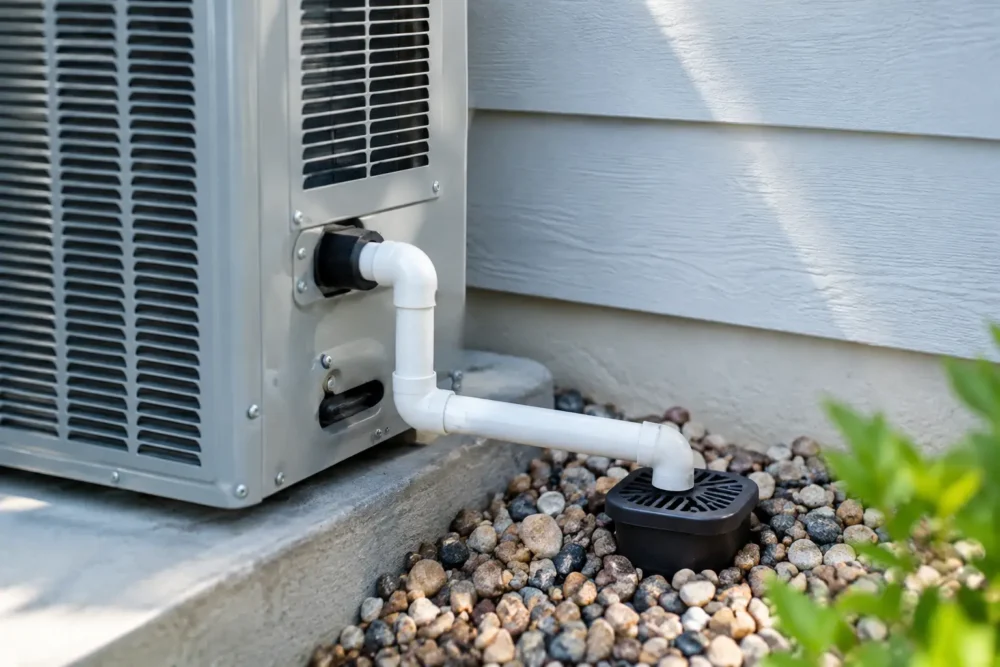
If the line exits outdoors, check that the termination is not buried in mulch, blocked by landscaping, or covered by dirt. Do not seal or cap the end. The outlet needs to remain open for proper drainage.
Why Shop Vacs and Quick Fixes Have Limits
Using a wet/dry vacuum at the outside drain outlet can sometimes remove a simple clog. It is a reasonable option only when you can clearly identify the drain termination, the pipe is accessible, and there is no active indoor overflow. A vacuum may pull out slime and debris, but it will not correct poor pipe slope, a damaged trap, a cracked pan, or a float switch problem.
It also depends on the system setup. Some homes have multiple drain lines, and others have lines tied into plumbing or routed through walls. Pulling from the wrong pipe can be ineffective, and a drain line that is still blocked after vacuuming needs professional attention.
A technician can clear the line with the right equipment, inspect the drain pan, test the float switch, confirm the trap is configured correctly, and make sure water is moving where it should. That full check matters because a clog is sometimes a symptom of another issue, such as an improperly installed drain line or an evaporator coil that needs cleaning.
Preventing Drain Problems in Humid Weather
The best time to deal with a condensate drain is before it overflows. Preventive AC maintenance should include clearing and flushing the drain line, checking the primary and secondary pans, and testing safety switches. During a regular tune-up, a technician can also inspect the evaporator coil and air filter, both of which affect moisture management and airflow.
Changing your air filter on schedule helps more than indoor air quality. A heavily loaded filter restricts airflow across the coil. That can contribute to coil freezing, excess water after thawing, and strain on the system. The right replacement schedule depends on your household, pets, occupancy, and filter type, but a monthly visual check is a smart habit in Florida.
Keep the area around an indoor air handler clear and dry. If your system is in a closet, avoid storing boxes directly against the unit or drain piping. For attic systems, inspect the ceiling beneath the air handler after severe weather, extended travel, or a period of unusually heavy AC use.
Commercial properties need the same attention, often on a more frequent schedule. Restaurants, offices, retail spaces, and rental units may have longer operating hours and more humidity load. A drain issue can interrupt business, damage finishes, and create an unwelcome safety concern for occupants.
When to Call for AC Drain Service
Call for professional help right away when water is leaking from the air handler, a ceiling is stained or sagging, the system keeps shutting off, or you cannot safely locate the source of the problem. Fast action can protect your home and avoid unnecessary downtime during hot weather.
It is also wise to schedule service if you have cleared a drain line more than once in a short period. Repeated clogs are not something to accept as normal. The system may need a better drainage solution, a pan repair, a safety switch replacement, or a closer inspection of the coil and installation.
For homeowners and property managers in Stuart, Jensen Beach, Port St. Lucie, Fort Pierce, Hobe Sound, Hutchinson Island, and Jupiter, Treasure Coast Air Conditioning provides prompt service for AC drainage problems, including urgent failures that cannot wait. A trained technician can identify the cause without guesswork and help protect the comfort and condition of your property.
A clear condensate line is easy to overlook when your AC is working well. Give it attention before the next stretch of humid weather, and treat water around your system as an early call for help rather than a problem to clean up later.