
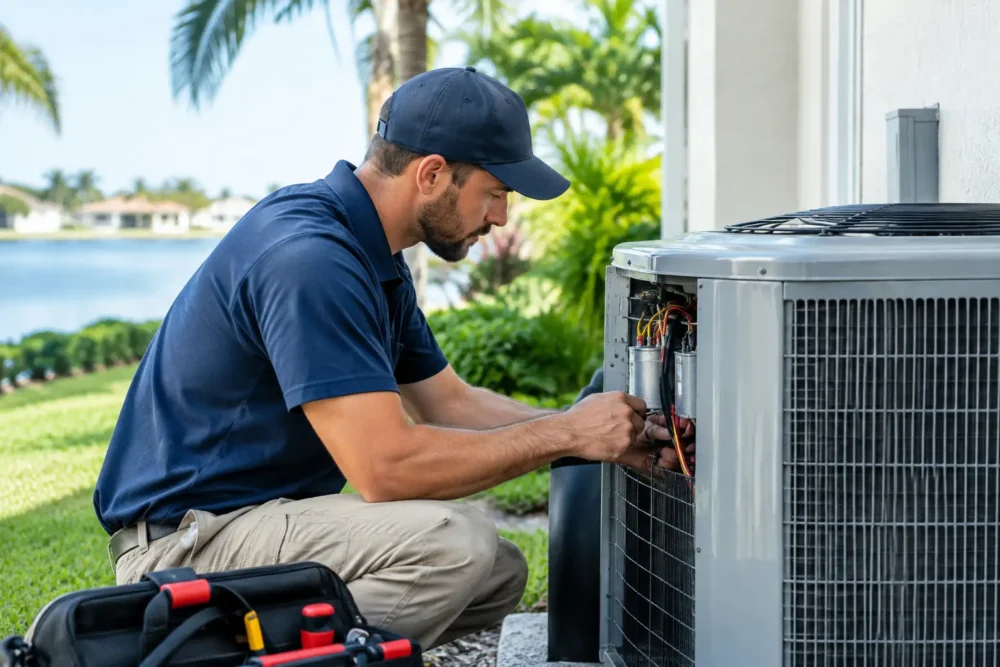
A Palm City AC repair example can show why a system that is still running is not necessarily keeping a home safe, dry, or comfortable. In South Florida, an air conditioner does more than lower the temperature. It manages indoor humidity, supports healthier air, and protects the home from the sticky conditions that can quickly make everyday life miserable.
Consider a common summer service call: a homeowner notices that the thermostat is set to 74 degrees, but the indoor temperature has climbed to 80. The vents are blowing some air, though it feels lukewarm. By afternoon, the home feels damp, bedrooms are uncomfortable, and the AC seems to run without stopping.
This is the point when fast professional attention matters. Waiting for the system to completely stop can mean more discomfort, a larger repair, and greater strain on equipment already working hard in Palm City heat.
A Palm City AC Repair Example: The First Signs
The homeowner in this example first noticed a small change. The system took longer to cool after lunch, and the upstairs rooms never seemed to catch up. At first, it was easy to assume the extreme heat was simply asking more of the equipment. But the warning signs became harder to ignore: higher humidity, longer run times, and a utility bill that rose without a clear reason.
When an AC is operating but not cooling well, several issues may be involved. A clogged filter can limit airflow. A dirty outdoor coil can prevent the system from releasing heat. Low refrigerant, a failing capacitor, a damaged blower component, or a thermostat problem can also produce similar symptoms. That is why guessing at the cause often wastes time and money.
A trained technician starts with the full system rather than replacing a part based on one symptom. The goal is to find the actual reason cooling performance changed and explain the repair in plain language before work begins.
What a Professional Diagnosis Looks Like
For this illustrative call, the technician begins by checking thermostat settings, airflow, electrical components, and the condition of the indoor and outdoor equipment. The filter is dirty enough to restrict airflow, but it is not the only issue. The outdoor condenser coil is coated with dirt and debris, forcing the unit to work harder to release heat.
The technician also finds that a weak capacitor is making it difficult for the outdoor unit to start and run efficiently. Capacitors are relatively small electrical components, but they play a major role in helping the compressor and fan motor operate properly. When one begins to fail, the AC may hum, cycle poorly, struggle during the hottest part of the day, or stop working altogether.
In this example, the compressor has not failed. Catching the problem before that happens makes a significant difference. Replacing a weak capacitor, cleaning the coil, and restoring proper airflow can often bring the system back to normal operation without the cost of a major component replacement.
The right repair depends on the system’s age, condition, and maintenance history. A newer unit with an isolated repair need may be an excellent candidate for repair. An older system with repeated breakdowns, poor efficiency, or a costly compressor issue may call for a different conversation.
Why Humidity Changes the Urgency
Florida homeowners often focus on the thermostat number, but humidity tells an equally important story. If a home feels clammy even when the temperature is close to the thermostat setting, the AC may not be removing moisture as it should.
Excess humidity can make 76 degrees feel much warmer. It can also contribute to musty odors, condensation around vents, and conditions that are less comfortable for family members, guests, or tenants. For seasonal residents, an AC problem can be especially concerning when a property sits empty for long periods in hot, humid weather.
A cooling problem does not always mean the system needs replacement, but it should not be ignored. Prompt service can help prevent a small performance concern from becoming a no-cooling emergency on a weekend or late at night.
Repair or Replacement: Making the Practical Choice
After diagnosing the issue, a reputable HVAC professional should help the property owner weigh the options rather than push one answer. Repair is often sensible when the system is reasonably new, has been maintained, and needs an affordable part or cleaning service.
Replacement may be worth considering when the system is more than 10 years old and has a pattern of expensive repairs. It can also make sense when the equipment no longer cools evenly, energy costs keep climbing, or an important component fails and the repair represents a large share of the cost of new equipment.
There is no single age at which every air conditioner should be replaced. Some well-maintained systems provide dependable service beyond a decade, while others show their age sooner because of heavy use, salt air exposure near the coast, or neglected maintenance. The decision should be based on the equipment in front of you, not a generic rule.
For homeowners who choose replacement, properly sized equipment is essential. Bigger is not always better. An oversized system can cool too quickly and leave humidity behind, while an undersized system may run constantly without delivering the comfort the home needs. A professional evaluation helps match the system to the home, usage, ductwork, and comfort goals.
The Preventive Step That Could Have Helped
The repair in this example was manageable because the homeowner called before the system failed completely. Regular maintenance could have made the warning signs easier to catch even earlier.
A seasonal AC visit gives a technician the chance to inspect electrical connections, test system performance, clean components as needed, evaluate drainage, and identify worn parts before they leave you without cooling. Changing filters on schedule is another simple but meaningful habit. The right filter and replacement interval depend on the household, pets, allergies, and system design, so one-size-fits-all advice is not always enough.
Duct condition can matter as well. If some rooms remain warmer than others, airflow is weak, or dust seems to return quickly, the issue may extend beyond the outdoor unit. Duct leakage, restrictions, and indoor air quality concerns can affect comfort even when the AC equipment itself is operating.
When to Call for AC Repair Right Away
Do not wait for regular business hours if the system has stopped cooling during extreme heat, if you smell burning, hear loud grinding or banging, see ice on the equipment, or find water collecting around the indoor unit. Turn the system off if you suspect an electrical issue or serious leak, then call for professional help.
For less urgent symptoms, scheduling service quickly is still the smart move. Short cycling, weak airflow, rising humidity, unusual sounds, and a thermostat that cannot maintain the set temperature are all reasons to have the system checked. Early diagnosis usually offers more options than waiting until the equipment is completely down.
Treasure Coast Air Conditioning has served local homeowners and businesses since 1990 with experienced technicians, prompt same-day service when available, and 24/7 emergency response when comfort cannot wait.
A home should feel like relief from the Florida heat, not another place to endure it. If your AC is running longer, cooling less, or leaving the air damp and uncomfortable, arrange service while the problem is still small enough to give you choices.