
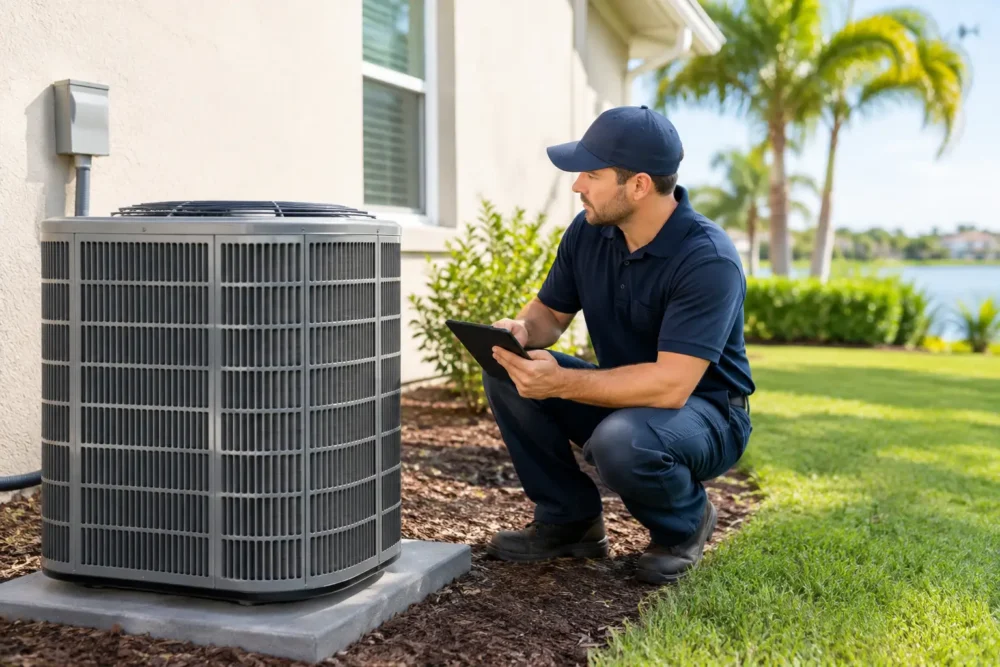
A new air conditioner is one of the biggest comfort decisions a Florida property owner will make. AC installation cost is not a one-price-fits-all number, especially when your system has failed during a humid summer week and your home needs relief quickly. The right question is not simply, “What is the cheapest unit?” It is, “What system will keep this property comfortable, dependable, and affordable to operate for years?”
For homes and businesses along the Treasure Coast, a professional in-home evaluation is the best way to get a clear answer. Square footage matters, but so do insulation, windows, ductwork, humidity, occupancy, and the condition of the existing equipment.
What Does AC Installation Cost in Florida?
Most homeowners can expect a complete central AC replacement to fall within a broad range of roughly $6,000 to $15,000 or more. Smaller, straightforward replacements may be near the lower end. Larger homes, premium efficiency equipment, extensive duct repairs, or systems with advanced comfort features can move the investment higher.
That range generally reflects more than the outdoor unit sitting beside the house. A proper installation may include an indoor air handler, refrigerant line work, electrical connections, a thermostat, a pad or mounting equipment, drainage components, permits, startup, and testing. If a quote looks dramatically lower than another, ask what has been included and what has been left out.
A replacement for a vacation home in Jensen Beach may have different needs than a full-time family home in Port St. Lucie. Likewise, a retail space or office may require different equipment, zoning, or installation planning than a residence. A qualified contractor should size and quote the system for the building in front of them, not rely on a quick guess over the phone.
The Biggest Factors Behind AC Installation Cost
System size and proper load calculation
A bigger air conditioner is not automatically better. An oversized system can cool the air too quickly, cycle on and off more often, and leave indoor humidity behind. In South Florida, that can make a home feel clammy even when the thermostat says the temperature is low.
Technicians determine the appropriate capacity by considering the home’s layout, ceiling height, sun exposure, insulation, windows, and more. Proper sizing protects comfort and helps prevent needless equipment and operating costs.
Efficiency rating and operating costs
Higher-efficiency systems often cost more upfront, but they can use less electricity over time. This matters in a climate where AC runs for much of the year. The best choice depends on how long you plan to own the property, your current utility bills, and how consistently the system is used.
For a seasonal property, reliability, humidity control, and remote thermostat access may carry as much value as the highest available efficiency rating. For a primary residence with heavy year-round use, investing in stronger efficiency may make more sense. A good recommendation weighs both the installation price and the monthly cost to cool your space.
Ductwork, airflow, and indoor components
Your new AC can only perform as well as the system delivering air through the property. Leaky, undersized, damaged, or poorly designed ductwork can waste cooled air and make some rooms harder to keep comfortable. Older homes may also need attention to return-air pathways, vents, drain lines, or electrical components.
Duct modifications add to the initial price, but they should not be dismissed as an unnecessary extra. If airflow problems are ignored, even a high-quality new system may struggle to provide the comfort you expect. In some cases, duct cleaning or targeted repairs can improve the performance of an otherwise sound duct system. In others, replacement is the more responsible long-term choice.
Installation access and site conditions
A simple changeout in an accessible garage or closet is usually less involved than replacing equipment in a tight attic, rooftop location, or difficult crawlspace. Corroded connections, aging electrical service, a damaged condenser pad, or a failing condensate drain can also affect the scope of work.
Florida’s humidity makes drainage especially important. A properly installed drain and safety protection help reduce the risk of water damage if a clog develops. These details may not be the first thing homeowners think about when comparing prices, but they can make a significant difference after installation day.
Permits and professional workmanship
Permits and code requirements are part of protecting your property and investment. A licensed HVAC contractor handles the installation process correctly, verifies safe operation, and tests the system before the job is complete.
Professional workmanship is not just about getting cold air on the first day. It includes correct refrigerant charging, secure electrical connections, proper airflow, drainage setup, and a system that is installed according to manufacturer requirements. Cutting corners can lead to poor efficiency, repeat repairs, shortened equipment life, and warranty concerns.
Why the Lowest Quote Can Become the Most Expensive Choice
When an AC stops working, homeowners understandably want a fast, affordable solution. But two quotes with the same equipment brand may not represent the same job. One may include permits, a new thermostat, code updates, drain protection, startup testing, and cleanup. Another may cover only the most basic swap.
Before making a decision, ask whether the quote includes the full system, labor, permits, warranty information, electrical work if needed, ductwork recommendations, and removal of old equipment. Also ask how the contractor determined the system size. Clear answers are a good sign that you are dealing with a company focused on long-term comfort rather than a rushed sale.
There are times when a lower-priced, basic system is the right fit. For example, a property owner preparing a home for sale or replacing equipment in a lightly used rental may prioritize the initial investment. The key is making that choice with a full understanding of the trade-offs, not because essential work was hidden from the estimate.
Repair or Replace: When Is Installation the Better Value?
If your AC is under 10 years old and the repair is minor, fixing it may be the most sensible move. Regular maintenance, clean filters, and prompt repairs can add useful years to an existing system.
Replacement becomes more worth considering when the unit is 10 to 15 years old, needs frequent repairs, uses outdated refrigerant, cools unevenly, or causes rising electric bills. A major repair on an aging unit can be difficult to justify if another component may fail soon afterward. New equipment may also offer better humidity management and quieter performance, which are meaningful improvements in a Florida home.
An honest evaluation should give you options. You deserve to know whether a repair can reasonably keep the current system running, as well as what a replacement would cost and why it may be recommended.
How to Plan for a New AC Without Rushing the Decision
The easiest time to replace an aging system is before it quits on the hottest day of the year. If your equipment is showing its age, schedule an evaluation while you still have time to compare options and plan your budget. Financing for qualified new equipment can help spread out the investment, allowing homeowners to choose the system that fits their needs instead of delaying a necessary replacement.
It also helps to think beyond the equipment itself. Consider whether you have hot or humid rooms, dust concerns, allergies, inconsistent airflow, or a thermostat that no longer gives you the control you want. An installation visit is an opportunity to address those comfort issues together, whether that means duct improvements, indoor air-quality equipment, or a smart thermostat.
For more than three decades, Treasure Coast Air Conditioning has helped local families and property owners make these decisions with straightforward recommendations and skilled installation. Whether you are planning ahead or facing an unexpected breakdown, the goal is the same: a properly sized system, clearly explained costs, and dependable comfort when Florida weather refuses to let up.
A clear, written estimate gives you room to make a confident decision. Ask questions, compare the complete scope of work, and choose the installation plan that protects your comfort long after the first cool air starts flowing.