
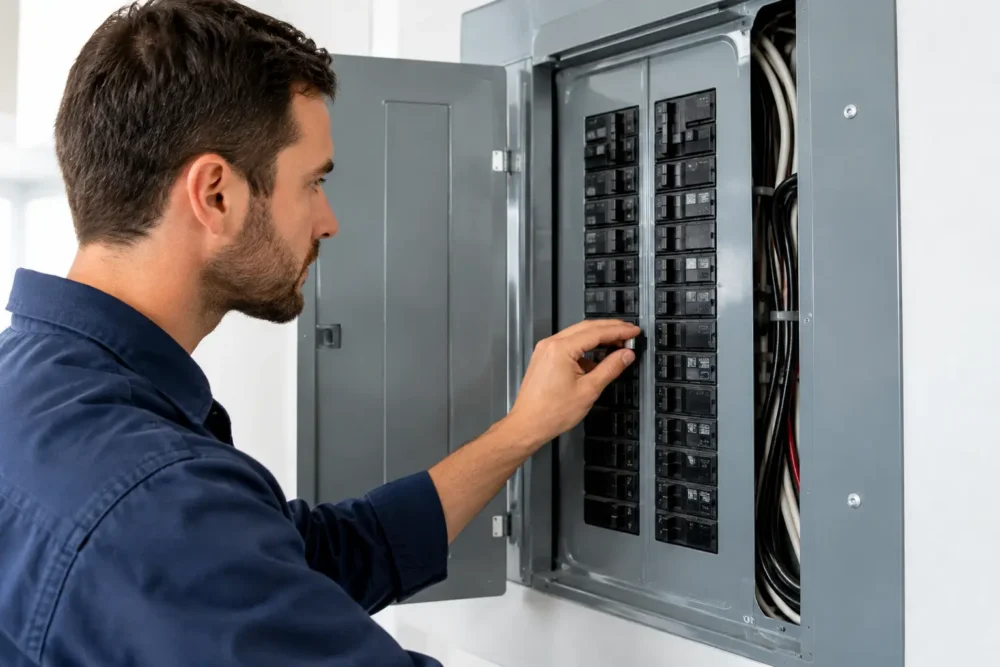
When your air conditioner trips a circuit breaker on a hot Florida afternoon, it is more than an inconvenience. Your system is signaling that something is drawing too much power, operating unsafely, or struggling to do its job. Understanding what causes AC circuit trips can help you respond safely and know when it is time to call for professional AC repair.
A breaker is designed to cut power before overheated wiring, damaged components, or an electrical fault creates a more serious problem. You may be able to check a few simple things, but repeatedly resetting a breaker is never the answer. If it trips again, leave it off and arrange service.
Why an AC breaker trips
Your central AC system uses significant electricity, especially when the outdoor condenser starts. The breaker will trip when the electrical current rises above what that circuit can safely handle. Sometimes the cause is minor, such as restricted airflow. Other times, it points to a failing motor, compressor, capacitor, or electrical connection.
The timing of the trip provides useful clues. A breaker that trips the instant the system turns on may indicate a starting or wiring problem. One that trips after the AC has run for several minutes may be related to overheating, airflow, or a component that fails under load.
1. A dirty air filter is restricting airflow
A clogged filter is one of the most common and preventable AC problems. When airflow is blocked, the indoor blower has to work harder to move air through the system. The evaporator coil can become too cold and freeze, which further limits airflow and places additional strain on the equipment.
Check your filter first if it looks gray, packed with dust, or has not been changed recently. In South Florida, where an AC system may run most of the year, many homes need filter changes more often than expected. A clean, correctly sized filter supports efficient operation, but it will not solve every breaker issue. If the breaker has already tripped more than once, do not assume a new filter makes repeated resets safe.
2. The outdoor condenser is dirty or overheated
Your outside unit releases heat collected from inside your home. Leaves, grass clippings, salt air buildup, and dirt on the condenser coil can trap that heat. The system then runs hotter and longer, causing the compressor and fan motor to draw more electricity.
Keep plants, mulch, and stored items away from the outdoor unit. Do not cover it while it is operating, and do not attempt to straighten damaged coil fins or wash electrical components yourself. A professional maintenance visit includes proper coil cleaning and an inspection of the electrical system, helping the unit run with less strain during peak summer demand.
3. A failing capacitor is making startup difficult
The capacitor gives the compressor and fan motor the electrical boost they need to start and continue running. As it weakens, the system may hum, struggle to start, cycle inconsistently, or trip the breaker when the outdoor unit kicks on.
Capacitors store an electrical charge even after power is turned off. This is not a homeowner repair. A licensed technician can test the component, confirm the correct replacement rating, and check whether another issue caused the capacitor to fail prematurely.
4. The compressor is drawing too much power
The compressor is the heart of the cooling process and one of the most expensive AC components to replace. If it is overheating, aging, mechanically damaged, or having trouble starting, it can pull excessive amperage and trip the breaker.
A compressor problem may show up as warm air from the vents, loud buzzing from the outside unit, or a breaker that trips shortly after cooling starts. It can also be connected to low refrigerant, dirty coils, or electrical wear. The right repair depends on the system’s age, condition, and diagnosis. On an older unit, a major compressor repair may need to be weighed against replacement costs and long-term energy savings.
5. A blower or condenser fan motor is failing
Your AC has motors that move air indoors and outdoors. A worn blower motor may overheat because of age, dust buildup, a failing bearing, or restricted airflow. A condenser fan motor can create similar trouble outside, leaving heat trapped around the compressor.
You might hear squealing, grinding, rattling, or an unusual humming sound before a motor fails completely. You may also notice weak airflow indoors or a fan outside that is not spinning as it should. Turn the system off if you see smoke, smell burning, or hear loud electrical buzzing, then call for service right away.
6. Electrical wiring or connections are damaged
Loose terminals, worn wiring insulation, corroded disconnects, and damaged contacts can all create resistance and heat. In coastal areas, humidity and salt exposure can accelerate corrosion around outdoor equipment. Rodents and landscape damage can also affect wiring.
Electrical faults are a serious reason an AC circuit breaker may trip. They require trained diagnosis because the visible issue is not always the source of the problem. A technician can inspect the disconnect box, wiring, contactor, breaker condition, and operating amperage without putting your home or equipment at further risk.
7. The circuit or breaker is undersized
An air conditioner should be on a dedicated circuit sized for the equipment’s electrical requirements. If a system was replaced without the electrical service being properly evaluated, or if the breaker itself has become weak over time, the circuit may trip even though the AC is not severely damaged.
This does not mean you should install a larger breaker. Oversizing a breaker without confirming the wire size and equipment specifications can allow wiring to overheat before the breaker trips. An HVAC professional and, when needed, a qualified electrician should determine the correct repair.
8. Low refrigerant is causing the system to work too hard
Refrigerant does not get used up during normal AC operation. If the level is low, there is usually a leak. Low refrigerant can lead to frozen coils, poor cooling, longer run times, and compressor stress. Eventually, that stress can contribute to a breaker trip.
Adding refrigerant without finding the leak is only a temporary measure. Proper service includes locating the issue, making the appropriate repair when possible, and charging the system to manufacturer specifications.
What to do when your AC trips a breaker
Start by turning your thermostat to Off. At the electrical panel, look for a breaker that is sitting between On and Off, then move it fully to Off before resetting it once. If the AC runs normally and does not trip again, monitor it closely and schedule maintenance if the system has been struggling.
If the breaker trips immediately, trips again the same day, or will not stay on, leave it off. Do not keep resetting it, use an extension cord, or try to bypass the circuit. Repeated resets can damage the compressor and raise the risk of electrical damage.
Call promptly if you notice a burning smell, smoke, melted insulation, water around electrical equipment, unusual noises, or no cooling during extreme heat. For families, seasonal residents, and businesses, fast action protects more than comfort. It can prevent a smaller repair from becoming an equipment failure.
Prevent circuit trips with regular AC care
Not every electrical problem can be prevented, but routine maintenance catches many warning signs early. A professional tune-up can identify weak capacitors, worn contacts, dirty coils, loose wiring, abnormal amperage, drainage problems, and airflow restrictions before they leave you without cooling.
Treasure Coast Air Conditioning has served local homeowners and businesses since 1990 with responsive repair and maintenance service. If your AC is tripping its breaker in Stuart, Jensen Beach, Port St. Lucie, Fort Pierce, Hobe Sound, Hutchinson Island, or Jupiter, a trained technician can pinpoint the cause and help restore safe, dependable cooling.
Your breaker is doing its job by getting your attention. Treat a recurring trip as an early warning, not a nuisance, and get the system checked before the next hot day puts even more pressure on it.