A closed-up Florida home can hold onto more than cool air. Pollen, dust, pet dander, cooking odors, and particles brought in from outdoors can circulate through living spaces, especially when the AC runs most of the year. Air purifiers can be a practical part of a healthier, fresher-feeling home, but the right solution depends on what is affecting your indoor air and how your HVAC system is set up.
For homeowners in Stuart, Port St. Lucie, Jensen Beach, and nearby communities, the goal is usually simple: keep the home comfortable, protect the AC system, and reduce the airborne irritants that make rooms feel stuffy or unpleasant. Here is what to consider before choosing an air-cleaning solution.
What Air Purifiers Actually Do
Air purifiers pull room air through one or more filters or cleaning technologies, then return cleaner air to the space. Depending on the equipment, they may capture airborne particles such as dust, pollen, pet dander, and some smoke particles. Certain systems also help reduce odors and gaseous pollutants with activated carbon media.
They are helpful, but they are not a cure-all. An air purifier cannot fix a roof leak, remove mold growing inside a wall, solve a moisture problem, or replace regular housekeeping and HVAC maintenance. It also cannot make a poorly sized or failing air conditioner perform correctly.
The best results come from addressing the source of an air-quality issue while using the appropriate filtration or purification equipment. For example, if a home has persistent musty odors, excess indoor humidity may be the real concern. If dust appears quickly after cleaning, duct leakage, an unsuitable filter, or construction activity nearby could be contributing.
Why Indoor Air Can Be a Bigger Issue in South Florida
Florida homes are built to keep cooled air inside. That is good for energy use and comfort, but it means indoor contaminants can remain in the home without enough fresh-air exchange or effective filtration.
High humidity adds another layer to the decision. When indoor humidity stays too high, a home can feel clammy even at a comfortable thermostat setting. Humidity can also encourage conditions that lead to musty odors and biological growth. A purifier may capture airborne particles, but it does not remove moisture from the air. In many cases, proper AC operation, drainage, ventilation, or dedicated dehumidification deserves attention first.
Seasonal residents may notice this issue when a home has been closed up for weeks or months. Property managers can face the same challenge in rental homes, offices, and retail spaces where occupancy changes throughout the year. A professional indoor-air-quality evaluation can help separate a filtration need from a humidity or HVAC performance problem.
Portable Units vs. Whole-Home Purification
The main choice is whether to clean the air in one room or throughout the home.
Portable Air Purifiers
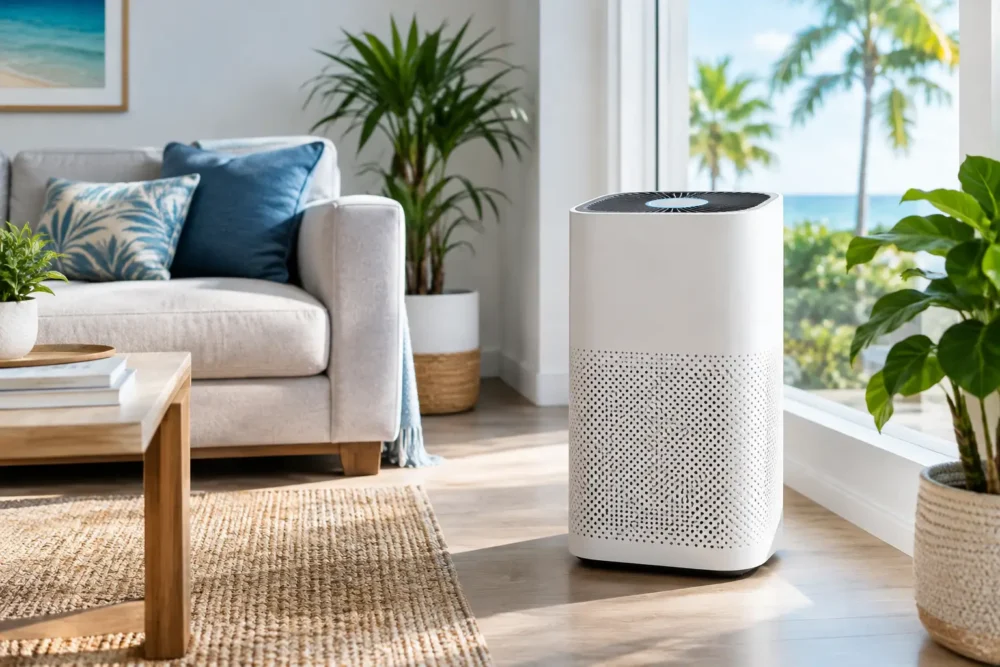
A portable unit is placed in the room where it is needed most, such as a bedroom, nursery, home office, or living room. It can be a sensible option for a household member affected by seasonal allergies, a room with pets, or an area where smoke or cooking odors are a concern.
The limitation is coverage. A portable unit only treats the air that reaches it, and open doors allow untreated air to move freely between rooms. One small device in a large living area will not provide the same result as a properly sized unit. Look at the manufacturer’s recommended room size and select a model sized for the actual space, not the minimum advertised coverage.
Whole-Home Air Purifiers
A whole-home system is installed as part of the HVAC system, usually near the air handler or ductwork. As your central AC circulates air, the purifier treats air moving through the system. This approach is convenient because it can serve multiple rooms without adding equipment to each one.
Whole-home options vary. Some rely on high-efficiency media filters, while others use additional purification technology designed to address particles, odors, or other airborne contaminants. The right system depends on the home’s duct design, airflow, existing equipment, and the specific concern you want to address.
There is a trade-off: whole-home equipment requires professional selection and installation, and its effectiveness depends on how often the HVAC system runs. In return, it can offer cleaner air across more of the home without taking up floor space or creating extra noise in individual rooms.
How to Choose the Right Air Purifier
Do not start with the biggest box or the strongest marketing claim. Start with the problem you are trying to solve. A good decision usually comes down to four questions:
- What is in the air that bothers you most: dust, pollen, pet dander, odors, smoke, or something else?
- Is the concern limited to one room, or does it affect the entire home or business?
- Is indoor humidity under control, especially during the rainy season?
- Can your HVAC system safely handle a more efficient filter or an added purification system?
For particle concerns, a unit with a high-efficiency particulate air, or HEPA, filter can be useful in a portable application. HEPA filters are designed to capture very small airborne particles, but the unit must be properly sized and operated consistently.
For odors, consider equipment with substantial activated carbon filtration. Thin carbon sheets may offer limited odor reduction, while more carbon media generally provides greater odor-adsorbing capacity. If odors are coming from a drain issue, damp materials, dirty ductwork, or a malfunctioning AC component, though, source correction is still necessary.
Be cautious with products that intentionally produce ozone. Ozone can irritate the lungs and is not a substitute for mechanical filtration or proper ventilation. If a product’s claims sound too broad, ask for clear information about what it removes, how it is tested, and what maintenance it requires.
Your HVAC Filter Matters More Than Many Homeowners Realize
The filter in your air conditioner is the first line of defense for the equipment and a major part of indoor air quality. A dirty filter restricts airflow, which can make the system work harder, reduce cooling performance, and contribute to unnecessary wear.
It is tempting to buy the highest-rated filter available. However, a denser filter can create too much resistance if the HVAC system was not designed for it. Reduced airflow may lead to comfort issues and, in serious cases, system problems. The right filter is one that provides appropriate filtration while allowing the system to move enough air.
This is why filter selection should not be guesswork. A technician can check your system, filter cabinet, ductwork, and airflow before recommending an upgrade. For many households, regular filter changes and preventive AC maintenance make a noticeable difference before additional equipment is even added.
Installation and Maintenance Make the Difference
An air purifier is only as useful as its setup and upkeep. Portable units need clean intake areas and replacement filters on schedule. Whole-home systems need compatible installation, correct electrical connections where required, and maintenance according to the manufacturer’s recommendations.
Do not ignore warning signs after a filtration upgrade. Weak airflow from vents, new whistling sounds, rooms that no longer cool evenly, or a system that runs longer than usual should be checked promptly. These may indicate that the filter or purifier is affecting airflow, or that an existing HVAC issue needs attention.
Duct cleaning can also be worthwhile in specific situations, such as after major remodeling, visible debris in ducts, pest contamination, or a history of moisture problems that has been professionally corrected. It is not a replacement for filtration, nor is it needed on a fixed schedule for every property. The condition of the system should guide the decision.
When to Call an Indoor Air Quality Professional
A professional assessment is especially helpful when air concerns persist despite cleaning and routine filter changes. Ongoing musty odors, frequent dust buildup, allergy complaints that worsen indoors, inconsistent airflow, visible moisture around equipment, or repeated AC drain issues deserve a closer look.
Treasure Coast Air Conditioning can evaluate the HVAC side of indoor air quality, including filtration options, humidity concerns, duct conditions, and whole-home purification solutions. The goal is not to sell a device that does not fit your home. It is to identify what will make a meaningful difference while keeping your system operating reliably.
If your home feels less fresh than it should, start with the basics: replace the filter, watch indoor humidity, and pay attention to where and when the problem occurs. Those details can point you toward the right solution and help keep your family comfortable through every Florida season.