
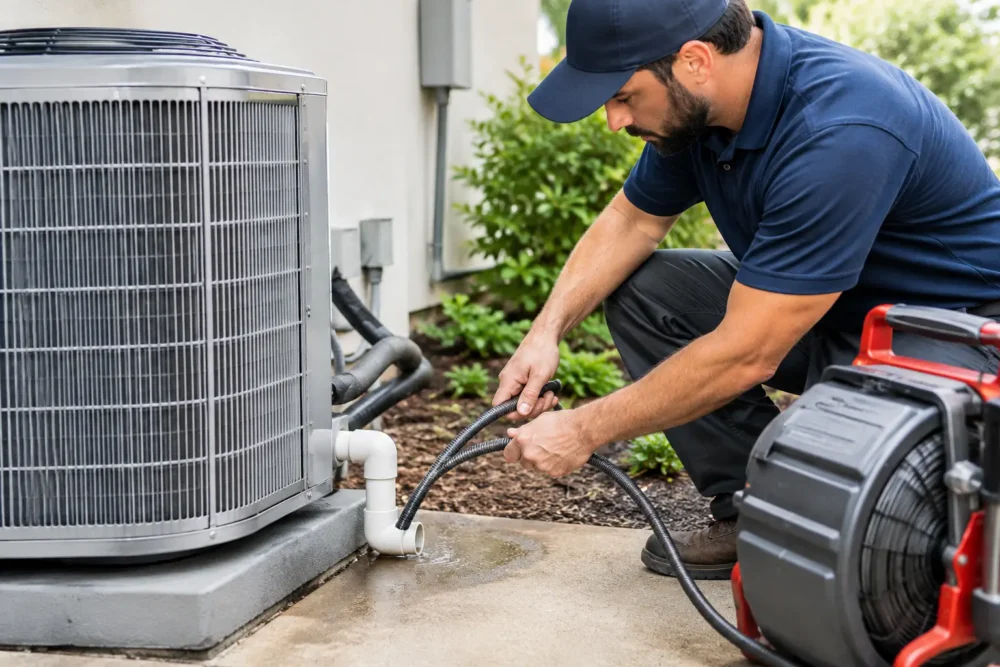
A small drip from an indoor AC unit can turn into a stained ceiling, damaged drywall, mold growth, or a system that shuts itself off during the hottest part of the day. In South Florida, where air conditioners run hard for much of the year, AC drain cleaning is not a minor chore. It is a practical way to protect your home, your comfort, and your equipment.
Your air conditioner removes moisture from indoor air as it cools. That moisture collects in a drain pan and travels through a condensate drain line to a safe discharge point outside. When that line becomes clogged, the water has nowhere to go. The result can range from a musty smell to an urgent water leak.
Why AC Drain Lines Clog So Often in Florida
A condensate line carries water, but it is not always clean water. Dust from the air handler, organic buildup, airborne debris, and naturally occurring algae can collect inside the line over time. Florida’s heat and humidity create favorable conditions for that buildup, especially when an AC system runs daily.
A partially clogged line may still drain slowly, which makes the problem easy to overlook. Eventually, the restriction gets worse. Water begins backing up into the drain pan, and a safety float switch may shut down the system to prevent overflow. That safety feature can save your ceiling, but it also leaves you without cooling until the drain issue is corrected.
Older systems, homes with attic air handlers, and properties that sit vacant for part of the year can all need closer attention. Seasonal residents should be especially cautious. A drain backup can develop while no one is home to notice the first signs of water damage.
Signs You Need AC Drain Cleaning
Do not wait for a major leak to take action. A clogged condensate line often gives clear warnings before it becomes an emergency.
Look for water around the indoor unit or near the air handler closet. A rusted or overflowing drain pan, water stains on a ceiling below an attic unit, and damp drywall all deserve prompt professional attention. If your AC stops running but the thermostat is still calling for cooling, a triggered float switch may be the reason.
Other signs are less obvious. You may notice a musty odor when the system starts, unusually high indoor humidity, or a visible trickle of water where the drain line exits outdoors that suddenly stops. None of these symptoms proves the drain line is the only issue, but each is a good reason to have the system inspected.
A drain problem can also be confused with a refrigerant issue, frozen evaporator coil, or improperly installed drain line. That is why a technician should look beyond the immediate clog if the problem keeps returning.
What Professional AC Drain Cleaning Involves
Proper service is more than blowing air into a pipe and hoping the water moves. A trained HVAC technician starts by locating the blockage and checking whether water has already collected in the primary or secondary drain pan. They also inspect the float switch, drain trap, fittings, and the condition of the line itself.
The line is cleared using the method that best fits the system and the obstruction. Depending on the situation, that may involve suction, specialized cleaning equipment, or a suitable drain-line treatment. The technician then flushes the line and confirms that water flows freely to the discharge point.
Just as important, the technician checks why the drain line clogged. A dirty air filter, for example, can allow dirt to build up around the evaporator coil and drain area. A poorly sloped line can hold water and encourage repeat buildup. A cracked drain pan or failed float switch may require repair rather than simple cleaning.
At Treasure Coast Air Conditioning, a complete drain service is approached as part of your AC system’s overall health, not as a quick fix that ignores the cause.
Can You Clean an AC Drain Line Yourself?
Some homeowners can perform limited, low-risk upkeep, particularly if they know where the drain access is and can reach it safely. Replacing the air filter on schedule, keeping the outdoor drain outlet clear of landscaping debris, and watching for changes in drainage are all helpful habits.
However, DIY work has limits. Pouring the wrong cleaner into a drain line can damage components or create fumes. Using excessive pressure can disconnect fittings or push debris into a harder-to-reach section of the line. If your air handler is in an attic, accessing it without proper footing can be dangerous, and a missed pan overflow can lead to costly damage.
Avoid treating a persistent backup as a weekend project. If water is already present around the unit, the AC has shut down unexpectedly, or there is staining on a ceiling or wall, turn the system off if you can do so safely and call for service. Acting quickly can keep a drain issue from becoming a restoration project.
Do Not Ignore a Repeated Clog
One clog can happen. Frequent clogs usually point to an underlying condition that needs attention. The drain line may be improperly pitched, the evaporator coil may be dirty, the condensate pump may be failing, or the system may be producing more condensation because of airflow or humidity problems.
A professional inspection can separate a routine cleaning need from a repair issue. That distinction matters because repeatedly clearing the same line without correcting the cause can cost more over time and leave your property exposed to another overflow.
How Often Should an AC Drain Line Be Cleaned?
For many Treasure Coast homes, annual drain-line cleaning as part of preventive AC maintenance is a sensible starting point. Systems that run nearly year-round, serve larger households, or have a history of drain backups may benefit from more frequent checks.
Commercial properties and rental units often need a more structured schedule. A blocked drain line in an office, retail space, or occupied rental can interrupt business, inconvenience tenants, and create liability concerns. Property managers should make drain inspection part of regular HVAC service instead of waiting for a tenant to report a leak.
The right interval depends on your equipment, usage, indoor air quality, and the condition of the existing drain setup. A technician can recommend a maintenance plan based on what they find rather than applying the same schedule to every system.
Preventing Drain Backups Between Service Visits
The best prevention starts with clean airflow. Change your air filter regularly according to the filter type, household conditions, and manufacturer guidance. A filter that is loaded with dust makes the entire system work harder and contributes to buildup where moisture collects.
Keep an eye on the area around the indoor unit and the drain termination outside. You should not see standing water, active dripping indoors, or a drain outlet blocked by mulch, soil, or vegetation. If your system includes a condensate pump, listen for unusual operation and have it checked if it seems to run constantly or not at all.
Routine maintenance also gives a technician a chance to catch minor concerns before summer demand exposes them. During a maintenance visit, they can inspect the coil, drain pan, electrical connections, refrigerant performance, and other components that affect cooling and moisture removal.
When a Drain Clog Is an Emergency
Call promptly when water is leaking through a ceiling, collecting near electrical components, or soaking flooring and walls. The same applies if your system shuts down during extreme heat and you have young children, older adults, pets, or anyone whose health may be affected by high indoor temperatures.
For homeowners in Stuart, Jensen Beach, Port St. Lucie, Fort Pierce, Hobe Sound, Hutchinson Island, or Jupiter, fast local HVAC service can make a meaningful difference when a drain backup threatens your home. Same-day help is especially valuable when the source of water is not immediately clear.
A clear condensate line is easy to take for granted until it fails. Keep an eye out for the early warning signs, schedule maintenance before peak heat arrives, and call for professional help at the first sign that water is not draining where it should.