
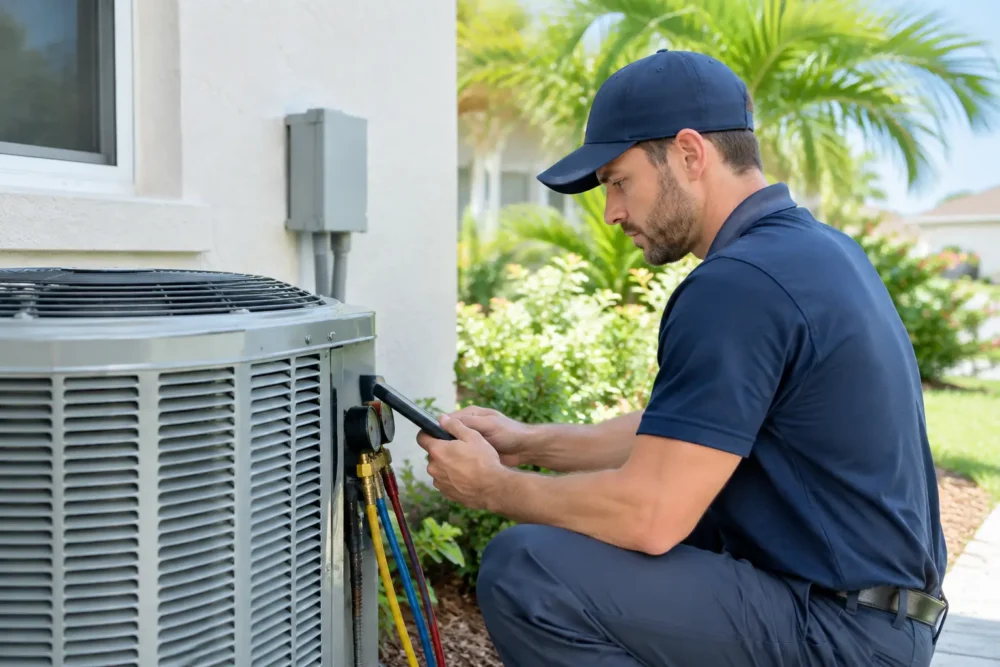
A South Florida air conditioner rarely gets the luxury of an off-season. When it starts blowing warm air, runs without cooling, or shuts down in the middle of the night, AC repair is not something to put off until next week. Heat and humidity can make a home uncomfortable fast, and a small mechanical issue can become a larger, more expensive problem when the system is forced to keep running.
When AC Repair Should Not Wait
Some air-conditioning problems are inconvenient. Others need prompt attention to protect your comfort, equipment, and indoor air quality. If the thermostat is set correctly and your system is still not cooling, start by checking that the breaker is on and the air filter is not severely clogged. If those basics do not solve the problem, it is time to call a qualified HVAC technician.
Warm air coming from supply vents is one of the clearest signs. The cause may be as simple as a thermostat setting, but it can also point to low refrigerant, a failing compressor, an electrical problem, or restricted airflow. Continuing to run the unit will not make it recover. It can place more strain on parts that are already struggling.
Water around the indoor air handler also deserves attention. Florida systems remove a great deal of moisture from the air. When a condensate drain line clogs, water can back up into the unit, leak into ceilings or closets, and trigger a safety switch that stops cooling. A quick repair can prevent water damage and get the system running again.
Call for service promptly if you notice burning smells, electrical odors, loud grinding or banging, repeated breaker trips, or ice on refrigerant lines. Turn the system off if there is a burning odor, smoke, or an unusual electrical issue. These are not repairs to troubleshoot on your own.
The Signs of a Developing AC Problem
Not every repair begins with a complete breakdown. Many homeowners first notice that the house feels different. Bedrooms may stay warmer than the rest of the home. The system may run longer each afternoon. Humidity may feel higher even though the thermostat shows the usual setting.
Higher utility bills can be another early warning. A bill can rise during the hottest part of the year, but a sudden increase without a clear change in your household habits may mean the system is working harder than it should. Dirty coils, a worn capacitor, a blower problem, leaking ductwork, or low refrigerant can all reduce efficiency.
Listen to your equipment, too. A brief click at startup or the steady sound of airflow is normal. New rattling, squealing, buzzing, or metallic banging is not. Noises often reveal a loose component, failing motor, damaged fan blade, or electrical part that should be addressed before it causes more damage.
Short cycling is another common concern. This happens when the AC turns on, runs briefly, shuts off, and restarts again soon after. A clogged filter can contribute, but so can thermostat issues, improper system sizing, refrigerant trouble, or a failing component. Because short cycling increases wear and energy use, it should be professionally diagnosed.
What Happens During a Professional AC Repair Visit
A good repair visit starts with listening. The technician should ask what you have noticed, when the issue began, whether it happens all the time or only during peak heat, and whether any recent changes were made to the thermostat or electrical system.
From there, the technician checks the parts that affect cooling and safe operation. That may include thermostat function, electrical connections, capacitors, contactors, blower performance, refrigerant pressures, drain-line condition, coils, filters, and the outdoor condenser. The goal is not to guess at the problem or replace parts unnecessarily. It is to identify the cause and explain the repair in clear terms.
If a repair is recommended, ask what failed, how the repair addresses the issue, and whether there are related concerns worth monitoring. Most repairs are straightforward when caught early. A worn capacitor, clogged drain, faulty contactor, or damaged thermostat component can often be corrected without replacing the entire system.
The right recommendation depends on the condition and age of the equipment. If your AC is relatively new and has been maintained, repair is usually the sensible path. If it is more than 10 years old, breaks down repeatedly, uses an outdated refrigerant, or needs a major component, replacement may be worth discussing. That does not mean replacement is automatically necessary. It means you deserve a clear comparison of repair cost, remaining reliability, efficiency, and long-term value.
Why Florida Homes Need Fast AC Service
In Stuart, Port St. Lucie, Jensen Beach, and nearby Treasure Coast communities, air conditioning does more than lower the temperature. It helps manage indoor humidity. When humidity climbs indoors, rooms can feel sticky, musty odors may become more noticeable, and moisture can affect comfort throughout the home.
A struggling system may cool just enough to keep the thermostat satisfied while failing to remove moisture effectively. That is why a home can feel uncomfortable even when the temperature setting looks normal. An experienced technician can determine whether the issue is airflow, drainage, refrigerant, equipment operation, ductwork, or another source.
Fast service also matters for seasonal homes, rentals, offices, and retail spaces. A system failure in an unoccupied property can go unnoticed long enough for excessive humidity or a drain-line leak to create a larger problem. Property managers and owners benefit from addressing warning signs early rather than waiting for a total shutdown.
Simple Steps That Help Prevent Repairs
No maintenance plan can prevent every unexpected failure. Electrical parts wear out, storms can affect equipment, and years of Florida heat place real demands on an AC system. Still, a few consistent habits can reduce preventable service calls and help your equipment operate more efficiently.
Change or clean filters on the schedule recommended for your home and filter type. A filter that is packed with dust restricts airflow, forcing the system to work harder and potentially contributing to frozen coils or reduced cooling. Homes with pets, construction dust, allergies, or frequent occupancy may need more frequent filter changes.
Keep the area around the outdoor unit clear of leaves, grass clippings, and stored items. The condenser needs room to move heat out of your home. Do not hose internal components or attempt to straighten coil fins yourself, but do keep plants trimmed back and avoid blocking the unit.
Schedule preventive maintenance before a minor issue turns into an emergency. During a professional tune-up, technicians can inspect electrical components, verify operation, clean key areas, check drainage, and spot wear before it becomes a no-cooling call. Maintenance is especially valuable before the most demanding stretch of summer weather.
Avoid closing too many supply vents or blocking them with furniture. Your system was designed for a certain amount of airflow. Restricting it can create uneven temperatures and unnecessary strain. If one part of your home is consistently warmer, the answer may be a repair, duct adjustment, thermostat solution, insulation improvement, or an assessment of system capacity.
Choosing an AC Repair Company You Can Trust
When your home is hot, it is tempting to choose the first available option. Availability matters, but so do credentials, communication, and local experience. Look for a licensed HVAC contractor that can explain the problem in plain language, provide clear repair recommendations, and respond when comfort is at risk.
A fully stocked service fleet can make a practical difference. Many common failures can be repaired on the first visit when the technician has the needed parts and diagnostic tools on hand. For urgent no-cooling situations, 24/7 emergency availability and same-day service can be just as important as technical knowledge.
Treasure Coast Air Conditioning has served local homeowners and businesses since 1990 with experienced technicians and responsive repair service. Whether the issue is a late-night breakdown, an overflowing drain line, or an AC that simply cannot keep up, the priority is restoring safe, dependable comfort without unnecessary delays.
If your air conditioner is sending warning signs, do not wait for the hottest afternoon to find out whether it can make it through the season. A timely service call can protect your equipment, your property, and the comfort your family depends on.