A Florida AC system rarely fails at a convenient time. It usually quits during a humid afternoon, after working nonstop through a stretch of high temperatures, or just as guests arrive at a seasonal home. Knowing how to prevent AC breakdowns helps protect more than comfort. It can help you avoid emergency repairs, water damage, disrupted sleep, and lost productivity at home or work.
Most air-conditioning failures are not completely random. They often start with restricted airflow, neglected maintenance, electrical wear, drainage problems, or a system that has been pushed beyond its capacity for too long. A few consistent habits can make a meaningful difference, especially along the Treasure Coast, where AC equipment has little opportunity to rest.
How to Prevent AC Breakdowns Before Summer Heat Builds
The most useful time to address an AC problem is before it becomes one. Waiting until the system stops cooling can turn a small repair into an urgent call, particularly when parts are under heavy demand during the hottest months.
Start with a professional preventive maintenance visit at least once each year. For many Florida households, twice-yearly service is a sensible choice: once before peak cooling season and again later in the year. The right schedule depends on the system’s age, household occupancy, pets, indoor air quality, and how hard the equipment runs.
During a maintenance visit, a trained technician can inspect electrical connections, test the thermostat, check refrigerant performance, clean critical components, examine the condensate drain, and identify worn parts before they leave you without cooling. Maintenance is not a guarantee that a part will never fail, but it gives you the best chance to catch developing trouble early.
Change Filters Before Airflow Suffers
A dirty air filter is one of the simplest and most common causes of unnecessary AC strain. When the filter fills with dust, pet hair, and debris, the system has to work harder to pull air through it. That reduced airflow can lead to uneven cooling, longer run times, frozen coils, higher utility bills, and avoidable wear on the blower motor.
Check your filter monthly and replace it as needed. Many homes need a new filter every one to three months, though homes with pets, allergies, construction dust, or frequent occupancy may need more frequent changes. The filter type matters, too. A very dense filter may capture more particles, but it can restrict airflow if it is not matched to your equipment. If you are unsure which filter is right for your system, ask an HVAC professional rather than guessing.
Keep the Outdoor Unit Clear
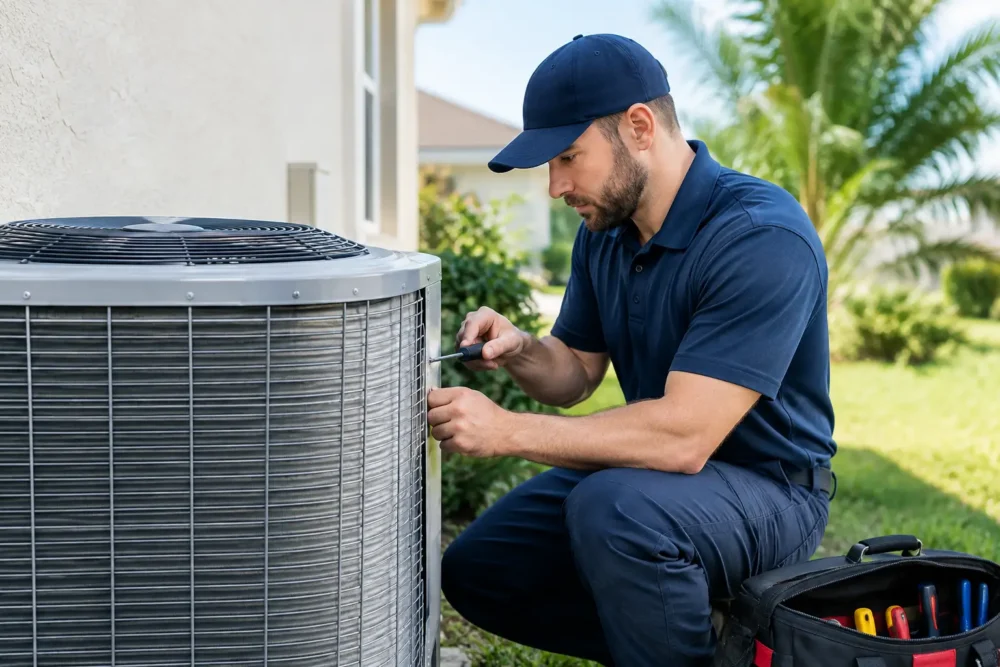
Your outdoor condenser releases heat from inside the home. If it is crowded by leaves, grass clippings, mulch, patio furniture, or overgrown landscaping, heat cannot escape as efficiently. The result is longer cooling cycles and added stress on the compressor.
Keep at least two feet of open space around the unit whenever possible, and trim shrubs back regularly. After mowing, avoid blowing grass directly toward the condenser. You can gently rinse loose debris from the exterior fins with a garden hose, but do not use a pressure washer or try to straighten damaged fins without the right tools. Those thin metal fins bend easily and can reduce airflow when damaged.
Protect the Parts That Commonly Cause AC Trouble
Some breakdowns come from ordinary wear, but Florida’s humidity, salt air near the coast, storms, and frequent cooling demand can accelerate it. Paying attention to the following areas helps you act before a complete shutdown.
Watch the Condensate Drain
Air conditioning removes moisture from indoor air, and that water must drain safely away. In humid weather, algae and sludge can build up in the condensate line. A clog may trigger a safety switch that shuts the system off, or it may cause water to back up and damage ceilings, walls, or flooring.
If you notice water near the indoor unit, a full drain pan, musty smells, or an AC system that suddenly will not start, call for service promptly. Some homeowners use approved drain-line treatments between maintenance visits, but the safest approach depends on your system’s setup. A technician can clean the line thoroughly and confirm that the drain and safety switch are working properly.
Do Not Ignore Electrical Symptoms
Capacitors, contactors, wiring, and other electrical components work hard every time the AC starts and stops. Warning signs can include a system that hums but does not start, frequent circuit breaker trips, a burning odor, flickering lights when the unit starts, or intermittent cooling.
Do not keep resetting breakers or repeatedly cycling the thermostat in hopes that the system will recover. Electrical problems can damage expensive components and may create a safety concern. Turn the system off and arrange professional service if these symptoms occur.
Use Your Thermostat Consistently
Constantly changing the thermostat setting can make an already stressed system work harder. Set a comfortable temperature and let the equipment maintain it. In many homes, setting the thermostat extremely low will not cool the space faster. It simply keeps the system running longer while it tries to reach a temperature that may be difficult to maintain during peak heat.
A programmable or smart thermostat can help create a practical schedule for workdays, vacations, and seasonal properties. It should be installed and configured correctly, however. Poor placement, incorrect settings, or compatibility issues can cause short cycling and comfort problems.
Know When a Small Symptom Needs a Service Call
Homeowners often notice early warning signs but put off calling because the AC is still producing some cool air. That delay can be costly. An air conditioner may continue operating while a failing part causes damage elsewhere in the system.
Call for professional inspection when you notice any of these signs:
- Warm air, weak airflow, or rooms that no longer cool evenly
- New rattling, buzzing, grinding, squealing, or banging sounds
- Short cycling, meaning the system turns on and off more often than normal
- Ice on refrigerant lines or the indoor unit
- Water leaks, musty odors, or a sudden jump in electric bills
- A thermostat that does not respond accurately or an AC that will not stay on
These symptoms do not always mean the system needs to be replaced. A dirty coil, failing capacitor, blocked drain, loose electrical connection, or thermostat issue may be repairable when addressed quickly. The longer the equipment operates under strain, though, the greater the risk of a larger failure.
Give Older Systems a Realistic Plan
An AC system that is more than 10 years old may still have useful life left, but it deserves closer attention. Older equipment can become less efficient, require more frequent repairs, and use parts that are harder to source. If repair calls are becoming routine, it may be time to compare the cost of continued repairs with replacement options.
Replacement is not automatically the right answer every time an older unit needs service. The condition of the compressor, coil, electrical components, ductwork, and overall repair history all matter. A qualified technician can explain what is failing, what repair would accomplish, and whether a newer system could offer better reliability and efficiency for your property.
This planning matters for vacation homes, rentals, offices, and retail spaces. A breakdown in an unoccupied property can go unnoticed, while a failure in a workplace can affect employees, customers, equipment, and daily operations. Routine checks and scheduled maintenance give property owners more control over those risks.
Prevent Breakdowns With Professional Maintenance
There is no substitute for keeping filters clean, clearing the outdoor unit, and noticing unusual changes. But many of the issues that cause AC failure are not visible from the outside. Refrigerant performance, electrical readings, coil condition, drainage safety, and component wear require professional testing.
For homeowners and property managers in Stuart, Jensen Beach, Port St. Lucie, Fort Pierce, Hobe Sound, Hutchinson Island, and Jupiter, Treasure Coast Air Conditioning provides preventive maintenance and prompt repair service backed by decades of local experience. If your system is making a new noise, leaking water, running constantly, or struggling to cool, scheduling service now can be far easier than facing a no-cooling emergency later.
Your AC does a demanding job every day in Florida. Give it clean airflow, room to breathe, consistent settings, and timely professional attention, and it will be far more likely to keep your family or business comfortable when the heat is at its worst.