A failed air conditioner can close a retail floor, disrupt an office, spoil inventory, and create an uncomfortable experience for everyone inside. In South Florida, commercial HVAC maintenance is not a nice-to-have service. It is a practical way to protect your building, your budget, and the people who depend on your business every day.
For property managers and business owners, the goal is simple: fewer surprises, steadier comfort, and a clear plan before a small problem becomes an emergency call. Regular professional service gives you that plan.
Why Commercial HVAC Maintenance Matters in Florida
Commercial systems work hard in every season, but Florida heat, humidity, salt air, and long cooling cycles create added strain. A system may appear to be running normally while losing efficiency, draining improperly, or operating with worn electrical components. By the time occupants notice warm air or poor humidity control, the issue may already be affecting the equipment.
Preventive maintenance helps catch those warning signs early. A technician can identify a clogged condensate drain, weak capacitor, dirty coil, loose connection, restricted filter, or refrigerant concern before it leads to a shutdown. That matters when your building houses employees, customers, tenants, sensitive electronics, food products, or valuable inventory.
There is also a financial reason to stay ahead of maintenance. Dirty filters and coils force equipment to work longer to produce the same cooling. That can increase energy use and add wear to major components. Service does not make an aging system new, but it can help a well-maintained system operate more reliably and give you better information when replacement becomes the smarter investment.
What a Professional Maintenance Visit Should Cover
Commercial properties vary widely. A small office with one split system needs a different plan than a restaurant, medical office, retail center, warehouse, or multi-tenant building. Still, a thorough maintenance visit should address the areas most likely to affect comfort, safety, and system performance.
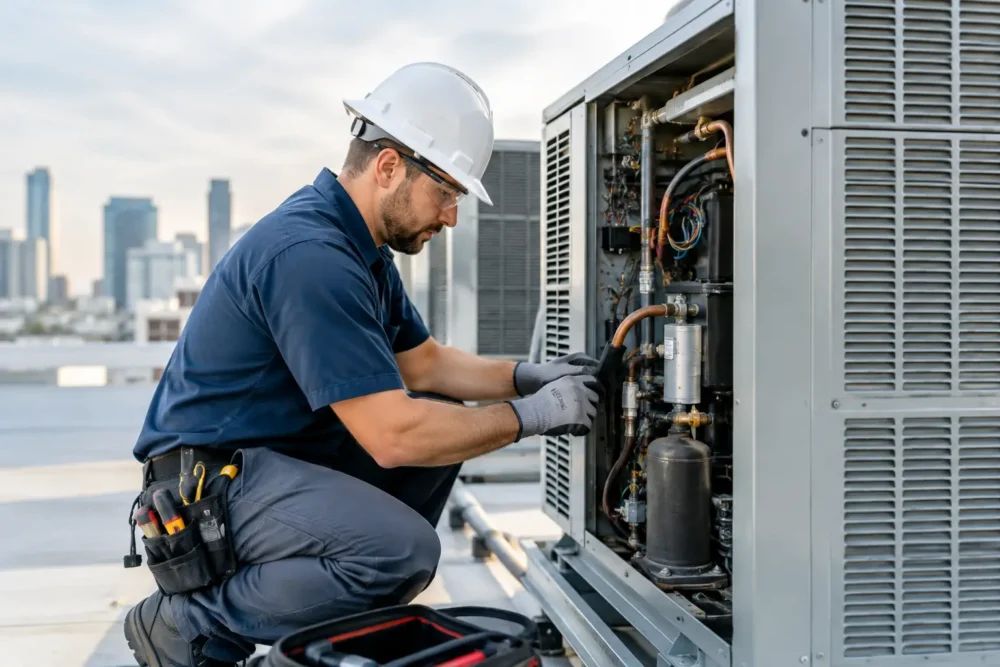
A trained HVAC technician typically inspects and cleans key components, checks electrical connections and controls, evaluates airflow, and confirms that the system is cooling properly. The visit should also include attention to filters, condensate drainage, outdoor equipment, and thermostat operation.
Airflow, Filters, and Indoor Comfort
Airflow issues are easy to underestimate. A blocked filter, dirty blower component, closed damper, or neglected return grille can make certain rooms feel warm while others become overly cold. Poor airflow can also increase humidity, which can leave a building feeling sticky even when the thermostat setting looks right.
For many businesses, filter changes need to happen more often than the schedule used in a typical home. Foot traffic, construction nearby, pets in pet-friendly facilities, and the nature of your operation all affect how quickly filters load up. A professional can recommend a practical filter schedule without overspending on filtration that your equipment does not need.
Coils, Drains, and Humidity Control
Evaporator and condenser coils transfer heat. When dirt builds up on them, the system has to work harder and may run longer than necessary. In a commercial setting, that extra strain can show up as higher utility costs, uneven temperatures, or equipment that struggles during the hottest part of the day.
Drain lines deserve the same attention. Florida humidity produces significant condensation, and a blocked drain can cause water damage, trigger a safety switch, or shut down cooling without much warning. Keeping drains clear is a small maintenance step that can prevent a major inconvenience.
Electrical Components and Controls
Commercial HVAC equipment depends on electrical parts that wear over time. Contactors, capacitors, wiring, disconnects, and relays should be inspected for signs of heat damage, corrosion, or loose connections. These issues may not be visible to a building occupant, but they can contribute to no-cool calls and unexpected equipment failure.
Controls matter too. A thermostat that is poorly located, improperly programmed, or failing to communicate with the system can waste energy and create comfort complaints. If employees routinely adjust the thermostat because one area is uncomfortable, that is a reason to have the system evaluated rather than treating the setting as the whole problem.
How Often Should a Commercial System Be Serviced?
For most Florida businesses, professional maintenance twice a year is a sensible starting point: once before peak cooling demand and again later in the year. Systems with long operating hours, heavy customer traffic, specialized ventilation needs, or critical temperature requirements may need more frequent attention.
The right interval depends on the equipment, its age, the building use, and the consequences of a failure. A lightly used office may have different needs than a restaurant kitchen or a server room. The best approach is a maintenance plan built around your actual operating conditions, not a one-size-fits-all calendar reminder.
Between visits, your team should pay attention to changes in performance. Rising humidity, hot and cold spots, unusual noises, water near an indoor unit, frequent thermostat adjustments, and unexplained increases in utility costs are all worth reporting. Early service can often limit disruption and reduce the chance of a full system outage.
Maintenance Versus Repair: Know When to Act
Maintenance is designed to reduce risk, not eliminate every repair. Parts can still fail, especially as equipment gets older. The advantage of routine service is that it gives you a clearer picture of what is urgent, what can be planned, and what may be nearing the end of its useful life.
If a technician finds a worn component, you may have a choice. Replacing a small part now may prevent an after-hours breakdown. In other cases, monitoring a condition may be reasonable if the equipment is still operating safely and reliably. Good service means explaining those trade-offs clearly, including the repair cost, the likely impact of waiting, and whether replacement planning should begin.
For systems more than 10 years old, repeated repairs and declining efficiency deserve an honest conversation. Replacement is not always necessary right away, but waiting until a complete failure can limit your options and force a rushed decision. Planning ahead gives you time to consider equipment efficiency, installation scheduling, financing, and the needs of your occupants.
Build a Maintenance Plan Around Your Business
A useful commercial maintenance plan should document your equipment, service history, filter needs, and known concerns. It should also account for access to rooftop units, tenant schedules, business hours, and any areas where work must be completed with minimal interruption.
Keep a simple record of comfort complaints and service calls. Patterns are valuable. If the same suite is always warm in the afternoon or the same unit repeatedly trips a drain safety switch, that information helps the technician diagnose the cause faster.
It also pays to establish a relationship with a local contractor before an emergency happens. When an AC problem affects customers, employees, or tenants, you need a team that understands the urgency and can respond with the right parts, tools, and experience. Treasure Coast Air Conditioning has served local businesses since 1990 with professional service and responsive support when comfort is on the line.
When to Call for Commercial HVAC Service
Do not wait for routine maintenance if your system is blowing warm air, shutting down, leaking water, making unusual noises, or failing to control humidity. Call promptly if you notice burning odors, electrical concerns, or a sudden temperature change in occupied areas. These are not issues to leave until the next scheduled visit.
For businesses in Stuart, Jensen Beach, Port St. Lucie, Fort Pierce, Hobe Sound, Hutchinson Island, or Jupiter, fast action can protect more than comfort. It can protect productivity, customer confidence, and the daily operation of your property. A consistent maintenance schedule keeps your system prepared for Florida weather, while prompt professional help keeps a small issue from taking over your day.