
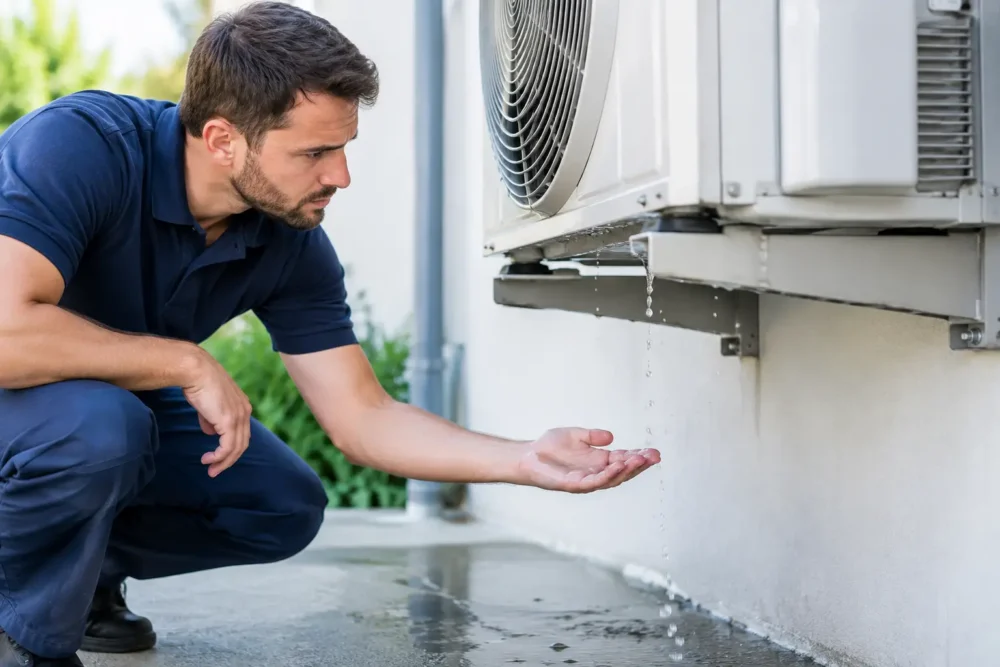
A puddle near your indoor AC unit is not something to ignore in a Florida home. With the system running hard to manage heat and humidity, a small drainage problem can quickly become ceiling damage, wet drywall, mold growth, or a complete shutdown. So, why is AC leaking water? Usually, the unit is still making condensation as designed, but that water is no longer draining where it should.
Your air conditioner does not create water the way a plumbing leak does. It pulls humidity from indoor air as it cools your home. That moisture collects on the indoor evaporator coil, drips into a drain pan, and exits through a condensate drain line. When any part of that process is blocked, frozen, cracked, or improperly installed, water can end up on the floor instead.
Why Is AC Leaking Water Inside the House?
The location of the water tells an HVAC technician a lot. Water around the indoor air handler, in a utility closet, or dripping from a ceiling near ductwork often points to a condensate drainage issue. Water coming from a window unit may have a different cause, such as improper tilt or a blocked drain opening.
In central air-conditioning systems, these are the most common reasons for an indoor water leak.
A clogged condensate drain line
This is one of the most frequent AC repair calls in South Florida. Condensate drain lines stay damp, making them a natural place for algae, mildew, dust, and sludge to build up. Eventually, the line restricts or blocks water flow. The drain pan fills, then overflows.
You may notice standing water near the indoor unit, a musty smell, or an AC system that stops running because its float safety switch has activated. That shutdown is frustrating, but it is designed to help prevent water damage.
A technician can clear the line properly, check the trap and drain connection, and confirm that water is flowing to the correct discharge point. Pouring chemicals into the drain yourself is not always the answer. Some products can damage components, fail to remove a stubborn blockage, or create a mess if the line is already fully backed up.
A dirty air filter causing a frozen coil
A severely clogged filter restricts airflow over the evaporator coil. Without enough warm household air passing over it, the coil can become too cold and freeze. Once the system cycles off or the ice melts, that excess water can overwhelm the drain pan and leak out.
Signs of a frozen coil can include weak airflow, warm air from the vents, ice on refrigerant lines, or water appearing after the AC has been running for hours. Turn the cooling system off if you see ice. Leaving it running can strain the compressor and turn a manageable repair into a much larger expense.
Check the filter first and replace it if it is visibly dirty. Then allow the system time to thaw. If the coil freezes again after a clean filter is installed, call for service. Low refrigerant, a blower issue, dirty coils, or duct problems may be involved.
A damaged or rusted drain pan
Older systems may have drain pans that corrode, crack, or shift out of position. A primary pan beneath the indoor coil can fail, and an auxiliary pan in an attic installation can also rust through. Even a small crack allows water to drip into areas where it does not belong.
This problem requires more than placing a container under the leak. A professional should inspect the pan, coil cabinet, drain line, and safety switch to determine whether the pan can be replaced or whether the system has additional age-related concerns.
A disconnected drain line or loose fitting
Vibration, previous work, settling, or a poor installation can leave a drain connection loose. In that case, water may drain freely – just not into the pipe. This can look like a sudden, heavy leak near the air handler.
Because access panels and drain assemblies vary by system, it is best not to force connections or remove components you are unfamiliar with. A quick repair is possible when caught early, but continued operation can soak insulation, flooring, framing, or drywall.
AC Leaking Water From the Ceiling or Attic
Water stains on a ceiling deserve fast attention, especially if the air handler is in the attic. The source may be a clogged drain line, overflowing secondary pan, cracked pan, or a failed condensate pump. It could also be a roof or plumbing leak, so avoid assuming the AC is responsible without an inspection.
If water is actively dripping from the ceiling, turn off the cooling system at the thermostat. If it is safe to do so, place containers below the leak and move furniture, electronics, and valuables away from the area. Do not puncture a bulging ceiling without understanding the risks involved. Saturated drywall can collapse, and water near electrical fixtures creates an additional hazard.
An HVAC technician can determine whether the AC drainage system caused the problem and address it before more damage occurs. If the leak is severe or occurs outside normal hours, emergency service is the right call.
Is Water Leaking Outside From an AC Normal?
Often, yes. A small, steady amount of water draining outside near the condenser can be completely normal during humid weather. Your AC is removing moisture from the air, and Florida humidity gives it plenty of moisture to collect.
The concern is not usually the presence of water outside. It is a sudden change, such as no drainage at all when the system is working hard, pooling around the indoor unit, or water backing up into the home. A drain line that terminates outside can also become blocked at the outlet by dirt, insects, landscaping debris, or algae.
Do not confuse condensation with refrigerant. Refrigerant is not plain water, and a refrigerant leak is a professional repair issue. Hissing sounds, reduced cooling, ice on the equipment, or an unexplained increase in energy use are reasons to schedule service promptly.
What You Can Safely Do Before Calling for AC Repair
Homeowners can take a few sensible steps without risking damage to the equipment. First, turn the AC off if water is entering the home, dripping from a ceiling, or if you see ice on the refrigerant line or indoor coil area. Continuing to run the system can make the leak worse.
Next, replace a dirty filter if you have the correct size and type. Check around the indoor unit for obvious standing water, and clear personal belongings away from the affected area. If your system has a visible emergency drain pan, look for overflow, but do not climb into an attic or open electrical panels if conditions are unsafe.
Avoid repeatedly resetting a float switch, taping over a drain problem, or running the unit with the access panel removed. Those workarounds may restore cooling briefly, but they do not fix the reason water is backing up.
When a Leaking AC Needs Professional Service
Call for professional help right away when the leak is more than a few drops, the system will not restart, a ceiling is wet, or the unit has frozen. You should also schedule service if this is a recurring problem. Repeated drain clogs can indicate a line that is improperly pitched, poorly trapped, undersized, or overdue for maintenance.
For property managers and seasonal residents, even a minor leak should be handled quickly. An unattended AC drain issue can continue damaging a vacant home long before anyone notices it. In Stuart, Jensen Beach, Port St. Lucie, and nearby Treasure Coast communities, high humidity means condensate systems work hard for much of the year.
Treasure Coast Air Conditioning can inspect the full system, clear and test the drain, identify airflow or coil problems, and help protect your home from another unexpected overflow. Prompt same-day repair can make the difference between a simple drain service and a costly restoration project.
Preventing Future AC Water Leaks
Routine maintenance is the most reliable way to prevent many condensate-related leaks. During a professional tune-up, the technician can clean or flush the drain line, inspect the drain pan and safety switch, check airflow, evaluate the evaporator coil, and spot early warning signs before they become a wet-floor emergency.
Regular filter changes matter just as much. The right replacement schedule depends on your home, pets, occupancy, indoor air quality, and filter type, but a filter should never be left in place until it is visibly packed with dust. In Florida, systems often run long enough that filters need attention more frequently than homeowners expect.
If your AC is leaking water, act while the issue is still contained. A dry, comfortable home starts with an air-conditioning system that can cool, drain, and run safely when you need it most.