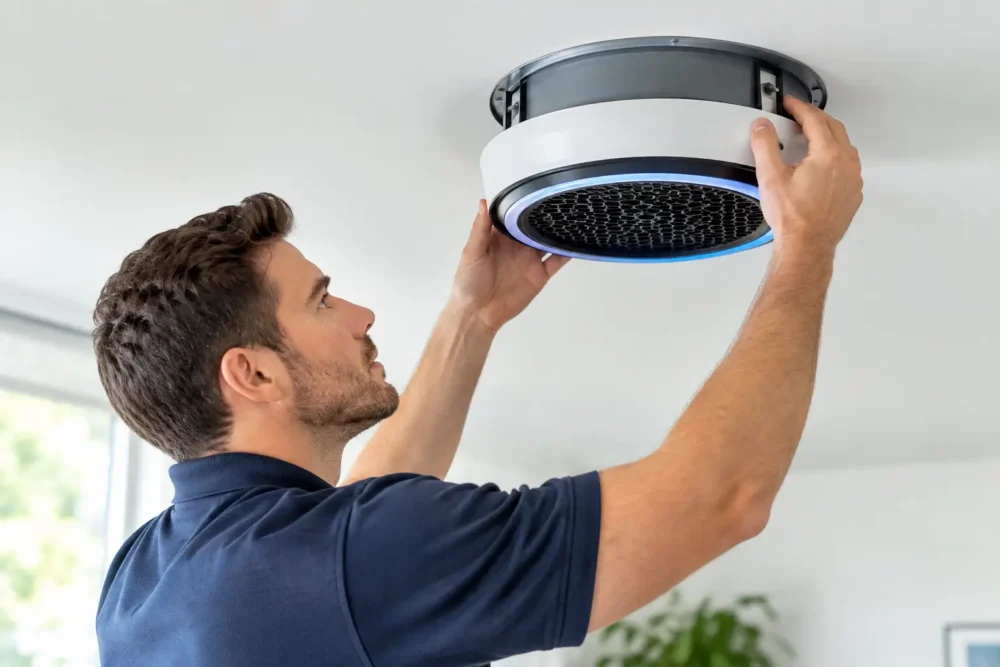
A whole-home air purifier should work when your air conditioner works – quietly, consistently, and without taking up space in a bedroom or on a countertop. REME HALO air purifier installation places the unit inside your HVAC system, where it can treat air moving through the ductwork. For South Florida homes that stay closed up through long stretches of heat and humidity, that can be a practical part of a larger indoor-air-quality plan.
The installation itself is not a do-it-yourself weekend project. It involves selecting the right location in the duct system, making a proper electrical connection, protecting the equipment from damage, and confirming the HVAC system still operates as it should. A professional installation helps ensure the unit is positioned to do its job without creating an avoidable service issue later.
What a REME HALO Air Purifier Does
REME HALO is an in-duct air purification product designed to work with a forced-air heating and cooling system. Depending on the specific model, the technology uses light and ionization processes intended to help reduce certain airborne particles, odors, and contaminants as air circulates through the system.
It is not a substitute for a properly sized air filter, regular filter changes, or fixing moisture problems in the home. If an AC system has a clogged filter, dirty evaporator coil, leaky ducts, or excess indoor humidity, an air purifier will not correct those underlying problems. It works best as one layer of protection alongside sound HVAC maintenance and sensible source control.
That distinction matters in coastal Florida. Musty odors, visible mildew, recurring condensation, and persistent humidity deserve a professional inspection. The right solution may include air purification, but it could also require a drainage repair, duct improvement, coil cleaning, dehumidification, or another targeted service.
Where REME HALO Air Purifier Installation Takes Place
A technician typically mounts the unit in the supply plenum or supply duct near the indoor air handler. This placement allows treated air to move out through the duct system as the blower runs. The ideal location varies by system design, available clearance, duct material, and the manufacturer’s installation instructions.
Before cutting into any ductwork, a qualified technician examines the air handler and duct layout. They look for a stable mounting surface, sufficient room for the unit and its replaceable components, and an area that will not interfere with access panels, wiring, condensate drains, or future maintenance.
The technician also confirms how the purifier will receive power. Some installations require a dedicated electrical connection or transformer, while others are configured to operate with the HVAC equipment. Wiring must be protected and installed correctly. A loose connection or improper voltage can shorten component life or create a safety concern.
Once the unit is installed, the technician seals the opening around it, verifies the air handler cycles properly, and reviews what homeowners can expect. The purifier is usually out of sight after installation, but it should never be out of mind when it is time for scheduled service.
Why placement matters
An air purifier mounted in the wrong place may be difficult to service, exposed to excess moisture, or unable to interact with the airflow as intended. It can also create air leaks if the duct opening is not cut and sealed properly.
Professional placement protects the performance of both the purifier and the HVAC system. That is especially valuable for older homes, renovated properties, and condos where duct layouts may be tight or access is limited.
What to Expect During Professional Installation
Most REME HALO installations can be completed without major disruption, but the exact timing depends on the equipment location and duct access. A straightforward installation may take only a few hours. Systems in cramped attics, closets, or hard-to-reach commercial mechanical rooms can require more planning.
The appointment should begin with a conversation about your concerns. Are cooking odors lingering? Does the home feel stuffy when the AC runs? Are you trying to improve air quality for a family member with sensitivities? Those details help determine whether an in-duct purifier makes sense and whether the HVAC system needs attention first.
A careful technician will inspect the filter, blower area, coil condition, drain line, and general duct condition. This is not unnecessary upselling. Air purification equipment relies on air moving properly through the system. If the filter is severely restricted or the coil is dirty, correcting those issues may deliver a noticeable improvement on its own.
After installation, ask the technician which model was installed, when its cell or lamp will need replacement, and what signs may indicate service is needed. Keep that information with your AC maintenance records. Seasonal residents can also arrange preventive maintenance so the system is checked before an extended stay or during time away.
Choosing the Right System for Your Property
Not every home needs the same indoor-air-quality equipment. The right recommendation depends on the size and configuration of the HVAC system, the home’s occupancy, pets, lifestyle, ventilation, humidity levels, and the concern you want to address.
For example, a tightly sealed home with two pets may have different needs than a vacation condo occupied only part of the year. A restaurant, medical office, retail space, or rental property also has different airflow patterns and maintenance demands than a single-family residence.
It also matters which REME HALO model is being considered. Product features, replacement intervals, electrical requirements, and manufacturer guidance can vary. A professional should explain the specific equipment proposed instead of treating every in-duct purifier as interchangeable.
Be cautious of promises that any purifier will make a home completely germ-free or eliminate every odor. No air-quality product can make that guarantee in a lived-in building. Good recommendations are based on realistic goals: supporting cleaner-feeling air, addressing particular concerns, and maintaining the HVAC system that delivers comfort every day.
Maintenance After Installation
REME HALO equipment needs periodic attention. Many models have a replaceable cell, lamp, or other component with a manufacturer-recommended service interval. Actual replacement timing can vary by model and operating conditions, so follow the equipment documentation and your technician’s recommendation.
Your regular HVAC maintenance visit is a convenient time to check the purifier. The technician can inspect the unit, confirm the indicator status if applicable, look for wiring or mounting issues, and make sure the air handler remains clean and efficient.
Homeowners should continue changing filters on schedule. A purifier does not mean you can leave the same filter in place for months beyond its recommended life. In fact, a clean filter helps the system maintain proper airflow and reduces strain on the blower.
If you notice a new odor, unusual sound from the air handler, a tripped breaker, water around the indoor unit, or reduced cooling performance, schedule service rather than assuming the purifier is the cause. Those symptoms can point to several HVAC issues that deserve prompt attention.
When an Air Purifier Is Worth Considering
A whole-home purifier may be a sensible addition when your central HVAC system is already in good working condition and you want added support for indoor air quality. It can be particularly appealing for households concerned about odors, pet-related particles, seasonal irritants, or the stale-air feeling that comes with keeping windows closed during peak heat.
It may be less useful as a first step when the real issue is uncontrolled humidity, a neglected AC system, water damage, or a ventilation problem. Start with an inspection. An honest assessment may confirm that a REME HALO installation is a good fit, or it may identify a more urgent repair that should come first.
For homeowners and property managers in Stuart, Jensen Beach, Port St. Lucie, Fort Pierce, Hobe Sound, Hutchinson Island, or Jupiter, Treasure Coast Air Conditioning can assess the HVAC system before recommending an indoor-air-quality solution. The goal is not to add equipment for its own sake. It is to help the air conditioning system keep your property comfortable, dependable, and ready for the demands of a Florida season.
Cleaner indoor air starts with a system that is installed correctly and maintained with care. If your home has air-quality concerns, a professional evaluation can give you a clear next step instead of another guess.