
Your air conditioner may be cooling the house, but that does not always mean the air moving through it is as clean as it should be. In South Florida, duct cleaning can be a practical service when dust, pet dander, renovation debris, pest activity, or moisture-related buildup has collected inside the duct system.
For homeowners and property managers, the question is not whether ducts need attention on a fixed calendar. It is whether there is a clear reason to inspect and clean them. A professional assessment helps separate a real indoor-air concern from problems that may actually stem from a dirty filter, a clogged drain line, poor airflow, or an aging AC system.
When Duct Cleaning Makes Sense
Air ducts are mostly out of sight, so the signs are often noticed in the rooms they serve. You may see dust collecting quickly on furniture after cleaning, notice a persistent musty or stale odor when the system starts, or find that certain rooms feel stuffier than others. These symptoms do not automatically mean the ducts are the cause, but they are a good reason to have an experienced HVAC technician take a closer look.
Duct cleaning is especially worth considering after a remodeling project. Drywall dust, sawdust, insulation particles, and other construction debris can find their way into return vents and ductwork, even when contractors make an effort to protect the home. Cleaning the duct system after major work can keep that debris from circulating each time the AC turns on.
It may also be appropriate after a pest issue. Rodents, insects, and other pests can leave debris or damage in duct runs, particularly in attics, crawlspaces, and less frequently used areas of a property. In that situation, cleaning should be paired with addressing the entry point and repairing damaged ductwork. Cleaning alone will not prevent the issue from returning.
Florida humidity adds another consideration. If there has been a leak, flooding, a disconnected duct, or a long-running moisture problem, an inspection is important. Moisture inside ductwork can contribute to odor and biological growth. The correct solution depends on what is found. Some ducts can be cleaned and treated; heavily damaged or contaminated sections may need replacement.
Signs You Should Schedule an Inspection
A visual inspection is more useful than guessing based on a schedule. It is smart to call when you notice several related warning signs, such as visible debris blowing from vents, unexplained odors when cooling begins, dust buildup around supply registers, signs of pests, or a recent construction project.
Households with pets, smokers, allergy concerns, or high occupancy may also have more reason to evaluate their duct system. Seasonal residents should consider an inspection if a home has been closed up for months and has an unusual odor or dusty air when they return.
At the same time, duct cleaning is not a cure-all. If one room is hot, the thermostat is inaccurate, or the system runs constantly, the issue may involve duct sizing, insulation, equipment performance, refrigerant, or a thermostat setting. A dependable HVAC company should explain what it finds rather than sell duct cleaning as the answer to every comfort problem.
What Professional Duct Cleaning Should Include
A proper duct cleaning service begins with an evaluation of the system, including accessible supply and return ducts, vents, registers, and key HVAC components. The technician should identify obvious buildup, loose connections, damaged insulation, standing water, or signs that the duct system is pulling air from an attic or other unconditioned space.
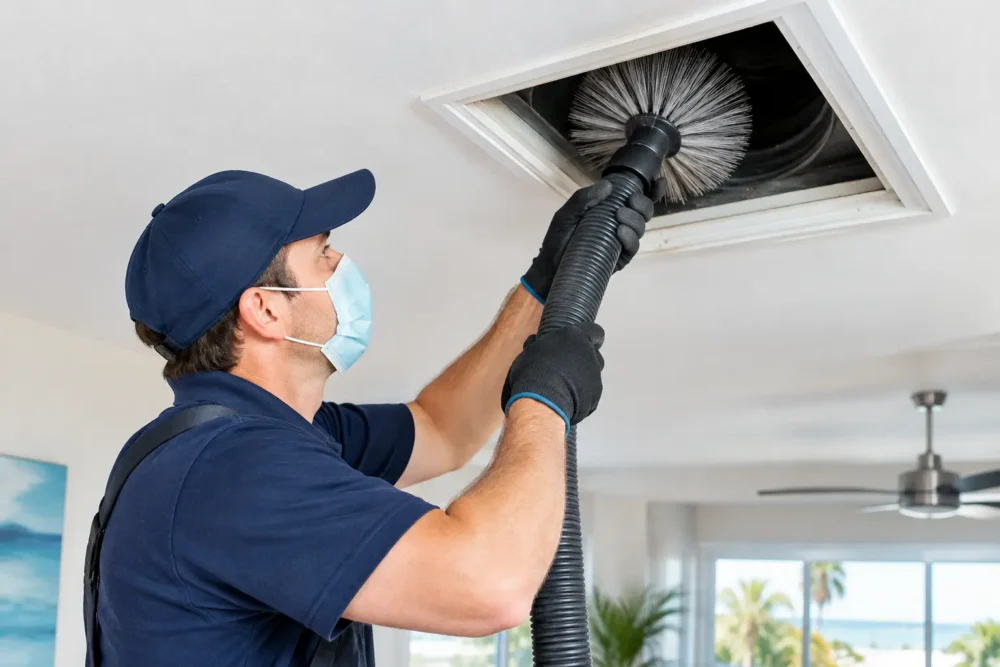
The cleaning process typically uses professional vacuum equipment and agitation tools designed to remove loose dust and debris without spreading it through the home. Registers are cleaned, accessible duct runs are addressed, and the return side receives close attention because it collects air from throughout the house.
The air handler area matters, too. The blower compartment, evaporator coil area, and drain system all affect airflow and indoor air quality. These components require careful service because they are essential to cooling performance. A clean duct system will not deliver its best results if the filter is clogged, the blower is dirty, or the drain line is restricted.
Before work begins, ask what areas are included and whether the technician has found damaged ducts, moisture concerns, or other conditions that require a separate repair. Clear answers protect you from surprise charges and help you make decisions based on the actual condition of your system.
Duct Cleaning Is Not the Same as Duct Repair
A clean duct system can still waste energy if it is leaking, crushed, poorly insulated, or disconnected. Leaks in an attic can pull hot, humid, dusty air into the system. That makes the AC work harder and can leave rooms feeling unevenly cooled, especially during the hottest months on the Treasure Coast.
If an inspection reveals duct damage, repair may be the more valuable service. Sealing leaks, reconnecting loose sections, replacing deteriorated flex duct, and improving insulation can make a noticeable difference in comfort and efficiency. In many homes, cleaning and repair work well together, but they solve different problems.
This is also why a technician should inspect the full system rather than focus only on the vents you can see. Airflow problems often begin behind walls, above ceilings, or in the attic. Finding the source is what helps protect your comfort over the long term.
How to Keep Ducts Cleaner Between Visits
The simplest way to reduce dust entering your HVAC system is to use the right air filter and replace it on schedule. A filter that is too restrictive for the equipment can reduce airflow, while one that is left in too long becomes loaded with dust and makes the system work harder. Your technician can recommend a filter type that balances filtration with the needs of your specific system.
Keep supply and return vents open and clear of furniture, rugs, and stored items. Vacuum registers periodically, particularly in homes with pets. During home projects, cover nearby vents and replace the filter after the work is complete. If you see water around the indoor unit or notice a musty smell, arrange service promptly instead of waiting for the issue to grow.
Preventive maintenance also plays a direct role. Regular AC service gives a technician an opportunity to check the filter, blower, coil, drain line, and visible duct connections before small problems affect comfort or indoor air quality.
Choose a Company That Looks Beyond the Dust
The best duct cleaning service is one that starts with an honest assessment. Be cautious of unusually low offers that promise to clean every duct in a home without first inspecting the system or explaining what is included. Quality work takes the right equipment, trained technicians, and enough time to address the areas that need attention.
For homes and businesses in Stuart, Jensen Beach, Port St. Lucie, Fort Pierce, Hobe Sound, Hutchinson Island, and Jupiter, Treasure Coast Air Conditioning brings decades of HVAC experience to indoor-air and comfort concerns. A professional visit can determine whether duct cleaning is appropriate, whether repairs are needed, or whether a simpler solution such as filter replacement and maintenance will better serve the property.
If your home smells stale when the AC starts, dust returns too quickly, or you have concerns after a renovation or moisture issue, do not ignore the signs. A careful inspection can give you a clear path to cleaner air and a more comfortable home.