A new air conditioner should do more than turn on and blow cold air. In South Florida, the right AC installation has to manage long stretches of heat, heavy humidity, and the daily demand of a busy household or commercial space. When the system is selected and installed correctly, you get steadier temperatures, better moisture control, lower strain on equipment, and the confidence that your comfort is protected when the weather will not let up.
Why Professional AC Installation Matters
An air conditioner is only as good as the system around it. Even a high-efficiency unit can disappoint if it is oversized, undersized, connected to leaking ductwork, or installed without proper airflow and drainage checks. Those mistakes can lead to rooms that never feel comfortable, short cycling, higher utility bills, and avoidable repair calls.
Proper installation begins before the equipment arrives. A qualified technician looks at the home or building itself: square footage, insulation, window exposure, ceiling height, occupancy, duct condition, and the way each area is used. A sunny west-facing room, a converted garage, or a second-floor bedroom can change what the system needs to do.
This is especially important along the Treasure Coast, where humidity can make a home feel warmer than the thermostat reading suggests. Cooling and dehumidification work together. A system that is too large may cool the air quickly but shut off before it removes enough moisture. A system that is too small may run constantly and still struggle during the hottest afternoons.
Start With the Right System Size
It is tempting to assume that bigger equipment delivers better cooling. That is not how air conditioning works. The goal is a system sized for the property’s actual cooling load, not simply the size of the old unit or a quick rule based on square footage.
A professional load calculation helps determine the right capacity. It accounts for insulation, windows, shade, duct layout, building materials, and other details that vary from one property to the next. If your previous system was installed many years ago, its size may not be the best fit today. New windows, attic insulation, additions, or changes in how the property is used can all affect the calculation.
The right size supports longer, more productive cooling cycles. That helps the system remove moisture, maintain a more even temperature, and avoid the hard starts and stops that wear down components. It also gives you a clearer picture of the equipment options that make financial sense for your property.
Replacement Is a Chance to Fix Old Comfort Problems
If certain rooms have always been warmer, the issue may not be the outdoor unit alone. During a replacement, ask about supply and return airflow, duct leaks, thermostat placement, and drainage. A new system is an opportunity to address problems that have been hiding behind an aging unit.
For example, adding capacity will not solve a bedroom with poor return airflow. Likewise, a thermostat placed near a sunny kitchen can cause the rest of the house to overcool. The best installation looks at the whole system, then recommends practical improvements that match the property and budget.
Efficiency Means More Than a High Rating
Efficiency ratings matter, but they are not the only factor in a smart equipment decision. Higher-efficiency systems can reduce energy use and may offer features such as variable-speed operation, quieter performance, and stronger humidity control. For many homeowners, those benefits are worth considering because the AC runs for much of the year.
Still, the best choice depends on your needs. A seasonal resident may prioritize reliable remote thermostat control and protection for a vacant home. A family may want consistent comfort in occupied bedrooms and better indoor air quality. A property manager may focus on dependable equipment, manageable operating costs, and equipment that can be serviced quickly.
The key is to compare the full value, not just the purchase price. Consider the expected energy use, warranty coverage, available features, condition of the ductwork, and how long you expect to own the property. Financing for new equipment can also make it easier to choose a system that fits your comfort needs without delaying a necessary replacement.
What Happens During an AC Installation
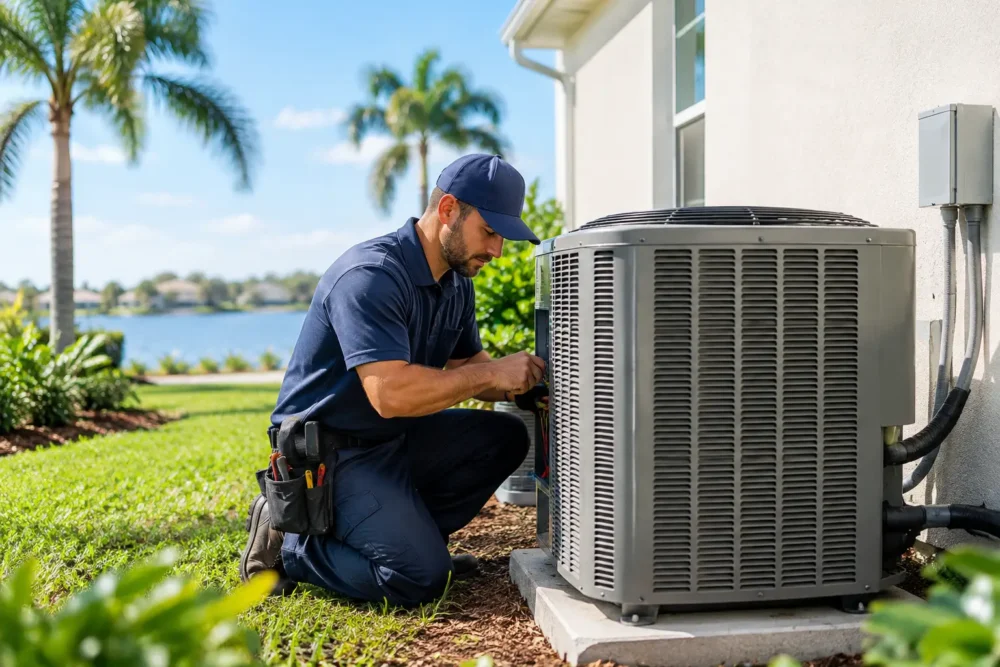
A professional installation should be organized, clean, and built around protecting your property. The process usually starts with confirming the equipment selection and reviewing the work planned for the day. Technicians remove the old system carefully, prepare the installation area, and inspect the connections that affect safety and performance.
The new indoor and outdoor equipment must be matched correctly. Refrigerant lines, electrical connections, condensate drainage, and duct transitions all need close attention. In Florida, the condensate drain is particularly important. A blocked, poorly pitched, or improperly protected drain line can create water problems and shut down the system when you need it most.
After installation, technicians should test operation, verify airflow, check refrigerant performance, confirm thermostat function, and make sure the system is draining properly. They should also show you how to operate the thermostat, explain filter needs, and answer questions about basic care. A rushed installation can leave details behind. A thorough one gives you a system that is ready for real weather, not just a quick startup test.
Do Not Overlook Ductwork and Indoor Air Quality
Your AC equipment moves air through the duct system, so damaged or leaky ducts can waste the comfort you are paying for. Leaks may pull hot attic air into the system, reduce airflow to distant rooms, and make the unit work harder than it should. In some homes, duct cleaning or repairs can be a sensible part of a replacement plan.
Indoor air quality is another worthwhile conversation, particularly for households concerned about dust, odors, allergies, or excess moisture. The right solution depends on the concern. Better filtration, whole-home air purification, humidity management, and regular duct service each address different conditions. There is no one add-on that every home needs, but there are practical options when the air inside does not feel as clean or comfortable as it should.
Protect Your New System After Installation
A new system needs routine attention to keep performing as designed. Change or clean filters on schedule, keep the outdoor unit clear of leaves and landscaping, and pay attention to signs of trouble such as reduced airflow, unusual sounds, water near the indoor unit, or rising energy costs.
Preventive maintenance is also a practical way to catch small issues before they become an emergency. During a maintenance visit, a technician can inspect electrical components, clear the condensate system, check operating conditions, and spot wear that may affect reliability. For vacation homes and rental properties, scheduled service provides an extra layer of reassurance when the property is not occupied every day.
Treasure Coast Air Conditioning has served local homes and businesses since 1990, with experienced technicians ready to help homeowners and property managers make clear, informed replacement decisions. Whether you are planning ahead or dealing with a system that can no longer keep up, professional guidance can prevent a stressful purchase from becoming an expensive mistake.
When Is It Time to Schedule a Replacement?
Age is one clue, but it is not the only one. Many systems begin to require closer attention after about 10 years, particularly when they have endured years of Florida heat. Frequent repairs, inconsistent temperatures, poor humidity control, loud operation, and increasing electric bills are all reasons to request an evaluation.
If your system has failed completely, fast action matters. But even in an urgent situation, you deserve an explanation of your options, a recommendation based on the property, and workmanship that supports long-term reliability. Prompt service should not mean cutting corners.
A well-planned installation brings comfort back to where it belongs: in the background of daily life. If your current system is struggling in Stuart, Jensen Beach, Port St. Lucie, Fort Pierce, Hobe Sound, Hutchinson Island, or Jupiter, schedule a professional evaluation before the next stretch of heat turns a warning sign into a complete breakdown.