A commercial HVAC problem rarely stays in the mechanical room. When cooling drops off in a Florida office, store, restaurant, or rental property, employees lose focus, customers leave sooner, inventory may be at risk, and humidity can quickly make the whole space feel uncomfortable. The right commercial HVAC plan protects your building, your budget, and the people who depend on your business every day.
For property owners and managers on the Treasure Coast, the goal is not simply to get the AC running again. It is to have reliable equipment, fast help when a problem occurs, and a maintenance strategy that reduces surprise breakdowns during the hottest months.
What Makes Commercial HVAC Different?
Commercial systems are built to serve larger spaces, longer operating hours, and more varied comfort needs than most residential equipment. A small retail shop may use a light commercial split system, while a medical office, restaurant, warehouse, or multi-unit building may rely on several rooftop units, zoning controls, ventilation equipment, or a more complex system design.
That added capacity brings added responsibility. One failing unit can affect a single suite, an entire sales floor, or a critical work area. Commercial equipment also has to manage more than temperature. It must address airflow, humidity, ventilation, occupant comfort, and energy use while operating around business hours.
Florida conditions make this especially demanding. Long cooling seasons, salt air near the coast, heavy rain, and persistent humidity all put pressure on AC components. Equipment that might seem fine during a quick walkthrough can still be working too hard, draining more power than necessary, or allowing moisture issues to develop inside the building.
Signs Your System Needs Professional Attention
Waiting for a total shutdown is expensive. A system can often give clear warnings before it quits, but those warnings are easy to overlook when a business is busy.
Uneven temperatures are one of the most common signs. If the lobby is cold but the offices feel warm, or one side of a restaurant is humid while another is comfortable, the cause could be an airflow restriction, thermostat issue, failing component, duct problem, or a system that is no longer sized correctly for the space.
Higher utility bills also deserve attention. Energy costs rise for many reasons, but a sudden or steady increase can signal dirty coils, clogged filters, refrigerant issues, worn electrical components, or equipment that is running longer to produce the same result. Strange noises, frequent cycling, water around an air handler, musty odors, and customer or employee complaints should be treated as service calls, not minor inconveniences.
A commercial property can also have indoor air quality concerns even when the thermostat reading looks normal. High humidity, dust buildup, stale air, and poor ventilation can affect how a space feels and how confidently customers and staff use it. The right solution depends on the building and its use. It may be as straightforward as filter changes and coil cleaning, or it may call for duct cleaning, humidity control, or an air-quality upgrade.
Repair or Replace? The Decision Depends on the Numbers
Repair is often the right move when a system is relatively new, the issue is isolated, and the equipment has been maintained. Replacing a failed capacitor, motor, contactor, drain component, or thermostat can restore dependable operation without requiring a major capital expense.
Replacement becomes more practical when repairs are frequent, cooling performance is inconsistent, or the unit is nearing the end of its expected service life. Many commercial systems begin to require closer evaluation around the 10-year mark, though age alone should not make the decision. Maintenance history, repair costs, energy use, available parts, and the unit’s condition all matter.
There is a real trade-off. Continuing to repair an older unit may reduce today’s expense, but it can create recurring disruptions and higher operating costs. New equipment requires an upfront investment, yet it may improve efficiency, reliability, humidity control, and tenant or customer comfort. For a business that cannot afford downtime, predictability has value.
Before approving a replacement, ask for a clear assessment of the current equipment, the recommended system capacity, expected efficiency benefits, and any building factors that may be causing the problem. A bigger unit is not automatically a better unit. Oversizing can lead to short cycling and poor humidity removal, while undersizing can leave the system running constantly on hot afternoons.
Preventive Maintenance Is Business Protection
Commercial HVAC maintenance is not just a seasonal task to check off the list. It is one of the most effective ways to protect equipment that works hard nearly all year in South Florida.
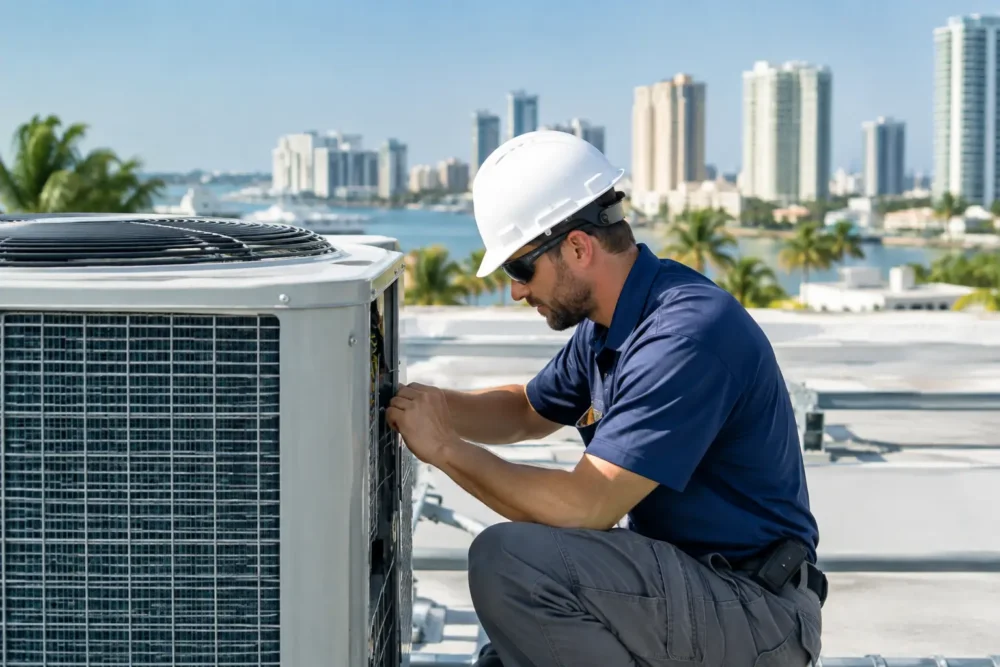
A professional maintenance visit typically includes checking electrical connections, inspecting components, cleaning coils as needed, clearing drain lines, evaluating airflow, reviewing thermostat operation, and identifying wear before it becomes an emergency. Filters should also be checked and replaced on a schedule that reflects the building’s use. A busy retail space, pet-friendly office, restaurant, or property near ongoing construction may need more frequent attention than a low-traffic professional office.
Maintenance also creates a record. For owners managing several units or locations, service history helps show which equipment is dependable, which units are becoming costly, and where future replacement planning should begin. That is far easier than making a rushed decision after an unexpected failure.
Scheduling service before peak summer heat gives your technician more opportunity to find small issues on your timeline. It also helps reduce the chance that your business will face a breakdown when parts availability and service demand are at their highest.
How to Protect Comfort Between Service Visits
Your staff can help spot problems early without attempting repairs. Assign someone to notice temperature complaints, unusual sounds, visible leaks, error messages, and changes in operating hours. If a space is consistently uncomfortable at a certain time of day, write down when it happens and what areas are affected. That information helps a technician diagnose the issue faster.
Keep supply and return vents clear of furniture, displays, boxes, and storage. Make sure the area around indoor and outdoor equipment is accessible for inspection and service. If your property uses programmable or smart thermostats, review settings after holidays, staffing changes, renovations, or modified business hours. A system should not be cooling an empty building all night because an old schedule was never updated.
Do not ignore drain issues. In Florida’s humid climate, condensate management is a major part of reliable AC operation. Water near equipment, stained ceiling tiles, or a shut-off switch caused by a backed-up drain line should be addressed promptly to prevent damage and downtime.
Choosing a Commercial HVAC Partner
Commercial service requires more than a quick repair. Look for a licensed contractor with experienced technicians, clear communication, and the ability to respond when comfort affects operations. Fast service matters, but so does a technician who takes the time to explain what failed, what was repaired, and what should be watched next.
Ask whether the contractor can support both urgent repairs and long-term planning. The best relationship is not limited to emergency calls. It includes maintenance, indoor air-quality guidance, thermostat support, equipment replacement recommendations, and straightforward options when budget decisions are involved.
Treasure Coast Air Conditioning has served local homes and businesses since 1990 with experienced technicians, stocked service vehicles, same-day service when available, and 24/7 emergency response for urgent AC problems. For businesses in Stuart, Jensen Beach, Port St. Lucie, Fort Pierce, Hobe Sound, Hutchinson Island, and Jupiter, local experience matters when the heat and humidity will not wait.
When your system starts showing warning signs, acting early gives you more options, less disruption, and a better chance of keeping everyone comfortable. A timely commercial HVAC service call can be the difference between a manageable repair and a business day shaped by avoidable downtime.