A hurricane watch can turn ordinary home maintenance into a time-sensitive job. Preparing AC for hurricane season before a named storm is on the map gives you more options, protects an expensive system, and makes it easier to restore comfort once the weather clears. For homeowners and property managers on Florida’s Treasure Coast, the goal is not to make the air conditioner stormproof. It is to identify weak points, avoid risky shortcuts, and know when a professional needs to step in.
Start With AC Maintenance Before Hurricane Season
Your air conditioner works hard through South Florida’s long cooling season. A system already struggling with weak airflow, a clogged drain line, or electrical issues is more likely to have trouble after heavy rain, power interruptions, and days of extreme humidity.
Schedule preventive maintenance well before the most active part of hurricane season. A technician can inspect electrical connections, test the system’s operation, clear the condensate drain, check refrigerant performance, and look at the outdoor unit’s condition. This is also a good time to address an aging capacitor, worn contactor, damaged insulation, or corrosion around the unit before a storm creates a much larger problem.
Maintenance does not prevent every storm-related failure. Windblown debris, flooding, and utility damage are outside anyone’s control. But a well-maintained system is less likely to fail because of a small issue that was already developing.
If your AC is more than 10 years old, needs frequent repairs, or has trouble keeping up on the hottest afternoons, do not wait until an evacuation notice to consider replacement. New equipment may offer better efficiency and reliability, but installation scheduling becomes much tighter when a storm is approaching.
Clear and Inspect the Outdoor Unit
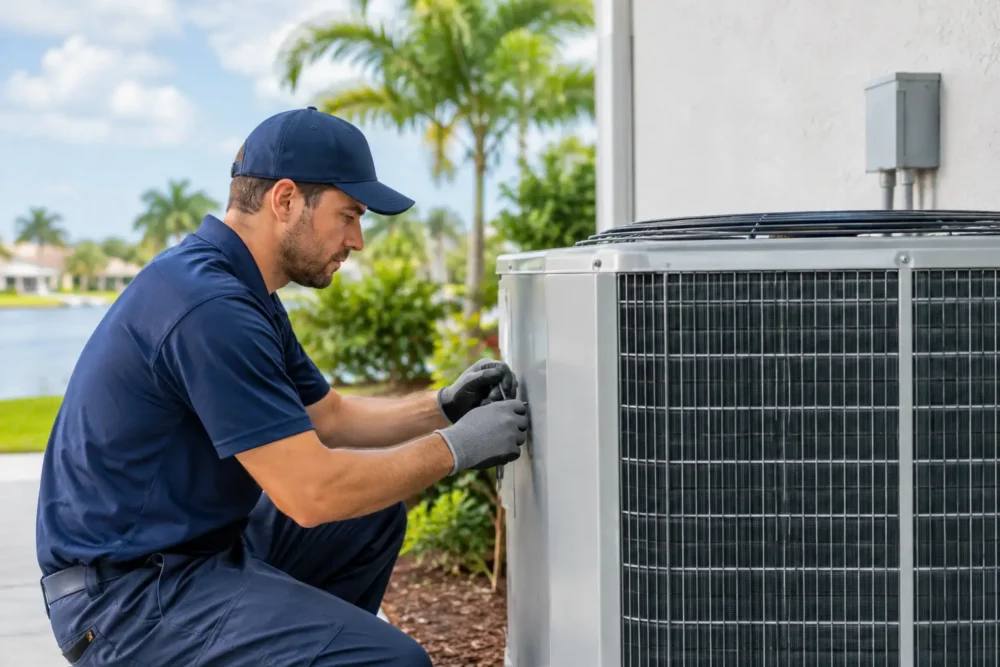
The outdoor condenser is built for rain, but it is not built to take a direct hit from loose patio furniture, branches, or flying yard items. Walk around the unit and remove leaves, palm fronds, lawn tools, planters, and other objects that could block airflow or become airborne.
Trim back shrubs and branches that are growing into the condenser. Leave open space around it so the system can breathe and so a technician can reach it safely if service is needed. Look for obvious concerns such as a unit that appears tilted, a loose pad, exposed wiring, or bent coil fins. Do not try to straighten damaged metal components or handle electrical wiring yourself.
Most outdoor units are secured to a concrete pad or mounting brackets, but the fastening hardware should be checked periodically. This is especially valuable for units installed on elevated stands, rooftops, or coastal properties exposed to salt air. A licensed HVAC professional can assess whether the unit and its mounting are in good condition.
Do Not Wrap the Condenser in a Tarp
Covering the outdoor unit tightly with a tarp may feel protective, but it can cause more harm than good. Tarps can trap moisture, rub against components, restrict drainage, and become loose in high winds. The condenser is designed to be outdoors.
If your manufacturer provides specific storm-cover instructions, follow them. Otherwise, focus on clearing the area, securing loose objects around the home, and having the unit inspected if you have concerns about its mounting or condition.
Protect the Electrical Side of Your System
Power surges and outages are common during severe weather. Before the storm arrives, make sure you know where your electrical panel and AC disconnect are located. You should be able to access them without moving heavy items or entering an unsafe area.
When a hurricane is imminent or you are leaving the property, turn the thermostat to Off. If local emergency guidance, your HVAC professional, or the equipment manufacturer recommends shutting off power to the AC at the breaker or disconnect, do so only when it is safe to reach the panel. Never stand in water or touch electrical equipment with wet hands.
There is a trade-off here. Turning off the system too early can make an occupied home uncomfortably hot and humid before the storm arrives. In many cases, it makes sense to continue cooling normally until severe conditions are close, then shut the system down before wind, flooding, or power instability creates a risk. Follow local emergency instructions first.
A whole-home surge protector can offer another layer of protection for appliances and HVAC equipment, but it is not a guarantee against major storm damage. Ask a qualified electrician or HVAC professional what protection makes sense for your home’s electrical setup.
Prepare the Indoor Equipment and Your Home
Hurricane preparation is also about controlling water and humidity inside the home. Replace a dirty air filter before the storm, especially if you expect to keep windows and doors closed for an extended period. A clean filter supports airflow and helps the system operate more efficiently.
Check around the indoor air handler for stored boxes, furniture, or household items. Keep the area clear, and make sure the condensate drain line has been professionally maintained. During humid weather, the system removes a significant amount of moisture from indoor air. A blocked drain can lead to water leaks just when you have enough to worry about.
For seasonal homes, rental properties, offices, and other vacant buildings, consider a plan for post-storm access. Identify who can check for water intrusion, confirm that power has returned safely, and report AC problems quickly. Heat and humidity can escalate fast in an unoccupied Florida property, especially after a prolonged outage.
Before the storm, take a few clear photos of your indoor and outdoor HVAC equipment. Include the model and serial number labels if they are accessible. Keep maintenance records and warranty information in a waterproof folder or secure digital location. Documentation can be useful if your system is damaged and you need repairs, replacement, or an insurance claim.
A Practical Hurricane AC Checklist
Complete these steps early, not during the final rush to secure your home:
- Schedule professional AC maintenance and address known repair concerns.
- Clear branches, furniture, planters, and debris away from the outdoor unit.
- Check that the condenser is level and report loose mounting, exposed wiring, or visible damage.
- Replace the air filter and make sure the indoor unit area is clear.
- Locate the thermostat, electrical panel, and AC disconnect before an emergency.
- Photograph your system, save equipment information, and keep your HVAC company’s contact information available.
What to Do With Your AC After the Storm
Do not rush to restart the air conditioner the moment the weather clears. First, make sure it is safe to be outside and that there is no standing water near the outdoor unit, electrical disconnect, or indoor equipment. Look from a safe distance for obvious damage, including fallen limbs, crushed panels, disconnected lines, loose wiring, or a shifted condenser.
If the outdoor unit, air handler, or electrical components were submerged, do not turn the system on. Water can damage motors, controls, insulation, and electrical connections. The equipment needs a professional inspection before it is energized.
If there is no visible damage and power has returned reliably, wait until utility service is stable before restarting. Set the thermostat to Cool and give the system time to begin its normal cycle. Listen for unusual noises and check that cool air is reaching the vents. If the breaker trips, the system hums without starting, airflow is weak, or you smell anything burning, turn it off and call for service.
Avoid repeatedly resetting a tripped breaker or cycling the thermostat on and off. That can cause additional damage and makes diagnosis harder. A trained technician can determine whether the problem is related to storm debris, a surge, water exposure, a failed component, or an issue that was already present before the storm.
Be Careful With Generators
A portable generator is usually not the right way to power central air conditioning. Most central systems require substantial starting power and must be connected correctly to avoid dangerous backfeeding or equipment damage. Never plug HVAC equipment into an improvised generator setup.
If backup cooling is a priority for your household, speak with qualified professionals ahead of time about generator sizing, transfer switches, and which equipment can safely run during an outage. For many homes, a generator is better reserved for essential circuits, refrigeration, lighting, and smaller cooling options until normal power returns.
Know When to Call for Help
Call an HVAC professional after a storm if your system was exposed to floodwater, struck by debris, shifted from its base, or will not restart normally. You should also request service if water is leaking near the air handler, the drain line is overflowing, the breaker trips, or the home remains unusually humid despite the AC running.
Prompt attention matters in Florida’s heat. It can help protect your equipment from further damage and restore a safer, more comfortable indoor environment for your family, tenants, customers, or employees. Treasure Coast Air Conditioning is ready to help local homeowners and businesses with inspections, repairs, and emergency AC concerns when conditions allow safe service.
A little preparation now can spare you from making difficult decisions in the heat after a storm. Keep the area around your system clear, treat water and electricity with caution, and arrange professional help whenever damage or uncertainty is involved.